An edited version of a talk delivered at St Beuno's, the Jesuit spirituality centre in North Wales, exploring the tradition of priest-poets from the Middle Ages to the present day, with Gerard Manley Hopkins at its heart.
This is an edited version of a talk delivered at St Beuno's, the Jesuit spirituality centre in North Wales, immediately following the Newman AGM at Hawarden on June 13th
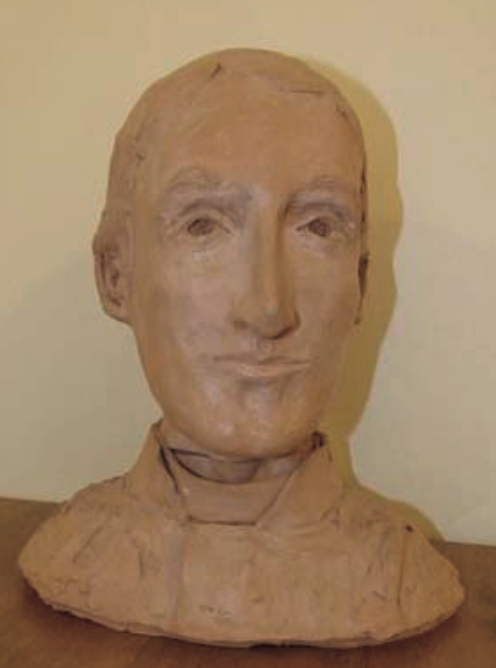
Gerard Manley Hopkins
Traditionally there are six things that God does not know: what a Benedictine does with his time, what a secular priest does with his money, what a Franciscan is going to say when he goes up into the pulpit, what a Dominican has said when he gets down from the pulpit, how many orders of women's communities there are – and finally, what a Jesuit is thinking. It reminds me of that Anna Massey film where she plays a nun in charge of a girls' class and singles out one of the girls in her charge. The girl has been rumoured to have been reading and even thinking about her faith. "Thinking about your faith? What right have you to think about your faith?" queries the nun. "That's what the Jesuits are there for." I mention that film scene because we are meeting in this Jesuit house of St Beuno's, aware of how the Society of Jesus was one of the great forces in the Counter-Reformation, powerful in its teaching and work in schools, powerful as confessors to kings and queens, and powerful in missionary work.
By the 19th century in this country – and we are looking at that period with Gerard Manley Hopkins – the Jesuit loomed in popular Victorian fiction often as a villain of the blackest dye, gliding with a noiseless step into the room, as one novel expresses it. In the Protestant and Anglican imaginations there was a deep suspicion, fear and even hatred of the Jesuits. And yet it was that order that Hopkins entered. He lived here at St Beuno's from 1874 producing some of his happiest poems, and it is a popular belief that it was in this room that the Rector asked Hopkins to produce what became his greatest poem, The Wreck of the Deutschland.
The Jesuit contribution
In the last months of 1881 he wrote several letters to Canon Richard W Dixon, his great friend and fellow poet, on the subject of the Jesuit contribution to literature and culture and on his own vocation as a poet: "Our society values and has contributed to literature, to culture, but only as a means to an end….for genius attracts fame and individual fame St Ignatius looked on as the most dangerous and dazzling of all attractions." But Hopkins went on to list several Jesuit poets: "There was a certain Fr Beschi who in southern Hindustan composed an epic which has become one of the Tamul classics and is spoken of with unbounded admiration by those who can read it. But this was in India, far from home, and one can well understand that fame among Hindu pundits need not turn the head of an Italian. In England we had Fr Southwell, a minor poet, but still a poet…then, what a genius was Campion himself! Was not he a poet?"
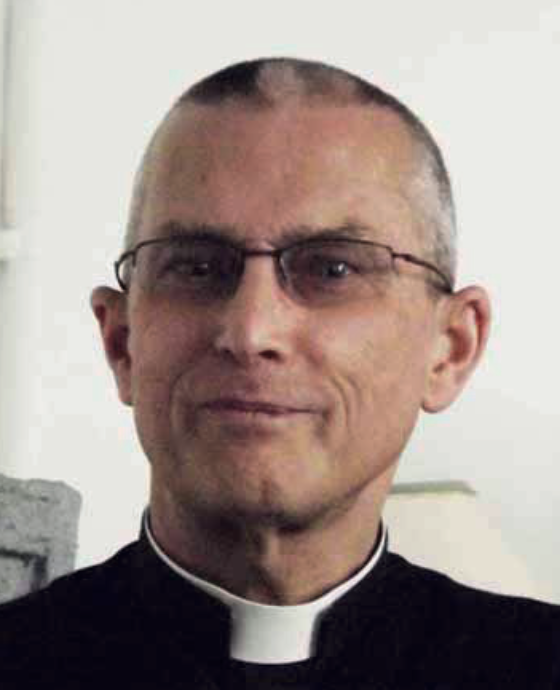
Michael Burgess
We could widen the boundaries of this phenomenon of the priest-poet beyond the Society of Jesus back to the Middle Ages: to the great hymn writers, Adam of St Victor and St Thomas Aquinas. We could point to the flowering of priest-poets in the 16th and 17th centuries: John Donne ordained in 1615, George Herbert turning from the pursuit of worldly ambition to become a priest at Bemerton near Salisbury, Robert Herrick, Thomas Traherne, and Thomas Vaughan, the twin brother of the more famous Henry Vaughan and Rector of Llansantfraid in Wales.
In the 19th century, in an age when Tennyson and Browning used poetry to voice Victorian doubts about Christianity and the Christian God, there were priests for whom poetry could express their Christian faith: John Keble, John Henry Newman, Frederick Faber, Richard Watson Dixon, Stephen Hawker in Cornwall and Hopkins himself.
In the last century we could point to Andrew Young, who began his ministry as a Presbyterian minister and was ordained into the Anglican Church in 1939, and the two important Welsh poets, Euros Bowen, who ministered in a parish near Lake Bala, and R S Thomas, who was a parish priest in north-west Wales. And in our own century: Peter Levi who died in 2000, David Scott in Winchester, Rowan Williams, Peter Walker from Llandudno who is the national poet of the Church in Wales, and Rachel Mann, priest and poet in residence at Manchester Cathedral.
For all of them priestly ministry and poetic creativity inspired each other. The poet's seeing eye illuminated all that priesthood involved: vocation, God, prayer, suffering and pastoral ministry. Karl Rahner, the great Jesuit theologian, wrote an essay in volume 3 of his Theological Investigations entitled Priest and Poet in which he explored this phenomenon of the two vocations and how they can become one and the same. The essay in fact began its life as a preface to a volume of poems by the Jesuit Jorge Blagot.
Rahner sees the unity of the two vocations lying in the concept of the word. To the poet, he writes, is entrusted the word and he uses words creatively. For Rahner, the poet is the one capable of speaking these primordial words in powerful concentration. And what is a priest? Someone entrusted with the efficacious word of God himself, bestowed as a gift and as mission – the word spoken by God who is Jesus. The priest is entrusted with this primordial word of God in such a way that he can speak the word Jesus in its absolute, concentrated power. The priesthood releases poetic existence and sets it free to attain its ultimate purpose, at the same time discovering in the grace of poetic power a charism for its own perfection. Thus the priest calls upon the poet, so that the poet's primordial words may become the vessels of the divine word, in which the priest can effectively proclaim the word of God.
The essay is a fascinating one, and I have only stated it summarily. But Rahner is showing the possibility of two vocations existing in a tension that is creative – if you like, grace perfecting nature. The Word Jesus answering the words the poet utters in questioning longing. This is indeed how many priest-poets have seen their vocation. Robert Southwell, who died in 1594, in his preface to St Peter's Complaint, wrote how poetry was a gift to exercise our devotion, not just the fawnings and follies of love. "With David, verse to vertue I apply" to make hymns of spiritual love, however much he was aware of singing the canticles of the Lord in a strange land. George Herbert in the dedication to The Temple wrote:
Lord, my first-fruits present themselves to thee;
Yet not mine neither: for from thee they came,
And must return. Accept of them and me,
And make us strive, who shall sing best thy name.
Robert Herrick, who served in the rural parish of Dean Prior in south Devon in the 17th century, wrote in the Argument to the Hesperides that his aim was to see the world as a unity: sacred and secular are one in God their creator and redeemer.
I sing of brooks, of blossoms, birds and bowers,
Of April, May, of June and July flowers….
I write of Hell; I sing (and ever shall)
Of Heaven, and hope to have it after all.
Thomas Traherne, who was a parish priest in Herefordshire in the mid-17th century, used words in his poetry and The Centuries to capture his delight in the world, a delight which is childlike and immediate, a delight which sees God in all things. For Andrew Young, words are used to show similarly that the things of creation are spiritual experiences. For Euros Bowen, writing for the most part in Welsh, nature was a treasury of images and the poet was like a sacramental priest, making images and words sacraments to show forth their author, God. Rowan Williams in his volumes of poems focused often on remembering – the Holy Land, a group of girls at the bus stop, Tolstoy at a railway station – and the act of remembering is like the anamnesis at the mass. Remembering somehow makes them present and shows them in their more than ordinary, their extraordinary uniqueness.
The spiritual dimension to poetry
Canon Dixon, a constant friend of Hopkins, by contrast seemed to have seen poetry in a much more utilitarian fashion. In a letter to Hopkins, he said he wrote poetry to keep accidie (apathy) at bay while serving in his Carlisle parish of Hayton. Hopkins of course was much more aware of the spiritual dimension to poetry and so he continually urged his friends Robert Bridges, Richard Dixon and Coventry Patmore to publish and to consider that the poet represented that kind of spiritual force I have shown in those priest-poets: a spiritual force that speaks for the good of the nation and the world.
We can see this creative tension of language and words on the one hand, reaching out to the mystery of God, who is, on the other hand, here with us as the divine word made flesh in much that Hopkins wrote. Throughout his Journals, we realise how he was fascinated by words and language – by dialect words to describe the cutting of corn, for example; by the pronunciation of Latin; by rumination about the nature of words; and by his concepts of instress and inscape. "He gave us eyes to see them and lips that we might tell"; those words from the popular hymn seem to me to sum up the vocation and achievement of Hopkins the priest-poet. Eyes to see and lips to tell – Jesus, the Lord of all that is, perfects the creation which the eyes look upon. Jesus, the Word, perfects the words of the poet which he uses to describe that reality.
What I think gives Hopkins his unique potency in vision and poem is that ability to look and see, and see to the heart of all that is. In 1872 Hopkins chanced upon Dun Scotus' concept of haecceitas: the thisness of every individual being in God's creation. This was a eureka moment or a Damascus experience for the poet. He wrote that "it may come to nothing or it may be a mercy from God". It was a mercy for it harnessed his observation of the infinite detail of the natural world to his love of Christ. Hopkins looked and looked, and he somehow unravelled the complex beauty of creation by taking the time to stand and stare: to look, to ponder, and to find the words that express the reality he was seeing.
We gather here 126 years after his death, and I think that is what can provide a beacon and a light in this hectic pace of life and movement and progress which many call "the hurry syndrome". We easily get caught up in it, and it leads to an offhand way with words. It is the cult of immediate satisfaction that marks our world and prevents us from taking the time to look and think and express. Hopkins looks at sunsets and then he mines his repository of words to find exactly and precisely the ones that will convey the special quality of each sunset. As a result he likens them to yellow lilies, golden candle wax, the flowers of the wild mallow, pink and mauve, crimson ice and oil. It is part and parcel of his delight and wonder at creation around him.
At Stonyhurst after a shower of rain he was often to be seen running down the path that led to the college to stare at the quartz in the pathway, glistening in the sun. "The slate slabs of the urinals even are frosted with graceful sprays," he wrote in 1870. "I have particular periods of admiration for particular things in Nature – for a certain time I am astonished at the beauty of a tree, its shape, its effect. Then, when the passion so to speak has subsided, it is consigned to my treasury of explored beauty, while something new takes it place in my enthusiasm."
Hopkins, it seems to me, is a vital voice in our world today. His Journals are bejewelled with exquisite cameos celebrating the uniqueness and variety of creation – exactly because he has taken the trouble to look and write about it. Walking near his home he notices the skyscape: "All the length of the valley the skyline of the hills was flowingly written all upon the sky. A blue bloom, a sort of meal, seemed to have spread upon the distant south, enclosed by a basin of hills." As he followed Scotus' principle of individuality, he delighted in describing landscapes and skies like that, or closer at hand, trees and plants and birds. His kingfisher sonnet is a glorious celebration of the originality of things: "kingfishers, dragonflies, tumbled over rim in roundy wells stones ring".
For Hopkins all this glory of the world, around which he describes and celebrates, is nothing if it is not the work of God. Each aspect of created beauty is a sign of the perennial newness of God in "the dearest freshness deep down things". That is the insight of this priest-poet. The inscape, the individuality of each thing in creation, points the beholder to the work of God. Priest and poet complement one another as he realises that the true inscape is Christ himself. The world possesses, either manifestly or secretly, a Christlike form.
It was for the sake of this vision that Hopkins, after a silence of seven years, began again to write poetry: the vision that in all matter, in the works of creation, and even in shipwreck and destruction, we can see Christ. The poet can reach out to the mystery of God, who, proclaims the priest, comes to us in the Word made flesh. Hopkins the poet uses words in his awareness that the Word Jesus makes sense of all we see and know around us. This theological understanding is at the heart of the great poem that broke the "elected silence" – The Wreck of the Deutschland.
Poetic energy
A chance remark by his superior at St Beuno's that it would be good to have a poem on a disaster at sea that had claimed over sixty lives in December 1875 released the poetic energy of Hopkins (to the bafflement of Bridges and others, it has to be admitted). But Hopkins went on to write about fifty more poems in the thirteen years between The Wreck of the Deutschland and his death. More than thirty are sonnets of one sort or another, and most of the poems develop and explore his fascination with words and rhythm: poet and priest inspiring one another in his own creative life.
In the poem The Wreck of the Deutschland Hopkins describes how in the midst of the shipwreck the tall nun, Gertrude, mouths the words that all words aspire to: "O Christ, come quickly". She says "yes" to Christ and so he makes his mercy and mastery in her, enabling her to see into the heart of the mystery of suffering. She glimpses meaning in what was apparently a meaningless tragedy – by turning to the Word, who gives power and coherence to human life, the crucified Word, who triumphed through suffering and conquered through death. Christ is the Word who brings meaning and purpose to past and present, this world and beyond. The poet says that when, like the tall nun, we realise this, then we can pray "O Christ, Christ, come quickly". In that encounter the word can become flesh and dwell in us. And so the words of the poet Hopkins raise us up to Christ the crucified word, and, proclaims Hopkins the priest, Jesus the crucified word descends to us – to Easter in us.
According to Christopher Devlin, who edited a book on Hopkins' devotional works*, Hopkins was very much a typical 19th century convert who brought with him into the Roman Catholic Church a "hero ideal" which led to bouts of self-loathing and anxiety over the purity of his motives. Devlin wrote in the introduction to his book, published in 1959, that "Hopkins the Jesuit behaved to Hopkins the poet as a Victorian husband might to a wife of whom he had cause to be ashamed". It hinged on that balancing act he tried to effect between his Jesuit vocation and his poetic creativity.
John Henry Newman played a major part in that journey of Hopkins that led him from Highgate school to Balliol College and then into the Jesuit order. At Oxford Hopkins was drawn to Pusey and Newman, and we know that when he arrived at Balliol his first visit was to Littlemore, where Newman had retired and where he was received into the Roman Catholic Church by Fr Dominic Barberi. In September 1866 Hopkins wrote to Newman, who was by then at Birmingham. That letter led to a meeting on September 20th to discuss Hopkins' own future. To Bridges he reported that Newman had been genial and almost unserious with sensible advice about his future. Newman wrote that your "first duty is to make a good class" (ie gain a First in his final exams). "Show your friends at home that your becoming a Catholic has not unsettled you in the plain duty that lies before you."
Cardinal Henry Manning would have advised Hopkins to leave Oxford immediately, but Hopkins followed Newman's advice. He was received into the Roman Catholic Church by Newman at the Oratory in October 1866 and then graduated the following year with a first-class Honour in Greats. Hopkins joined Newman at the Oratory school where he began learning the violin, possibly after hearing Newman play in a quartet. In 1868 he resolved to become a priest and Newman was again a wise counsellor for his future vocation. He wrote to Hopkins, who was thinking of becoming a Jesuit: "I think it is the very thing for you. You are quite out, in thinking that when I offered you a 'home' here, I dreamed of your having a vocation with us. This I clearly saw you had not, from the moment you came to us. Don't call 'the Jesuit discipline hard', it will bring you to heaven. The Benedictines would not have suited you."
The Jesuits did their best to sustain Hopkins: they never forbade him to write poetry and they tried to give him appropriate work. But it would be true to say that the Jesuit way of life wrecked his health and his confidence. He was happy here in Wales, for a time in Oxford and now and then at Stonyhurst, and those places produced his world embracing, joyous verse. But the frequent and unpredictable moves of Jesuit life upset him; from 1877 to 1884 he had seven different posts. As he set himself to preaching and teaching he found he was no good at either, and the final five years at Dublin compounded the sense of failure. He looked at his life and its fruits and found little to rejoice in. Dublin brought out depression and illness. Christopher Devlin is right in saying how this was inevitably the hero ideal of converting coming face to face with his own frailty and self-doubt.
The burning of the poems
"The massacre of the innocents" when he burnt his poems in the spring of 1868 was a symbol of the surrender of his old vocation to the new. "I burnt them before I became a Jesuit and resolved no more, as not belonging to my profession, unless by the wish of my superiors". But it was never an unconditional surrender: his friends had copies of the poems burnt in the massacre. He went on as we know to write more verse, yet the guilt remained with him.
For John Henry Newman I sense there was no such struggle between the vocations of priest and poet. We have that great outpouring of poems when he was abroad in the 1830s, yearning to be back in this country, when he penned Lead kindly light. He wrote that "obvious ideas become impressive when put into metrical shape" and 109 poems formed the major part of Lyra Apostolica of 1836. Then there was silence, and Newman was realistic enough to say in 1843 that "the muse is resting". The muse awakened again, however, at the Oratory and in 1865 he wrote his great poem The Dream of Gerontius.
The poems of Anglican days and the more recent poems were published in one volume in 1868, Verses on Various Occasions. Gladstone thought highly of them and the poetry was the subject of an Oxford lecture by Sir Francis Doyle. Newman wrote: "I have been so little used to praise in my life that I feel like the good woman in the song 'Oh, cried the little woman, sure it is not I!'" But at heart he thought of the poems as ephemeral for all the impact they made in print. Newman had other, more important, things to focus on and which consumed his time and commitment. That sense of being called to do work for God where the individual found himself was a strong motive in Newman's life. For Hopkins it was different: the calling as a Jesuit brought a struggle with his own interests and creativity.
That is why a favourite image of Hopkins is the bird flying free in the air, and there are many poems which capture the image of the bird soaring high and not weighed down by duty and obedience. If Hopkins thought that he had achieved his poetic best in The Windhover, it was because of that intense evocation of the bird in the air as "daylight's dauphin" who in "brute beauty and valour and act" spirals upwards with "air, pride, plume" against the buffeting wind. The poet sees the bird hovering on high and then pouring forth all his most dangerous power as he swoops to the earth again.
In The Windhover the bird is an image of Christ, but at an early stage the ascending bird became his own signature: "Let me be to thee as the circling bird". Later the "bare-gale skylark" imprisoned in his cage became a symbol of Hopkins bound to earth and his vocation. In the sonnet The Sea and the Skylark the lark ascending and pouring out its song above the roar of the tide and the shallow town of Rhyl is again a picture of the poet who longed to be like the bird, free flying. And as a free flying bird, Hopkins was aware that he was an oddity: he was influenced by Duns Scotus when the norm for religious thought was Thomism. He preached occasionally in the industrial cities but he was aware that he never had the common touch. That is why he yearned to fly high like the windhover; but he was always called back to earth, to obedience as a Jesuit.
What stands out with Hopkins is his unique voice. "No doubt my poetry errs on the side of oddness – now it is the virtue of design, pattern or inscape to be distinctive and it is the vice of distinctiveness to become queer. This vice I cannot have escaped", he wrote to Bridges in 1879. Hopkins knew himself to be a beginning. "If you do not like it, it is because there is something you have not seen and I see", he wrote about his musical compositions, and he could have applied those words to his poetry.
A unique voice
The comparison of Hopkins and other priest-poets shows how they all live in that same world of grace and nature, but somehow the voice of Hopkins sounds out as unique. There was nothing quite like it in the Victorian age. And I want to end by looking more closely at how Hopkins achieved this distinctive voice and insight. As Rahner said in his essay, priest and poet complement one another, and so Hopkins the poet with his all-seeing eye glories in creation and then mines his storehouse of words and images to express that joy and glory, not for their own sake, but to read the inscape and see in all around the manifestation of God.
We sense that special voice in Hopkins as we meet in this place where he was possibly at his happiest. This "pastoral forehead" of Wales inspired some of his most exultant and exhilarating poems and showed him that, for all his scruples over obedience and vocation, poet and priest could spark each other off in creative spirit. Sight and words go hand in hand to convey the vision of God in creation, and so the sonnet The Windhover, dedicated to Christ our Lord, draws out the image of a bird in the sky in an immense ascending intensity. The bird soars upwards and then drops down to catch its prey.
For the poet, that moment of collapse is more majestic than the dominance of the air; it is the moment of beauty and triumph. Just so Christ, his Lord, a spent coal, collapses on Calvary, injures himself for us and lets flow the gold-vermilion, the healing blood. He may have found this image not just in walking the fields and lanes around St Beuno's, but also in St John of the Cross, where the image of the falcon soaring into the sky is an image of the soul chasing its quarry Christ. But all this theological understanding has to be unpacked from what looks like a nature poem. The Cross of Christ is fundamental to the poet's theology, but it is only expressed openly in the dedication.
It seems to me that at the heart of his poetic achievement in soaring to the heights of ecstasy and plumbing the depths of despair are the shipwreck poems – The Wreck of the Deutschland and The Loss of the Eurydice. Two ships, one with the five nuns, the other with young sailors, founder and are shattered by the roaring sea. In the same way, says the poet, all worldly images and symbols founder and collapse as they yield a final picture of the sacrament of this world perishing and ascending to God; death leading to resurrection, and "a shipwrack" becoming a harvest (stanza 31 of The Wreck).
Everything is washed away and leaves us turning to God and his mercy. The only haven is heaven, and so there is only one thing to cling on to: not words or images or the beauty of this world – the world of the poet – but as the priest says, "Ipse, the only one, Christ, King, Head" (stanza 28 of The Wreck). The words of the poet reach out to encounter the Word proclaimed by his priest; and that Word is the key to the future, as it is to the present and the past:
Ah! there was a heart right!
There was single eye!
Read the unshapeable shock night
And knew the who and the why.
And here at St Beuno's today we rejoice in that single eye and heart right of priest and poet, Gerard Manley Hopkins.
Canon Michael Burgess is an Anglican priest, and Rector of two parishes in the Chester diocese.
*The Sermons and Devotional Writings of Gerard Manley Hopkins, OUP (out of print)