We all experience fleeting moments in life when we feel that we have encountered the divine. Anne and John Duddington reflect on R.S. Thomas's poem 'The Bright Field' and the call to stop and experience the presence of God in the present moment.
We all experience fleeting moments in life when we feel that we have encountered the divine or have some profound sense of belonging to Creation. This may be when we sit in a garden and look at the beauty of the flowers, or when we are transfixed by some wonderful piece of music or when we unexpectedly meet a friend whom we have not seen for a long time. It can also be, of course, when we pray and feel that we are in communion with God.
These are precious moments but all too often we pass on quickly and do not stop for long enough to really take in what it is that has so moved us. This is what the Welsh poet R.S. Thomas was writing of in his poem 'The Bright Field':
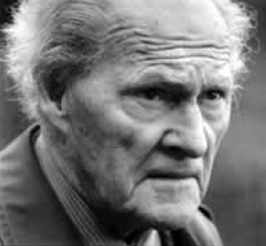
R.S. Thomas
I have seen the sun break through
to illuminate a small field
for a while, and gone my way
and forgotten it.
As he goes on to say: 'But that was the pearl of great price,'
And so he concludes:
Life is not hurrying on to a receding future, nor hankering after
an imagined past. It is the turning
aside like Moses to the miracle
of the lit bush, to a brightness
that seemed as transitory as your youth
once, but is the eternity that awaits you.
God is timeless, He is ever-present, but, as R.S. Thomas is pointing out, too often we live either in the past or in the future when we ought to experience the intensity of a present moment and feel the presence of God just as Moses did when he saw the burning bush. At such moments we need to heed the voice of the Psalmist:
'Pause awhile and know that I am God, exalted among the nations, exalted over the earth'. (Ps. 46.10).
Anne and John Duddington