A biblical interpretation exploring the scandal of Christian disunity — its causes, obstacles, and the way ahead through love, receptive ecumenism, and listening to the Spirit.
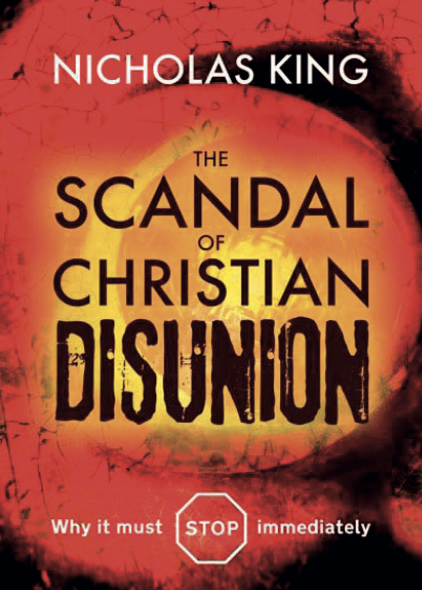
I have called it The Scandal of Christian Disunion, a Way Ahead? We are living in a darkened world, which desperately needs to hear the Gospel and cannot. That is because people look at Christians and note how they all hate one another so other people have no need to listen to them. We are creating a scandal by our divisions.
This talk originates in some lectures I gave in South Africa a year or so ago, and out of that has come a book, published just this week, called The Scandal of Christian Disunity1. I taught for many years in universities and seminaries in South Africa and since then I was teaching most of the time in Oxford. Sitting down for most of the time with my students – some of whom were atheists, many others being in different Christian denominations – I discovered a real closeness of readings of the New Testament, which didn't have anything to do with denomination. Also, I could feel in them a real sense of the life that is in the New Testament. I think we have a precious asset. What I am going to say tonight is only a very small part of what is in the book.
The mystery of anti-ecumenism
Point one is what I have called the mystery of anti-ecumenism. When you start to talk about ecumenical relations various reactions can be experienced. One is that you can notice real sense of anger: people say, do you want us to surrender all our hard-won insights? I have experienced that both on the Catholic side and the Reform side. You can also get a cold indifference. Who cares, what does it matter? These people say: I'm not interested, I know what I believe and I'm going to carry on with that. And then you can trigger a kind of counter-reaction, a real disappointment. Michael Hurley, the great Jesuit ecumenist, talked about "a great chaos of lovelessness" and he was talking there about the relationship between the Catholic and the Orthodox churches. It was a very, very sad thing to say; it's a mystery to me.
And that brings me to the second point, which is the beguilement of easy solutions. It's very easy – for example, for Catholics – to say, well, it's all your fault, you lot abandoned the Church which Christ founded. Or, in the words of John Calvin, Rome corrupted word and sacraments, so it was Rome that unchurched itself by drifting away from the truth of the Gospel. But I don't want to go for any of those easy solutions; I want to peer dimly through the fronds of the jungle and see if there is a way ahead.
Thirdly, there is the role of recent popes. Certainly, more than we often recognise, recent Popes have given Catholics a very strong lead in ecumenism. This obviously applied to John XXIII, whom you would generally categorise as something of a conservative, though a very open conservative: he simply said to us that the Catholic Church considered it her duty to work towards reunification. He conceived the Second Vatican Council as an opening-out to other Christians.
Paul VI had a different approach to theology – he never went to a seminary and he studied at home. That was both an advantage and a disadvantage. He saw dialogue between Christian movements as an exchange of gifts. And he said something different about the office of the Pope: it was not, he said, a supreme authority puffed up with spiritual pride but a primacy of service and a ministration of love. He also said: "The Pope, as we well know, is arguably the greatest obstacle in the path of ecumenism."
Then there was John-Paul II: "Ecumenism is an organic part of the Church's life and work," he said, and he spoke of the need for the Pope to be converted. That's very strong. And Benedict XVI, in his inaugural address to the Cardinals, said: "The fostering of the unity of Christians will be at the pinnacle of my ministry". He also spoke of the absolute importance of Jesus.
As for his successor Francis, his gift is one of gestures, of bowing his head and receiving a blessing from the Eastern Orthodox Patriarch, and his visit, for example, to a Pentecostal Church: no other Pope would have dreamt of doing that. He has said the following things: "We are all at fault" (and it is something to hear the Bishop of Rome saying that); "Our divisions must not be accepted with resignation"; and "Unity comes about in journeying". He has also said: "Our divisions represent a major obstacle to our witness to the Gospel in the world," and "Signs of division between Christians in countries ravaged by violence add further causes of conflict on the part of those who should instead be a leaven of peace."
My fourth point is that there are other obstacles to ecumenical dialogue. It seems to me that those who are least at ease in their own religious tradition are those who are most inclined to resist ecumenical outgoing. Just a faint insecurity forces us to hug on to our security. Then there are those who think that they have got nothing to learn. Here's an example from St Mark's Gospel: "There he rose up and went off to the regions of Tyre. He went into a house and he couldn't remain secret. Jesus couldn't pass unnoticed. And immediately a woman saw him and she had a daughter with an unclean spirit who fell at his feet. She asked him to expel the demon from her little daughter. He replied, because of your word, off you go, the demon has come out of your daughter. So it was quite clear that Jesus saw his as a reform movement within Judaism: "Go only to the lost sheep of the house of Israel," he says in Matthew 10. But Jesus recognised that he had something to learn.
Thirdly, there are those who are determined to hold on to hard-won insights. I was brought up in recusant Catholicism – the blood of the martyrs runs in my veins – but that doesn't mean that we should cling to everything that they stood for. In Jeremiah 7, Jeremiah is warning them that "it's all your fault" and the temple is going to fall. The spirit might be trying to warn you that it is time to move on. Then there are those who rush ahead too far. This could include those who try to link the Gospel with social justice.
Here is a slightly different example from Acts 8. The Angel of the Lord speaks to Philip and they appoint eight deacons, who all have impeccably Greek names, and we only ever hear of two of them again. One is Stephen, who is preaching so brilliantly that they stone him to death for it, and the other is Philip, who rushes around preaching, and does it under the influence of the spirit.
So the Angel of the Lord spoke to Philip, saying he should journey to the south, going down from Jerusalem to Gaza. And he came across a eunuch, the powerful servant of the Queen Candace; he was in charge of all her treasury. He was sitting in his chariot reading the prophet Isaiah out loud. Philip said, do you know what you're reading and the eunuch replied2, "no, how can I unless someone guides me?" He invited Philip to get up and sit down next to him, and the item of scripture was from Isaiah 53, about a lamb being led to the slaughter, and the eunuch asked "about whom was the prophet saying this?" Was it about himself or about someone else?
Philip then gospelled him about Jesus, and as they were journeying they came to some water and the eunuch said "what's stopping me from being baptised?" They both went down into the water and Philip baptised the eunuch. When they came out of the water the spirit of the Lord drew Philip away and the eunuch went on alone. That's another thing that can go wrong if we go rushing ahead of the spirit; we have to listen to the spirit but sometimes the spirit isn't taking us quite as far as we tend to want it to.
So that is another difficulty with ecumenical dialogue. Here's yet another one. Odeum theologicum; how these Christians hate one another. In John, 8:48, the Judeans replied to Jesus, aren't we right in saying you're a Samaritan? And you've got a demon? (simply because he is proclaiming God as Father). I've seen quoted a high-ranking prelate speaking about Pope Francis and the Synod on the Family, and saying "Isn't this a bit Protestant?" That is odium theologicum.
Another problem is those who refuse to consider what the Spirit is saying. An example of that is Acts 15, right in the middle of the Acts of the Apostles. There was trouble which could have ripped the Church apart in those early days, because what we would now consider as conservatives quite correctly said that the Bible gave instructions about things like eating kosher food, circumcising males and observing festivals. It said so in the Bible. If you were denying that you were wrong. So some people came down from Judea and they started teaching the Brethren that unless they were circumcised in the manner of Moses they could not be saved. There was quite a lot of unrest and argument with Paul and Barnabas: Paul, of course, would never be backward in coming forward with these matters.
Acts 15 relates that they go to Jerusalem, and all the apostles and the elders get together to talk about this problem. There is a great deal of argument, and then Peter stands up; he makes an unexpected speech saying "Don't put burdens on these people" so you can feel the issue changing. But notice, technically, as a Biblical matter, Peter is wrong, because it says in the Bible you've got to be circumcised. But he says God gave the Holy Spirit to the Gentiles just as to us, and made no difference, cleansing their hearts by Faith. So why do you tempt God, putting a yoke on the neck of disciples such as neither our ancestors nor we were able to bear. But through the Grace of the Lord Jesus Christ we believe that they can be saved just like us. Then the whole group was silent.
Then Jacob (James) the leader of the Church in Jerusalem, said: "Men, brothers, listen to me." Simeon has explained how God has visited to take a people for his name from the Gentiles." And so Jacob, this conservative, leads them towards a solution. They all agree, and they cheer, and a letter is sent to the Gentiles. There is an example of people being prepared to listen to the Holy Spirit. That's a model for us today. We've got one or two really neuralgic issues in the Church and our task is simply to say, what's the Holy Spirit saying? If we listen to that all is going to be well.
And then, a final obstacle is our lack of love. Here's a moment, in Mark, when Jesus lives this out. It comes just after a series of battles between Jesus and various religious authorities. He has just thrown the moneychangers out of the temple in Chapter 11, so the elders and the Pharisees come along and say: "By what authority do you do these things?" He throws to them a question about John the Baptist, and then delivers the parable of the vineyard, which he is clearly aiming at his interlocutors.
In addition he is faced with the Pharisees and the Herodians who put to him the dangerous question about whether tax should be paid to Caesar; and then – not such a dangerous question, but a silly one – the Sadducees ask him about the story of the woman who had seven husbands, and Jesus effortlessly dismisses it using Exodus (which, of course, is in the five books of the Bible that they recognise). It's a brilliant, brilliant tour de force by Jesus. So you can feel the tension rising.
After the Sadducees, another question, from a scribe and we know what is going to happen if a scribe asks a question. This is another dangerous question: what is the number one commandment? But Jesus doesn't hesitate for a second: You shall love the Lord your God with all your heart and all your soul and all your understanding and all your strength. And then he gives a bonus offer: number two! You will love your neighbour as yourself. This time he is quoting not from Deuteronomy but from Leviticus, but it is just as good.
This should have been enough. But then something else happens. The scribe says to him, beautifully spoken, Teacher, you have told the truth. And Jesus, seeing him, that he has answered intelligently, says to him: "You are not far from the Kingdom of God". And no-one any longer dares to ask him any questions. There you have love, unexpectedly burgeoning out of a lot of hostile stories.
I think there are huge signs of hope, and among Church leaders I see it today. On all sides, Church leaders have done great work in this respect, and there is a real openness to other traditions.
Then South Africa. I worked for many years in South Africa, for something like 13 years. When I arrived and went to biblical conferences the Dutch Reformed ministers would call the Catholics the "Roman Menace" and I really felt a certain distance when I turned up. A decade and more later something had changed, and I noticed that by then they had a real interest in Catholicism: there were two aspects in particular, the sacramentality of Catholicism was starting to appeal to them, and the spirituality, the openness to prayer and the Spirit. And we were learning from them about reading the Bible attentively.
Out of that, there were the people who met each other in prison; they knew they were opposed to apartheid because they were Christian, and in prison these people from different Christian denominations would hear each other singing hymns, and they would say: "We sing that hymn too!" And then they would discover they were in prison for the same reason; maybe their Christianities weren't as separate as they thought they were. So it is no accident that the great Truth and Reconciliation Commission owed a lot of inspiration and leadership to not only Desmond Tutu but to a lot of other Christians involved in that TRC. Bible-reading convinced Christians who because of that thought that was the way ahead. A real change of attitudes took place. And suddenly, sixteenth-century divisions imported from Europe didn't seem to matter all that much.
A third sign of hope is coming out of Durham University's Catholic theology faculty, with receptive ecumenism. Receptive ecumenism means that we listen to what the other Christian group is saying. We are trying to find language that makes sense.
So finally, what about the way ahead? I am offering three ways ahead. Before we get to those, basically what we have to do is listen out for God's word, to keep our eyes on Jesus and to follow the leading of the Spirit. My book, apart from the first and last chapters, is a look at each of the twenty-seven volumes of the New Testament, every one of which is shows awareness of the problems of division within the Church and observing how the different faiths handle it; roughly speaking, the answer always is, keep your eyes on God, watch Jesus, listen to the Spirit. It's as simple as that.
Three consequences
There are three consequences that result if we take each other seriously. One is, Christians often find themselves working with one another on local ecumenical projects. And secondly, as an inevitable consequence of working together on these good projects, they find themselves praying together. And then, thirdly – and this is the tricky stage, but it's really important – they then say, we believe this about the eucharist or about authority, or whatever it may be, what do you believe? And then you try and articulate what you really believe. And then you try receptive ecumenism, you try and listen to each other, and try to make sense of this other person. I don't think, if we continue on the ecumenical journey, that we are going to be forced to surrender what is precious to us – our hard-won doctrinal insights – that in history we have really battled for. What we will have to do is surrender our lovelessness, our instinct to hate. We do react very badly at times, and the point is that love trumps doctrine.
And here's a question: how do you deal with division? In 1 Corinthians Paul has a whole series of strategies. They are fighting in Corinth like rats in a sack and he has a whole series of strategies for coping with the fighting. And here's the last and, alas, unsuccessful one. You know it by heart, because it's been read at every wedding you've been to, but do you mind if I read it once more? It's clearly written by Paul, it's clearly aimed at Corinth and it doesn't belong quite where it is between chapter 12 and chapter 14.
But this is how it goes. I'm still going to show you a more excellent way. If I speak with the tongues of human beings and of angels but I don't have love I become an echoing cymbal. Just outside Corinth there was a particular kind of bronze that was mined that was particularly good for making cymbals. This business about prophecy, they were prophesying like anything. And Paul said, I can prophesy too but I don't boast about it. And if I have all the faith to move mountains (he's quoting from the Gospel there, of course) and if I "have no love, I am nothing". That's what they were not doing in Corinth. And then he goes into a portrait of his beloved Jesus and it's not at all a portrait of those crazy Corinthians.
Love isn't jealous
Love is long-suffering, love is kindly (and the Greek word for kindly is chrestos, it sounds like Christ); love, said Paul, isn't jealous, unlike you Corinthians who are as jealous as anything. Love doesn't bear a grudge, love isn't puffed-up, love doesn't behave indecently – unlike some of you in Corinth – doesn't calculate evil, doesn't rejoice at injustice but rejoices with the truth. Jesus bears everything, believes everything, hopes everything, endures everything; love never fails. As for knowledge, which you are claiming I don't have, that will be abrogated, because we know only in part and we prophesy only in part. We look now through a mirror, a distorting mirror. Think of those funny mirrors that we used to see at funfairs, the ones that make you look fat or thin. They would take the bronze they mined just outside Corinth and they would rub it up and polish it and you would see a sort of dim picture. That's what you've got to understand Paul is talking about there.
So we see through a mirror, but then you can see a dim picture. That is what Paul is talking about. Now there remain faith, hope and love, these three things, and the greatest of these is love. And that's the answer to the divisions they had. But, sadly, they wouldn't listen. The last words of the Corinthian correspondence, very, very sad words, you know it by heart: "The grace of the Lord Jesus Christ, and the love of God, and the communion of the Holy Spirit be with all of you". That's the very end of the Second Letter to the Corinthians, when he knows he has failed to get them back on track. It was very, very sad because 50 years later Pope Clement I went from Rome to Corinth quoting Paul to them and saying, you're still fighting3.
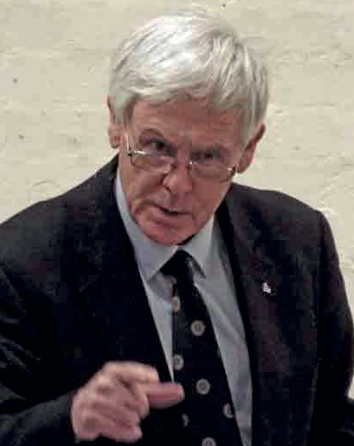
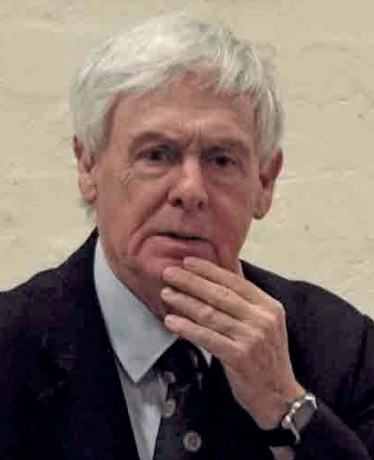
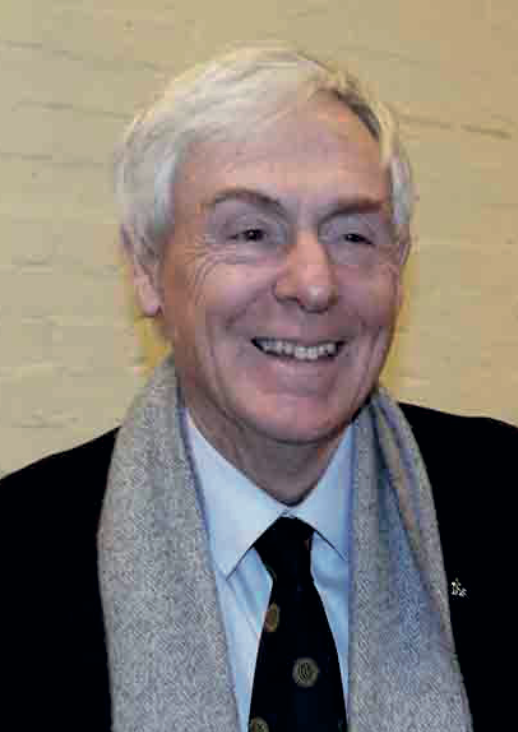
This is a transcript of a talk given by Fr Nicholas King SJ to the Ealing Circle on January 27, 2017.
Notes
- The Scandal of Christian Disunity is published by Kevin Mayhew, £17.99
- Biblical quotes in this article come from Nicholas King's own translation, published by Kevin Mayhew in 2013, £49.99 (paperback edition, £39.99)
- The First Letter of Clement, addressed to "The Church of God which sojourneth in Corinth", is not in the Bible. "Ye therefore, who laid the foundation of this sedition, submit yourselves to the presbyters, and receive correction so as to repent, bending the knees of your hearts. Learn to be subject, laying aside the proud and arrogant self-confidence of your tongue."