Reflecting on the future shape of the Church, Werner Jeanrond argues that the clericalist model of Church leadership is neither necessary nor theologically justified, and calls for a participatory, pilgrim Church rooted in love and discipleship.
What are we expecting of God? When reflecting on the future shape of the Church, it may be appropriate to ask ourselves a few questions. What do we expect of God at this point in our lives, in our Church, in our country, in Europe, in the world? How do we expect God's reign to manifest itself here and now and what is our role and the role of Christian community in this process? What does it mean to be a disciple of Christ today?
Imagine for a moment what tops the list of our expectations: salvation, forgiveness of sins, eternal life, justice, peace, love, renewal of the earth, heaven, being with God, being with our loved ones in paradise. We may also wish to ask ourselves: what does God expect from us? In what way are we to be God's arms, legs, mouth, hand, feet in this universe? What might top God's list of expectations?
It is important to identify and explore our expectations – and God's expectations – when approaching the question of how our Church ought to develop at this point in time. Moreover, it is crucial to consider how we think of God when analysing our potential role in God's evolving Church. Do we imagine God in terms of a monarchical super-power high above and beyond all worldly concerns, looking down on us from heaven and interfering at this or that moment in response to our wishes, prayers and protestations? How do we imagine God's presence in our lives, in the Church, in the world and in this universe at large? How do we imagine our co-operation with God in the Church?
Emerging Models of Church
In the Roman Catholic Church we are witnessing massive changes at present. For many centuries the Catholic Church was understood to be on its way to becoming a perfect society, in and for the world, in accordance with what was assumed to be the will of God. Other Christian Churches were considered aberrations from this road map, not to speak of other religious movements. The Church was pictured as a triumphant institution aspiring to order the world with the help of a divinely-sanctioned hierarchy of popes, cardinals, bishops, priests, deacons (so far all male) and then supported by the religious and, finally, by the laity.
Pope Francis's image of the Church as a field hospital initiates a dramatically different model of Church1. During the Pope's recent visit to Lund in Sweden he remembered Martin Luther and the legacy of the Protestant Reformation; and his encounters with other world religions demonstrate his determination to lead the Church away from the model of the perfect society toward a model of a pilgrim Church. He understands the Roman Catholic Church in terms of a pilgrim movement beside other pilgrim movements.
For Christians, Jesus Christ has become the incarnation of God's twofold project in our midst. His ministry, the violent death and the surprising resurrection of Jesus of Nazareth, together confirm God's creative will for this world and emphasise God's lasting commitment to and love of his creative project. Jesus showed us how to respond to God's creative and reconciling initiative in his love, his healing attention to our human needs and, ultimately, in his self-sacrifice. The early disciples could not think any longer about God apart from recalling these significant and transformative experiences with Jesus Christ. God made himself known in Jesus Christ. Ultimately, the experience of the continued presence of Christ in history through the divine Spirit prompted the emergence of the concept of the Trinity. Confessing God as Trinity, therefore, amounts to a confirmation that God remains committed to his creative and reconciling presence in our midst. That is what is part and parcel of salvation.
Hence, salvation does not call for a departure from God's created and beloved world into some other place or anti-world. God is not gnostic! Rather, accepting God's salvation in Christ involves us in God's promise to make everything new – beginning here and now. Therefore, Pope Francis's image of the Church as a field hospital makes good sense if one wishes to be involved in God's ongoing project of creation and reconciliation. However, it makes no sense if one sees the Church in terms of an anti-world, hierarchically structured by ordained men to avoid change and development.
God desires community with us human beings. This is the mystery of God's creative and reconciling love – a mystery which invites us to participate ever more deeply in the divine-human network of interdependent love relationships: our love of God, our love of our fellow human beings, our love of God's creation, and our love of our own emerging selves2. Christian communities are called to become communities of love – and not models of some perfect society with a well-ordered male hierarchy.
It follows nowhere from the good news of Jesus Christ, from his death on the cross and his resurrection, that those who will be leading and organising Christian communities ought to be male. Where are there reliable, well-founded theological reasons to support an exclusively male (or for that matter an exclusively female) priesthood? Or indeed for a necessarily celibate clergy? The fact that for centuries cultural forces have prioritised men to take on religious, social and political leadership in European societies is a result of a gender power game. But please let us not blame God for this patriarchal development and let us refrain from imposing such a patriarchal plot on God.
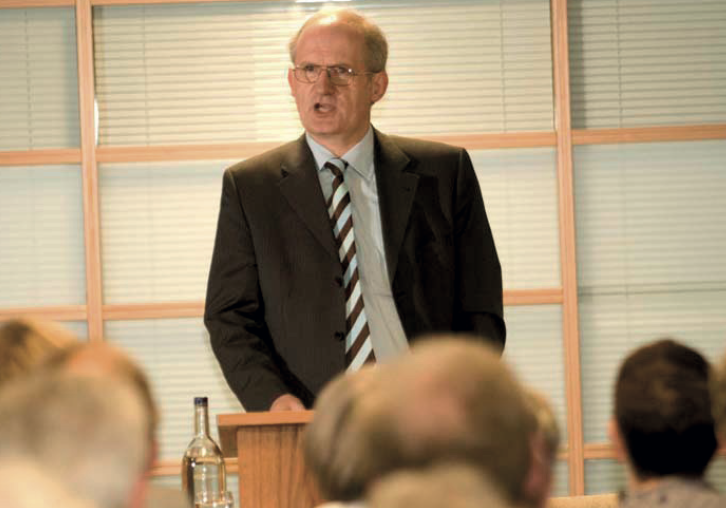
We live and work at the intersection of two competing models of Church: the Church as a well-ordered society and the Church as a dynamic community. The model of Church as society has favoured a clericalist understanding of Church leadership. Here, the guarantors of a functioning Church are the (male) clergy. This understanding is still about today. It reflects the efforts of past generations to erect a perfect society with the perfect and pure male leader on top of the social pyramid in a monarchical setting.
Moreover, the image of the celibate holy man was a statement of power: God can be encountered perfectly only through male mediation. This is not to suggest that many priests that have emerged from this cultural, religious and monarchical model of patriarchal power have not been good people or have not done marvellous work in God's Church. However, I am arguing that, theologically, this model of clericalist leadership is neither necessary nor desirable for a Church that understands itself now in terms of a field hospital called by God to serve a wounded world in great need of healing.
Let us reflect in some more detail on how vibrant Catholic communities might look like today and what form of leadership they require in order to support Pope Francis's approach to Church and life today. Thus, rather than concentrating on the global picture, here I wish to reflect on the renewal of the local Church.
Great Catholic parishes
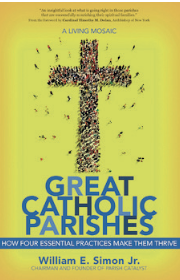
In a book entitled Great Catholic Parishes: How Four Essential Practices Make Them Thrive, published last year, William E Simon Jr and his friends in the Parish Catalyst movement set out to explore criteria for successful local Catholic parishes3. Even though this study reflects the current situation in the United States of America, important lessons can be learned even for our situation in the British Isles. Bill Simon and his team visited 244 parishes all over the 50 American states. There are more than 17,000 Catholic parishes in the United States (see p. 52 of the book). However, the 244 parishes highlighted are particularly vibrant and dynamic. Hence, they offer some insights into what makes a parish a great parish. In Bill Simon's words:
"Our study revealed that great Catholic parishes (1) share leadership, (2) foster spiritual maturity and plan for discipleship, (3) excel on Sundays, and (4) evangelize in intentional, structured ways. There is nothing revolutionary about these four practices. "In fact, at first glance they can appear deceptively simple. But these particular parishes are thriving in a time and climate when many people no longer find value in organised religion. These pastors, parish leadership teams, and parishioners have developed a clarity of vision. "The common attributes apparent in these pastors and woven through these parish communities are collaborative, intentional, and joyful (p. 6)."
If we have a closer look at the four practices characterising a great Catholic parish we immediately see that the model of pastoral leadership advocated and practised here differs sharply from the hierarchical approach to priestly leadership which supported the model of Church as perfect society. Of course, good pastoral leadership can come in different forms. However, leadership in great Catholic parishes always involves lay people in some way. In the tone of American Western expression Bill Simon sums up: "Lone rangers are no longer the norm in vibrant parishes" (p. 19).
Three styles of parish leadership have been identified by Simon and his team:
- Collaborative Leadership
- Delegated Leadership
- Consultative Leadership
All of these styles combine pastoral and lay leadership, recognise distinctive ministerial talents and gifts, and organise and develop the ministerial profile of a parish accordingly. Moreover, it is essential that, once the lay ministers are in place, "the pastor must be willing to trust that the responsibilities assigned to team members will be handled and will allow the laity to do their work. Only then can he devote himself to the elements of parish leadership exclusive to his role as the leader of leaders. Only then will he have the time, energy, and vision necessary to do these things well" (p. 29).
In a pilgrim Church, leadership represents neither status nor position but should be an activity which, with appropriate training and experience, anyone can practise anywhere at any time (cf. p. 45). Hence, references to the shortage of celibate priests can never be a good reason for closing down a parish or for amalgamating parishes. Leadership and ministry are practices not limited to the ordained clergy. However, as we have seen, ordination might well be a route to exercise new and more appropriate forms of collaborative, delegating and consultative leadership in and beyond the local Church.
The primary task among ordained and lay leaders in the parish is to develop strategic thinking and planning about discipleship. Once it is agreed that spiritual maturity is a goal to be pursued in the parish and the respective resources (human and financial) are identified and allocated, programmes for the spiritual development of the parish membership can be implemented. The spiritual hunger is immense today and represents a wonderful call to parishes to prepare to meet it.
A word of caution
At this point a word of caution is needed. It has been shown that "increased participation in church activities does not significantly contribute to an increasing love of God and others" (Cally Parkinson). Thus, involvement in a parish programme does not automatically guarantee the parishioners' deepened commitment to Christ (p. 61). This insight makes it necessary to concentrate on the overall goal of parish life, i.e., developing the network of interdependent loving relationships. The sense of belonging, therefore, must be a sense of belonging to God in Christ and each other rather than being a mere sense of belonging to a specific group in distinction of other possible groups. Hence, what needs deepening is not a feeling of belonging, as such, but the development of a strong sense of Christian community.
However, a parish must never be encouraged to be only inward-looking. A healthy exchange and interaction with other parishes, other faith communities and the host of religious development programmes on offer is essential. And let's not forget that the Church is there to serve the world – critically and self-critically.
The Eucharist is the central experience of any Catholic parish, though not the only transformative experience. Prayer in its many different forms and occasions, Bible studies, meditation and contemplation groups, works of charity, concern groups for justice and peace, the different catechetical teams and the preparations for sacramental initiation and participation are co-essential for the development of a passion for faith, love and hope in the Christian community. Mass attendance, then, is important, but in itself is not yet a guarantee for moving forward on a dynamic journey of faith (p. 95). The Sunday experience, however, remains a crucial point of departure for all Christians in renewing and deepening their vocation and discipleship.
For the static model of Church as a perfect society, the Sunday experience meant: coming, receiving, and leaving (p. 100). For a pilgrim Church this will never suffice. Rather, it takes planning and work to create a culture of hospitality and reasons for people to stick around and connect after Mass – all part of what makes the Eucharistic experience meaningful (cf. 103). Moreover, the Eucharist needs adequate preparation – including the homily, the liturgical execution of the sacrament, and the accompanying music. "The confidence that a well-executed liturgy inspires in parishioners is critical to getting a Sunday experience off on the right foot (p. 105)."
Bill Simon offers six important insights into preparing for the Sunday experience:
- Vibrant, welcoming Sunday liturgies require thorough staff planning and a well-organised network of volunteer ministers.
- Attention to the needs of the children in the community is a critical success factor for vibrant parishes.
- Hospitality begins with a parish's online presence, which must be kept fresh and relevant to the expressed needs of both parishioners and newcomers.
- The physical plant's upkeep and suitability to meet the needs of the worshipping community are key factors in creating a vibrant worship experience.
- Flourishing parishes have pastors who love being present to their people and who are highly disciplined about setting aside long hours of time and attention for homily preparation.
- Music is central to the Sunday experience. Significant time, talent, equipment, and money must be budgeted in order to deliver great liturgical music (Cf. pp. 123-4).
Again, these important insights are accompanied by frustrating experiences of no-change attitudes by some priests and parishioners alike. It will always appear easier to remain in the old Church-as-society paradigm where everybody had their hierarchically-assigned place rather than embarking on a pilgrimage toward the unknown with loss of status, power, control, comfort and security. Too often, long-standing negative behaviours on a parish staff or in a volunteer position are permitted to continue. Too often, priests unable to move to the new paradigm block any change. There are times when a person needs to move on and let someone new minister, and there are times when ministerial roles should be restructured to make a parish professional or volunteer team more creative and productive (cf. p. 130).
In the old model of Church we left the light on for people who might come in. In the Church understood now as field hospital we must bring the light to the people. We must reach out and share what we have received; we are to evangelise (p. 139). In the old model, evangelisation was often accompanied by fire-and-brimstone sermons and undertaken by, at times, overzealous fanatics. Mission in all its forms and shapes – and its symbiosis with the British (or other forms of) Empire – has left a bitter taste in our mouths and we are embarrassed even to talk about it, let alone engage in it ourselves. What is required from a vibrant parish is simply a change of attitude: from being concerned merely with itself now to looking outside; from "mirror people" to "window people" – through the glass looking at others.
"Evangelising people are the parishioners who see beyond their parish community and share their enthusiasm for their parish with outsiders, encouraging them to join in. They see the needs of the world and make room in their lives to provide for others (p. 141)."
In other words, we need to move from maintenance to mission, from being content with what we see to inviting outsiders to come and see for themselves how we practice, enjoy and radiate discipleship. Such a culture of hospitality requires a conscious effort on the part both of the leadership of the parish and of all the parishioners4.
"In the end, the purpose of evangelisation is not to 'make converts' or 'fill the pews' but is simply to open doors – to let others know the Good News that Catholic faith has made a positive difference in our lives and that God's love is available to others as well (p. 146)." Pope Francis never tires of inviting us to change towards becoming out-reach people. In the old model of Church we have been saving the saved; now we must reach out to those beyond (cf. p. 155). We must begin to develop new attitudes and methods of evangelisation – always beginning with ourselves.
Expectations reconsidered
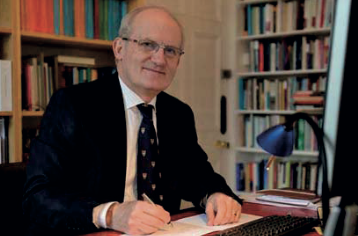
The crisis in our Church is not a crisis of faith, but the crisis of a particular paradigm of being Church. A good illustration can be found in the continuing debate on where the Church is to be found: is the Church to be found where there is a priest or where there are people responding to God's invitation in Christ to build up God's reign? If the first scenario is true, the Church will come to an end when the last priest dies. If the second scenario is right, the Church flourishes wherever people gather around the good news of God's ongoing project of creation and reconciliation.
The difficulty which we are facing today – not least in the British Isles – is that we are living in a transition period: between a dying model of Church and an emerging model of Church. Much of the clerical structure and the patriarchal and hierarchical organisation of our Church reflects the now dying model. However, few new structures are in place yet to nurture the emerging model. Nevertheless, as we have seen from the example of great Catholic parishes in America, new models of leadership and co-operation between pastors and laity are emerging.
Pope Francis has declared war on clericalism – not on clergy understood as serving the community. It remains a big challenge for us all, priests and laity alike, to get rid of clericalism in our heads while developing a healthy approach to the pastoral and leadership needs of the emerging model. Moreover, claims that the forms of clericalism associated with the old model of Church were in fact willed and revealed by God are meant to destroy any legitimate critique of outdated Church structures and to make it appear like sacrilege. We must free ourselves from this false guilt-trap: a no-longer-functioning model of Church does not get any better just because we blame God for it. Rather, God has empowered all of us to become active participants in God's emerging reign. It is time we recall the Vatican II reminder that we all share in the priesthood of all believers:
"Though they differ essentially and not only in degree, the common priesthood of the faithful and the ministerial or hierarchical priesthood are none the less ordered one to another; each in its own proper way shares in the one priesthood of Christ (Lumen Gentium II: 10)."
Nobody in the Church – old and new – argues, as far as I know, that leadership was not necessary. Rather, what is necessary is a conversation on which kind of leadership best supports the gospel's call on developing Christian communities, which kind of priesthood is required to promote the Gospel in today's world, and which approach restores the community to its holy vocation of becoming afresh the salt of the earth.
In this period of transition toward the emerging model of a truly participatory Church we lay-people (literally "people-people"!) must be clear about our co-responsibility for the Church. We ought not to hide behind the ineffectiveness of the old model of Church and say that because we disagree with that model we cannot participate in the different levels of Church work – local, regional, national and global. There is no excuse for passivity if we truly love Christ and long to follow him to the fullness of God's creative and reconciling presence in our midst. The new model of Church cannot emerge and flourish if we are not actively contributing to it and thus promoting it.
All kinds of conflicts may appear on the road toward a better Church. All kinds of vested interests will show their often ugly heads when challenged. But in the present period of transition, we are invited to remain faithful to God's love command, so forcefully confirmed by Jesus Christ. Loving God, our neighbours and ourselves is at the heart of any faithful response to God's invitation to be part of her community. Hence, this love command applies also in any struggle within our Church.
However, to love does not mean to like. Nobody, not even God, can force us to like the misuse and neglect of power and responsibility in the Church. Rather, the necessary struggle to transform our communities towards becoming participatory communities must be a struggle of love. And that means that we should never deny that others – priests, bishops and lay people alike – are in principle also are genuinely searching for true ways of being Church. What we must insist on – otherwise our love is not just – is that we all equally engage in an open-ended co-operation and in dialogue on all levels on what it means to be Church today and on which ministries and leadership functions are needed in the pilgrim Church. As a friend of mine recently put it to me, dialogue in the Church today is easier than before, since the Pope himself provides cover in that struggle.
It is true that not all priests and bishops have yet appreciated that the days of the old Church model with its hierarchical order and authoritarian self-understanding are definitely over. We must help them to see the light. That help can take many forms: prayer, faithful resilience, loving critical support, acts of liberating priests and bishops from their often self-imposed and painful isolation, inviting them back into the life of vibrant communities.
Back to the beginning: what do we expect from God in our complex situation of transition? What does God expect from us? How strong is our desire to transform our world in love, beginning always with ourselves? How much faith do we have in God's love and guidance? Do we take the priesthood of all believers seriously and stop hiding behind the facades of a crumbling model of Church?
Finally, let's remind ourselves that we do not believe only in the Church, but with the Church – and at times even without it and at times even in spite of it – in the transformative presence of God in our midst. This faith will free us to liberate the Church and its structures for an ever-more-adequate service in God's emerging reign.
Werner G. Jeanrond is Master of St Benet's Hall and Professor of Theology in the University of Oxford. He gave a talk based on this text to the Edinburgh Circle on February 15th 2017. A version of this text appeared in the February 2017 issue of Doctrine & Life, a publication by the Dominicans in Ireland.
Notes
- Pope Francis has frequently referred to this image. Cf., for example, his apostolic exhortation Amoris Laetitia (2016), 291. "The Church must accompany with attention and care the weakest of her children, who show signs of a wounded and troubled love….let us not forget that the Church's task is often like that of a field hospital."
- See Werner G Jeanrond, A Theology of Love, London/New York: T&T Clark, 2010.
- William E. Simon Jr., Great Catholic Parishes: a Living Mosaic: how Four Essential Practices Make Them Thrive, Notre Dame, IN: Ave Maria Press, 2016, $17.95 (paperback). Numbers in the text refer to pages of this book.
- For a thoughtful and challenging reflection on hospitality see Mona Siddiqui, Hospitality and Islam: Welcoming in God's Name, New Haven/London: Yale University Press, 2015.