A Manchester Newman Lecture exploring how the growing Muslim presence in Europe will transform European Christianity — challenging Christians to overcome prejudice, learn from Islam, and recover a more confident faith.
Manchester Newman Lecture, April 3rd 2017
It is not, of course, strictly accurate to speak of Islam as a new presence in modern Europe. There were isolated pockets of Muslims living in Europe long before the Second World War: think of the Balkan remnants of the Ottoman Empire, the Yemenis present in northern England from the 1860s or the oft-ignored Muslim Tatars of Poland who trace their origins all the way back to the fourteenth century. But post-war immigration, notably into the old colonial powers of France, Belgium, Britain and Holland, into Spain, close neighbour of North Africa that it is, and into the Germanophone lands, long-linked to the Turkish world, has created a highly diverse and substantial minority: Muslims and people of Muslim background now represent 7 per cent of the European population.
This proportion is likely, according to some forecasts, to rise to a quarter by the end of the century. Whilst hardly representing the kind of take-over repeatedly described in certain right-wing media outlets from across the Atlantic, this is nevertheless a substantial change in the religious landscape. What is surprising is how little interest is being taken by the Churches who should at this stage be wondering how European Christianity will be transformed by the presence of Islam.
Why Christians do not even want to think about Islam
Perhaps we should not be so surprised by this. On the one hand, the Churches feel beleaguered and under attack; European Christianity in the early twenty-first century is manifestly a fragile thing. Islam's capacity to hold on to its young people (especially its males) and to demand respect for its beliefs shows up a disquieting crisis in the transmission of Christian faith. Better to ignore that stark disparity lest it crystallise a troubling question.
On the other hand, Christian attitudes betray a deep-seated superiority complex; European Christians can give the impression of thinking they have resolved all the tensions involved in being religious in the modern world. To listen to some of their rhetoric, one would imagine they had long been blazing a trail that Muslims would be mad not to follow. How many times does one hear Catholics calling, without intended irony, for an Islamic Reformation (as if the turbulence and violence which afflict the Muslim world did not betoken an Islamic Reformation already well underway)?
This patronising disposition is built on the legacy of centuries of interreligious polemic. When Christians look at Islam, they have invariably done so in a downwards direction, through a lens shaped by assumptions it is surely now time to unlearn. The foundation stone, laid many centuries ago, was contempt for Muhammad. For centuries, he has been systematically portrayed as a false prophet and a knowing deceiver of his followers, a man who preached in bad faith. Islam itself was deemed early on to be a heretical form of Christianity and it came to be seen as a super-heresy combining all the accumulated errors of the past, from Arianism through Docetism to Pelagianism. One hears an echo of that logic in the complaints Christian commentators regularly make about Islam: that it lacks an analogue of the papacy, that its incorporation of reason into its juridical procedures is inadequate (the point of Pope Benedict XVI's Regensburg Lecture) or that it does not espouse a doctrine of justification by faith alone (a standard charge made by Protestant missionaries who object to what they see as Islam's commitment to a doctrine of salvation by works).
To overcome these obstacles, European Christians will need to learn three new habits: giving Muhammad, in the absence of evidence to the contrary, the benefit of the doubt by assuming his sincerity and good faith; trying to understand Islam as Muslims understand it, which is to say in its own right, in all its difference; and weaning themselves off a regrettable assumption of superiority.
Learning from Muslims?
With these moves made, it will rapidly dawn on the European Churches that having Muslims in large numbers as neighbours is bound to alter the questions that preoccupy them. Throughout modern times, Christian theology's principal interlocutor has been liberal secular modernity: it has grappled with the questions modernity provokes, trying to explain why God-talk is possible and meaningful, or how faith and science might not be mortal enemies. Within a few decades, Islam will, I suspect, have become an equal dialogue partner alongside secular modernity. It may even end up usurping its place.
Secular modernity has cauterised the Christian imagination; it bowdlerises religion, paring it down to the bare bones of ethics and "values" and sidelining dogma, ritual and practice. Enlightenment Christianity is a "respectable" kind of religion; its adherents are self-policing, knowing precisely what they may not say in public. Muslims, to posit a generalisation, are not so afflicted. They have no hesitation in affirming the reality of God, of angels and even of jinn, the fiery demons of Arabian mythology and who are mentioned in the Qur'an. Comparatively coy about the social utility of her faith, the European Church may well find herself liberated by the energy of unabashed Islamic theism to speak with a new confidence and simplicity about God. Lived with discernment and sound theological reflection, this could only be a great gift.
The evidence suggests that once Christians become familiar with Islam, they feel provoked by it. I use the word after the example of the French Islamicist, Louis Massignon (1883-1962) who was himself so moved by the hospitality of Muslims that he was converted by it to a deep personal engagement with Catholicism. The word "provocation" has a nice ambiguity to it. Some Christians will have felt provoked to anger by Muslim attitudes towards their faith. A mimetic rivalry can also arise, as high profile court cases have shown: if Muslims are going to be given prayer facilities or be allowed to wear certain indicators of religious belonging, Christians must assert their right to the same treatment.
But provocation can also be constructive. There are Christians who have been provoked by the prayerfulness and religious commitment of Muslims and have returned, like Massignon, to their own tradition with renewed vigour. It is not unusual for young Christian students in British university campuses to feel drawn to the prayer, ritual and even the fasting practices of their own tradition, incited, as it were, by the example of their Muslim counterparts. The strength of intra-Islamic solidarity can show up the weak social bonds of the secular West and of the Church present in it. Might it not inspire new forms of community life? And at a time when the ecological crisis is said to demand a "bold cultural revolution"1, the resistance Muslims have put up to the more negative aspects of modernity might inspire Christians to reflect on what a more radical Christianity might look like.
A New Apologetics
If Christians will find a certain solace in conversation with Muslims about the value of believing, they will also be challenged as to what they ought to believe. The prime bone of contention in religious terms between Islam and Christianity has always been the identity of Jesus Christ. Right from the outset, Islam has contested the Church's central doctrinal claims, notably those pertaining to the incarnation and the Trinity. We can see just how early the Christological question came to the fore by examining the Qur'anic inscriptions on the Dome of the Rock in Jerusalem (691 A.D.) which explicitly reject the divine sonship of Jesus and assert the Muslim view of him as a prophet of God. Islam sees itself as a final reiteration of an original revelation from which Christian belief about Jesus has deviated.
The challenge of a committed Christian faith lived out in a religious environment shaped by Islam is, therefore, to find a way to express and make credible the tenets of that faith which Muslims call into question. Do today's Christians know why the divinity of Jesus is so important to Christian faith? Can they readily articulate what Trinitarian theism involves without prematurely appealing to it as an unfathomable "mystery"? Decades of dialogue with secular modernity have weakened their sense of the importance or even rationality of such notions. European Islam will, I anticipate, provoke a desire to recover them and live radically by them. But it will require a solid theological and catechetical response from the Church first to prepare the faithful adequately.
Along with faith in Jesus Christ as Saviour and Redeemer of the world has gone a belief that there is something from which human beings require salvation in the first place. Augustinian theology clarified the matter decisively for the western Church by formulating the doctrine of Original Sin. Consequently, for modern people, including some believers, Augustine has become a by-word for misanthropy, a bleak pessimism about the human condition. Christian theology has responded by stressing the value and goodness of human agency and the hope for humanity which comes in salvation through Christ.
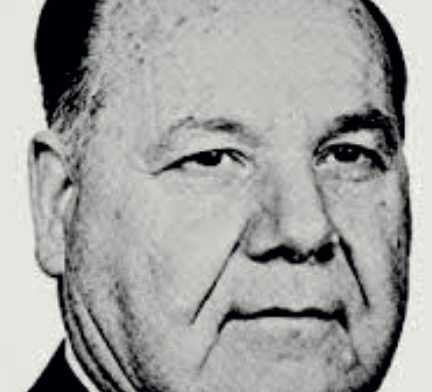
Ismail al-Faruqi
The response of Muslims to Christianity's vision of the brokenness of God's image in the human has been, surprisingly, not dissimilar to that of secular modernity. Sin, for Islam, is rebellion against God; but God is merciful and instantly dispenses the repentant sinner from guilt, just as, according to the Qur'an, He did for Adam in Eden. There is no abiding structural flaw from which human beings need to be extricated and hence no saviour, no sacrifice on Calvary, no atonement. Ismail al-Faruqi, a Palestinian intellectual who died in 1986, would speak disparagingly of Christian "peccatism" and "saviourism", an obsession with human dysfunction which could only breed despair. Islam, by contrast, offered a wholesome and optimistic take on the human condition.
The shock of the "new"
Islam has generally been marked by its conservativism and in modern times this tendency has intensified. It sees itself not as a new religion revealed to and spread by Muhammad but as the original monotheism taught by all the prophets since Adam. It is true that the Qur'an, the particular dispensation sent down to Muhammad in the Arabic language, has its own form and legal content but here too there is an absolute fidelity to its original data, the liturgy of the daily prayers, for instance, remaining unchanged in over 1400 years. Muslims look back to the years of the Prophet's activities as a golden age, a time when, as it were, the heavens were open and God's word was available in a direct way in which it is no longer. Muslims will think of Islam as divinely authored and therefore perfect.
True, there is an element of fallible human interpretation to be reckoned with. But the Qur'anic notion that Islam has been perfectly and totally revealed to the believers (Cf. Qur'an 5:3) goes deep; this is why Muslims flinch at the suggestion that Islam itself can be blamed for terrorism or other undesirable things. A strand of Islam dominant today instils a mistrust of anything "new" at all, any innovation which departs from the prophetic exemplar and the practice of the first three generations of Muslims; the Islamic philosophy and spirituality of previous ages find themselves harshly judged indeed.
Things look rather different to a Christian, whose point of departure is a "new covenant" and a "new creation" and whose central proclamation is a "secret hidden since the foundation of the world" (Matthew 13:35). This fundamental difference of stance leads inevitably to mutual incomprehension. The repeated insistence from some Christian quarters that Islam should update itself strikes many Muslims more as a sign of the problem inherent in Christianity than a solution for contemporary Islam. A distinctly conservative brand of Christianity may well grow in influence, as it is already doing in some parts of Africa where Muslims and Christians live in close quarters.
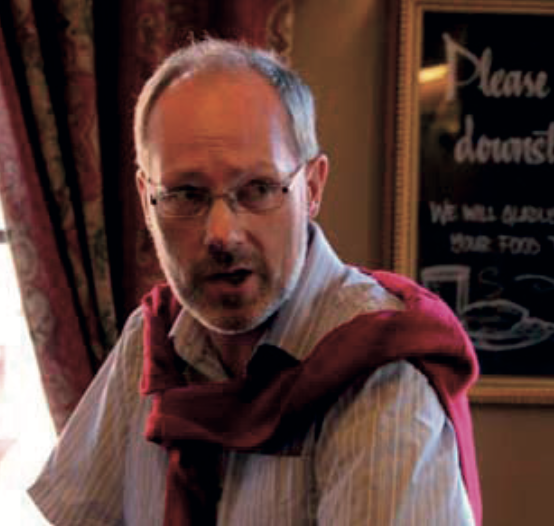
Damian Howard SJ
The Sacred Page
It is often said that Islam, unlike Christianity, is a religion of the book; in essence, it also understands original and authentic Christianity to be the same. Muslims believe that, just as the prophet Muhammad was given the Qur'an, so the prophet 'Isa (Jesus) was given the injil, a book revealed to him to guide human beings towards true religion and right conduct. Such bibliocentrism is almost matched by those Protestant fundamentalists whose estimation of the scriptural word comes close to a Muslim understanding of the Qur'an. But any valid Christian theology has to accord the book a status secondary to that of the revealed Word of God par excellence that is Jesus Christ. The book serves to mediate the One Who is the Word made flesh.
That said, one must concede that mainstream Catholicism does not always give the Bible its due. Study of the Bible by believers can be downplayed in favour of the teaching of the Magisterium and the reception of the sacraments. Liberal Protestantism has also found a way to distance itself from the power of the revealed text by stressing its historical contextualisation and so loosening its grip on the minds of the faithful. In all the mainstream Churches, a vague affirmation of human reason prevails which leaves ordinary believers unsure as to why they should bother reading the Bible. It is very different for Muslims for whom every letter of the Qur'an matters greatly and for whom investigation of the possible human generation of the text is not an option. It is not hard to foresee this disjunction having consequences, not least through the attempts of Muslims to engage Christians in conversation on this topic with a view to inviting them to enter Islam. The Bible really is not like the Qur'an and trying to pretend that it is just misplaces a profoundly important theological emphasis.
Politics and Violence
Muslims, it is often said, make no separation between Church and State. This statement is badly in need of considerable nuance, not least because Islam has no "Church". Christian commentators wax lyrical about how Islam's resistance to the secular state is a demonstration of its obscurantism and latent violence. Yet, the historical record shows that Muslims have not lived perpetually and exclusively under theocratic regimes. It is true that they tend to think that God's will is pertinent to every aspect of life. For this reason, they strongly resist the demand to cordon off the whole of common and public life from the purview of God's purposes, as secular modernity requires (and as not a few modern Christians seem to think the Gospel calls them to do).
None of which is to deny that Islam does also bear an in-built propensity for state enforcement of religious law which is problematic for Christians. But there is space also, surely, to re-examine today's allegedly Christian instinct for faith to be apolitical; political non-engagement is a very strange position for an incarnational religion to take. If there is one area of deeply entrenched confusion in modern Christianity it surely lies in its haunting by the lingering spirit of a liberal Protestantism which prevents so many Christians from even contemplating the idea that their faith might call them to resist the ambient culture.
I think it likely that the encounter with Islam will encourage Christians to explore and commit themselves to a more politically engaged stance. In this regard, interest in Catholic Social Teaching is likely to gain in importance, but it might find itself challenged to explain itself vis-à-vis its indebtedness to scriptural and traditional sources, for Muslims expect religious guidance to have its roots in revealed truth and therefore to have direct scriptural warrant. They are less impressed with the authority claims of a magisterium made up of human beings nor with the speculative or empirical insights of this or that philosophical school.
European Muslims have suffered greatly the association fixed in people's minds between their religion and violence. Propagated by medieval Christian polemicists who sought to stress Islam's worldly as opposed to divine origins and reinforced by several decades of terrorist violence perpetrated in the name of Islam, this association has launched a thousand academic (and pseudo-academic) publications and created a new field of research, "religion and violence", so that now all believers have come to share in the opprobrium heaped on Muslims.
Some elucidation of the place of violence in Christian theology may be helpful in deconstructing this overly stark opposition. The most significant difference between Islam and Christianity in this regard is that the latter espouses an irenic vision of a Messianic era in which even the violence hard-wired into creation will be extinguished:
In that day the wolf and the lamb will live together; the leopard will lie down with the baby goat. The calf and the yearling will be safe with the lion, and a little child will lead them all. (Isaiah 11:6)
This vision has been made real in Jesus Christ and in the eschatological Kingdom of God which He announced, and which Christians believe to be even now breaking into an old creation marked by sin and violence. This anticipation of the eschatological Kingdom means that God's peace can be tasted in the here and now even though it has not yet been fully brought about.
Christians and pacifism
This tension between the "already" and the "not yet" means that Christians have not generally embraced pacifism even if there is a palpable tug on their hearts in that direction. Instead, they have long recognised the need for the coercive power of the state to support the promotion of the social good, be it in the service of just warfare or the legitimate punishment of criminals. Notwithstanding, Jesus' non-violent career represents a certain ideal which serves to make Christians uncomfortable with coercive force. Augustine's theology of the two cities captures this ambivalence about state power which is shown up in all its mundane dreariness by the radiant light of the City of God3.
Muslim states have tended to deploy violence in broadly similar ways to western governments, be they Church-backed or secular. They have used corporal and capital punishment for crimes which threaten the social order. They have unleashed jihad, armed state violence, against a foreign aggressor as a means of self-defence (sometimes, it must be admitted, so broadly construed that it has been positively aggressive itself). And there has been a strong tendency to assume that the enemies of Islam must also be the enemies of God, just as modern secular states see their foes as enemies of civilised liberalism.
Violence, in all this, is a deterrent, an expression of disapproval of certain crimes and a kind of restitution. It is an essential tool for the promotion of justice in a world in which some human beings and some states choose to exercise their freedom in flagrant disregard for the demands of justice. Those who insist, even with good intentions, that "Islam is a religion of peace" are rather missing the point; Islam sees itself as a religion of justice.
No-one can deny that there is a grave problem in our age with the use of violence by certain Muslims. What is in question is whether there is a gulf that separates Christianity from Islam in each religion's attitude to violence. There is a difference, to be sure, but it does not amount to an absolute opposition. Whatever the issues, be they jihad or capital punishment, and however serious they are, western Christian self-absolution in the name of a purported evangelical aversion to violence is sham. Christian citizens of western countries collude, by silence or disinterest, in the violence meted out by their governments, whether that is the capital punishment and mass incarceration of young black men practiced in the USA or drone warfare in Afghanistan.
One need not be a radical leftist to point out that in recent years western weapons have killed and maimed many, many times more people than have even terrorists operating under so-called Islamic inspiration. The West has a problem with violence; Christians, if their protest against other manifestations of religious terrorism are to be authentic, must face it and find a way to witness to their hope in true evangelical peace.
Changing places
Interreligious conversion is one of the more hidden but nonetheless potent ways in which religions impact on each other. It is always a painful matter for those who continue to adhere to the religion being rejected, and dealing with the emotional fall-out of such episodes is bound to test the quality of relationships between communities. Conversion between Islam and Christianity in European countries is already taking place. One hears more about conversions to Islam in part because they can be spoken about publically without risk to life. Anecdotal evidence also suggests that it is probably because there simply are more conversions in that direction, though hard figures are not easy to come by. That said, conversions from Islam, especially among Turks and Iranians, seem to be on the rise. Such a conversion is only feasible if the individual concerned lives far from family and friends and so scandal and reprisals can be avoided. Among tight-knit communities, such as Pakistanis in Bradford or Algerians in Marseille, it is far less likely to occur.
Converts in general are usually known both for their enthusiasm for their new religion and their disparagement of the old. But this should not be exaggerated. Some of the more dialogically minded Muslims in the UK and US are converts, familiar with western culture and ways of thinking. Muslims who convert to Christianity often do so because of what they experience as the oppressive ambiance brought on membership of an ethnic minority with a strong authority system. Turning to Christ can be a bid for a new kind of personal freedom.
Epilogue
One would like to end by appealing to European Christians to give these matters some thought so as to prepare for a challenging future. The truth is that such pleas always fall on deaf ears. There may be wisdom in selective deafness. I have sketched a future pattern of interrelationships based to some extent on past experience of Christian-Muslim cohabitation and also on a perhaps rather formulaic grasp of how the two religions function as belief systems. Yet the European Churches' encounter with Islam is more likely to be a series of surprises. It is possible, one must admit, that the future will be surprisingly worse than I have suggested; as I write, reports are coming in of the death of a Catholic priest in Normandy at the hands of Muslim terrorists. No-one can hope that such atrocities will be anything other than isolated aberrations in a shared future. Were they to be otherwise then my speculations will strike a future reader as bizarrely naïve.
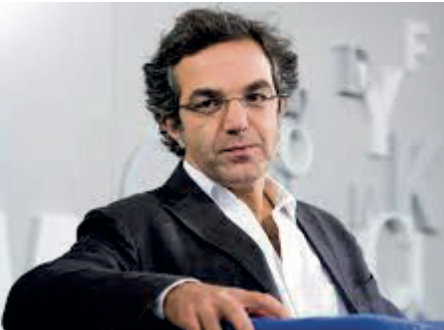
Navid Kermani
And yet, if you know where to look, surprises of a more positive order abound. I will leave you with one that has moved me greatly. On Sunday, October 18th, 2015 a Muslim intellectual, Navid Kermani, received the Peace Prize of the German Publishers' Association. He chose to frame a most remarkable acceptance speech by telling the story of two Christian priests whose witness had inspired him: Fathers Jacques Mourad and Paolo Dall'Oglio SJ. Fr Jacques is a Syriac-Catholic priest who was abducted in May 2015 from Qaryatain, Syria by Islamic State terrorists; Fr Paolo is an Italian Jesuit who set up a monastery in Syria called Deir Mar Musa dedicated to Christian-Muslim friendship. Openly critical of the Syrian regime, Fr Paolo tried to mediate with ISIL in July 2013 but was kidnapped by the group and his fate remains uncertain. Kermani put his admiration for both men on record and invited Muslims to take heart from their generosity towards the faith of Muslims:
A few days before his abduction, when the group that pretends to represent Islam and claims to apply the law of the Quran was already an immediate physical danger to him and his parish, Father Jacques still insisted that these terrorists were distorting the true face of Islam. I would take issue with any Muslim whose only response to the phenomenon of the Islamic State was the worn-out phrase that their violence has nothing to do with Islam. But a Christian, a Christian priest who could expect to be expelled, humiliated, abducted or killed by followers of another faith, yet still insisted on defending that faith – such a man of God displays a magnanimity that I have encountered nowhere else, except in the lives of the saints4.
There is something in the magnanimity of Kermani himself from which European Christians might in turn take their cue. If Christians and Muslims are to find a way beyond the sterile and predictable dynamics of mimetic rivalry then we will need to find something that interrupts them. Kermani offers a crucial insight:
self-love [by which he means the love Muslims have for Islam] must be a struggling, doubting, constantly questioning love if it is to avoid falling prey to narcissism, self-praise, self-satisfaction. How true that is of Islam today! Any Muslim who does not struggle with it, does not doubt it and does not critically question it does not love Islam.
An equivalent Christian "self-love", it must be admitted, is no less prevalent and certainly no less in need of struggle and interrogation. Perhaps the disarming charity of these two holy priests, both of whom found themselves at the very heart of darkness, might shine a light to enlighten their brothers and sisters in the Old Continent.
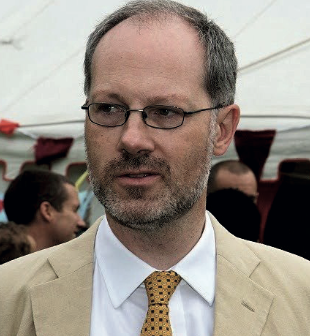
Damian Howard is a lecturer in Christian-Muslim studies at the University of London and a resident of the Hurtado Centre, a Jesuit social institution in East London.
References
- Laudato Si' 114
- Cf. Rowan Williams, Arius: Heresy and Tradition, Second Edition, London: SCM, 2001
- Augustine, City of God, abridged and translated by J.W.C. Wand, London: Oxford University Press, 1963.
- Navid Kermani's speech at his reception of the Friedenspreis des Deutschen Buchhandels is available online at http://www.friedenspreis-des-deutschen-buchhandels.de/1038404/