A reflection on Rose Macaulay's last and most famous novel, The Towers of Trebizond — a story of guilt, remorse, estrangement and exile, and what the shining city really stands for.
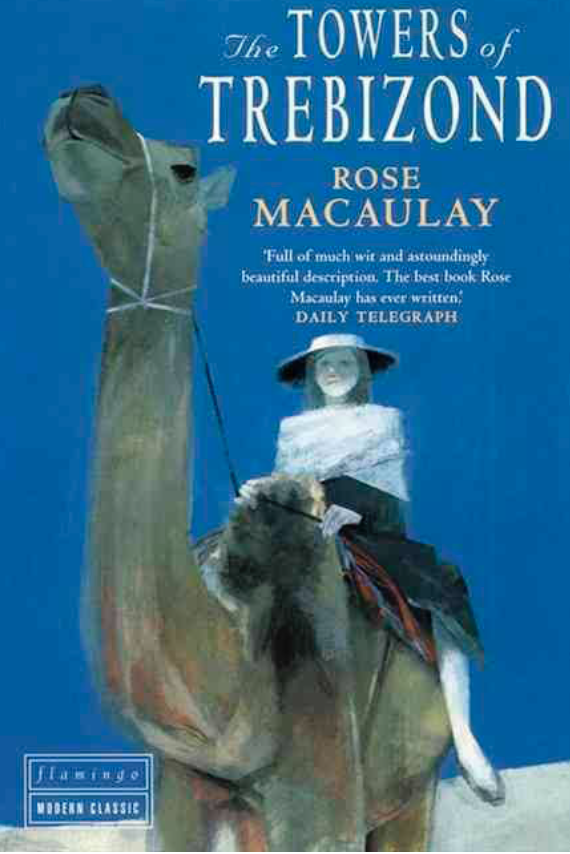
Dame Rose Macaulay was very well known in her lifetime as a novelist, essayist, travel writer and broadcaster but she seems to have faded from view in more recent times. It may then be appropriate to look on this page at her last and most famous novel, The Towers of Trebizond. The book is, to some extent, a satire on Cold War paranoia and colonial attitudes but it is also about guilt, remorse, estrangement and exile. It is also, in parts, ridiculously funny.
One of the characters is Laurie, who accompanies her Aunt Dot (who famously climbed down from her camel after High Mass) and a very High Anglican priest, Father Chantry Pigg, on a sea voyage through the Black Sea to the Turkish port of Trebizond, now often known as Trabzon. Laurie is in an adulterous relationship which she knows is wrong but cannot leave.
Trebizond actually stands for a vision:
Then, between sleeping and waking, there rose before me a vision of Trebizond: not Trebizond as I had seen it, but the Trebizond of the world's dreams, of my own dreams, shining towers and domes shimmering on a far horizon, yet close at hand, luminously enspelled in the most fantastic unreality, yet the only reality, a walled and gated city, magic and mystical, standing beyond my reach yet I had to be inside, an alien wanderer yet at home, held in the magical enchantment; and at its heart, at the secret heart of the city and the legend and the glory in which I was caught and held, there was some pattern that I could not unravel, some hard core that I could not make my own, and, seeing the pattern and the hard core enshrined within the walls, I turned back from the city and stood outside it, expelled in mortal grief.
What is this "hard core?" What does it consist of? Aunt Dot supplies an answer when she tells Laurie: "I think my dear, that the Church used once to be an opiate to you, like that Trebizond enchanter's potion; a kind of euphoric drug". The pattern and the hard core is simply the everyday Christian life, in Aunt Dot's words: "do this this, do that, love your friends and like your neighbours".
Laurie is forever outside the city. As she says at the very end of the book, when contemplating Trebizond: "But at the city's heart lie the pattern and the hard core, and these I can never make my own: they are too far outside my own range".
It is tempting to think that we are not Laurie: that we are inside Trebizond. It is also tempting to think that we are not like her in viewing Christianity as a kind of escapism. But is there at least a touch of Laurie in most of us at times? If so, then reading this once-famous novel may jolt us out of our complacency.
Anne and John Duddington