A personal reflection on the contradictions of being gay and Catholic, from writer and broadcaster Mark Dowd, delivered to the Manchester and North Cheshire Circle in July 2017.
What a weird and contradictory relationship this is. It's like having a mother who feeds you delicious food one moment and then deftly slaps you the next – such are the dynamics of this gay man's relationship with the Roman Catholic Church. And, of course, we must distinguish between the narrow "Church" (hierarchy, Magisterium and source of much of that "slapping") and the wider Church: the people of God on pilgrimage, including all those friends and family down the years who have helped sustain and build me to the curious and life-affirming person I feel I am today aged fifty-four years old.
It was a religious order that provided the incubator for the coming-to-age of my sexual identity and awareness. Aged thirteen I was convinced God was calling me to be a teaching brother of St John the Baptist de la Salle and I was whisked off to a junior seminary in Berkshire. A post-puberty volcano erupted, so much so that my mother and father had to confront me one morning in the summer holidays with the fact that I had been "talking about Duncan" in my sleep. In 1974 I was sent off to a doctor, but neither he nor the incessant prayers of my parents delivered the cure.
I later became a Dominican friar for a couple of years, and when I came clean with the prior about my proclivities I was greeted with a warm and human smile. "Put it this way," he said. "I don't think you'll be the only one." He was right. Religious life was a safe and welcoming space to be who I was. My vocation as a preacher didn't last, but once more the official structures of the Church played a huge part in the next chapter of my life. Over dinner in the priory I met and fell in love with a former Dominican. Michael and I lived together for nine years. I can thank the Catholic Church for this introduction and the fact that we are still very firm and dedicated friends.
The Church at the official level has been essentially reactive about same sex love. There was next to nothing from Rome until the 1970s when gay liberation and the Stonewall Riots in New York placed the whole LGBT identity under the spotlight. Then in the 1980s, when AIDS began devastating thousands of lives, Cardinal Joseph Ratzinger published his now infamous pastoral letter, Homosexualitatis Problema (1986). There have been acres of newsprint written on this missive from the present Pope Emeritus, and one frequently finds an interpretation that gives the impression that the Church is wanting to "love the sinner and hate the sin"…i.e being gay is OK as long as you don't act on it. But a closer inspection of this text, still the longest and most detailed one on the subject from Rome, tells a different story.
Section Three spells out it clearly enough:
"Although the particular inclination of the homosexual person is not a sin, it is a more or less strong tendency ordered toward an intrinsic moral evil; and thus the inclination itself must be seen as an objective disorder."
The ranks of the clergy
So forget about all this business of loving the sinner and hating the sin, even being gay is a disordered inclination. For years that set me thinking. Priests, in the sacrifice of the Mass, are acting in persona Christi, yet I knew full well from my experiences that gay men were vastly over-represented among the ranks of the clergy. I found this to be hugely ironic. The very people whose sexuality the Vatican was setting its stall against were the people who were keeping the show on the road.
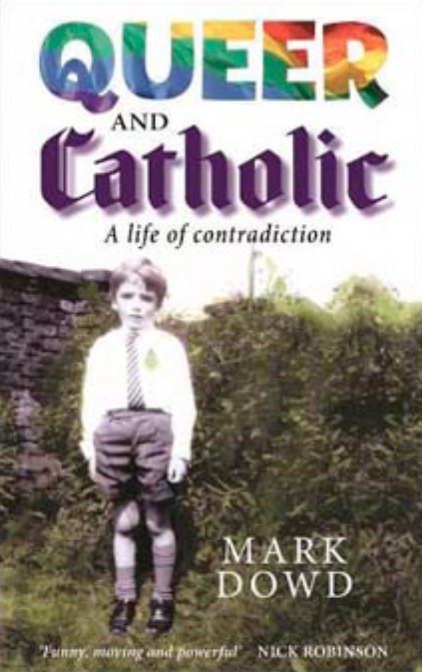
As I have often commented: if the Vegetarian Society found out more than half its members were bunking off for T-bone steak at lunchtimes it would have an identity crisis! As a broadcast journalist this struck me as a worthwhile area of inquiry, so in 2001 we transmitted Queer and Catholic on Channel Four TV, a ninety-minute investigation which, for the first time, contained seminary rectors speaking candidly about gay men in the priesthood.
The star interviewees were a couple of former students from the English College in Rome who had fallen in love with one another. They spoke candidly about a weird and twisted phenomenon: inverted homophobia. The very people who were the most condemnatory about same-sex attraction in college were the same ones that were known to be strolling around in Rome's parks and engaging in anonymous sexual liaisons. "This was not deemed to be breaking the promise of celibacy, as many students defined celibacy as 'not falling in love'," one of them told me. It is shuddering to think that many of these young men would go on to be priests and bishops in the Church at a later point in their lives.
Goodness of folk
The very parents who had whisked me off for a magical cure, of course, had to bear witness to all this – and they came through it with flying colours. Their "cure," if you will, had been a simple thing: namely to be exposed to the simple humanity and goodness of folk. As my mother said to me: "Well, love, it's just like being left-handed isn't it?" When I reminded her that such people were once burned at the stake for being agents of the devil (ever stopped to think where the word "sinister" comes from? In Latin sinistra means "left" – and historically the Devil has been depicted as left-handed) it caused her to pause. "Yes but we've moved on."
My mother and father moved on by meeting my partners and, in my mother's case, attending conferences of Quest, a UK-based group for LGBT Catholics. "So much more fun than the Union of Catholic Mothers," she used to say. I do wish we had adopted that as a motto for our T-shirts.
So there is a strange paradox: the very agency which oppresses you with its fierce and insensitive language of "disorder" is also the one that has helped to fashion your own sexual identity, make you feel safe and secure about discussing same-sex attraction and has even fashioned you with a long lasting relationship. We've seen significant moves in the "mood music" of the Church since Pope Francis' election. His now-famous remarks on the plane journey back from South America in 2013, "Who am I to judge a man if he is gay?", have been heralded as a key development. A pope, for the first time in history, uses the "G" word and not the medical- and clinical-sounding "homosexual." This is a man who answers letters from LGBT individuals and allows the fact to become part of the public discourse.
Divisions are rendered nonsense
All of this is welcome. But our standard as Christians must always be Jesus. One simply cannot imagine Our Lord singling out LGBT people for discriminatory treatment. Not a word was said on all four gospel accounts and St Paul tells us in Romans that in Jesus there can be no such thing as male and female, Jew and Greek, free man and slave. All divisions are rendered nonsense faced with the saving grace of his Death and Resurrection.
So I look forward to a world where talk of "disorder" and "doing violence to children" by same-sex couples engaging in adoption becomes an embarrassing anachronism. And that is why I stay and take my place at the altar, so that my presence can be counted and my story told. For how else can the rest of the Body of Christ in the church be transformed into healing acceptance and love unless they know who we are? There can be no pointing of fingers and hectoring and such gains are not made by forcing placards down the throat. "They'll know we are Christians by our love", as we used to sing.
Slow but inevitable
Will they? If and when they do, the worm that has been turning, will continue its slow and inevitable process until the day that LGBT is about as relevant as the colour of one's eyes. That day, sadly, is still some way away.
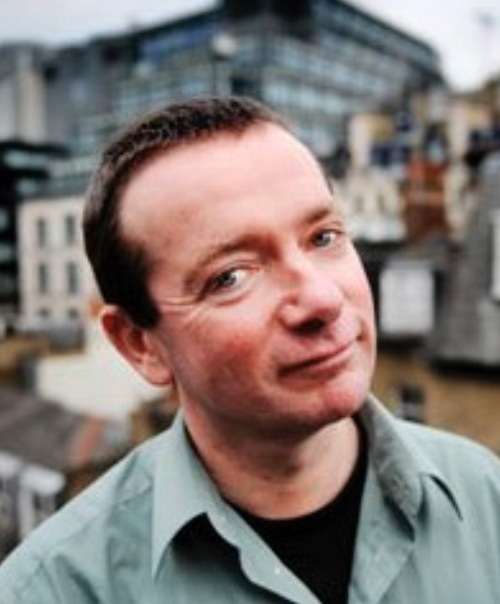
Mark Dowd is a writer and broadcaster. He talked to the Manchester and North Cheshire Circle in July 2017. His book Queer and Catholic is to be published later this month (September) by Darton, Longman and Todd.