A talk delivered after the Newman AGM 2017 exploring Pope Francis's inductive methodology, his teachings on poverty, ecology, and care for our common home.
Extracts from The Guardian's Editorial: September 1st, 2016:
In August "the International Geological Conference declared that we should recognise that we entered a new geological epoch, The Anthropocene, in around 1950. The changes we have made to the planet are now irreversible and their effects will continue for millennia to come. None the less, this may prove to be the shortest of all geological epochs, since there is no guarantee that humans, who made it, will survive the results of their own activity."
Climate change is a global problem, and it can only be countered by some kind of global consciousness and a sense of the common good that embraces the whole of humanity. This is where the efforts of the world religions become important. Perhaps, then, we need the help of people who are clear about the distinction between humans and gods.
Enter Pope Francis, who has swung the weight of his papacy behind the environmental movement in an unprecedented way. He is not alone. All of the organised world religions now have a strong environmental consciousness. As the Pope puts it: "Human beings are deeply connected with all of Creation. When we mistreat Nature we also mistreat human beings." The difficulty is to link such sentiments with practical action, and this is what his latest initiative imaginatively suggests.
Care for the environment is henceforth to be considered by faithful Catholics as a "work of mercy" – what the outside world would call a charitable act. They are called to "a grateful contemplation of God's world" as a spiritual discipline, but also to the small, slightly inconvenient gestures like recycling, using public transport, or even just turning off unneeded lights. All of these, he says, are to be understood as "simple daily gestures which break with the logic of violence, exploitation and selfishness"; and while the world undoubtedly needs huge and dramatic actions to break the cycle of exploitation and climate change, it also needs ordinary people to play their part with just such simple acts."
It is a good editorial because it recognises implicitly the methodology of Pope Francis which is inductive, bottom up and interdisciplinary. It is an inclusive method which draws on the approach of See, Judge and Act familiar to many of us from the Cardijn1 movements and adopted by the Church since John XXIII embraced and promoted it in Mater et Magister (1959, 236). This is a shift from seeing things "in terms of the eternal, the immutable, the unchanging" instead of embracing an historical consciousness that "gives more importance to the particular, the contingent, the historical and the individual"2. It is Newman's approach in his "On Consulting the Faithful in Matters of Doctrine".
Church teaching
The advantage is that it puts peoples' experience at the heart of Church teaching. So rather than starting from documents and principles it starts from the experience of the poor and their oppression and need for liberation. It has been used consistently by the Latin American bishops since the great conferences of CELAM3 at Medellin 1968, Puebla 1979 and Aparecida in 2007 where (curiously) the editor of the final statement was none other than Jorge Mario Bergoglio. In it he encouraged, as he does in Evangelii Gaudium, the way or path of discipleship. Disciples of Christ are influenced by the values and vision of the Kingdom of God which they are called to realise in historical and cultural contexts in which they (we) live (Aparecida 20-32).
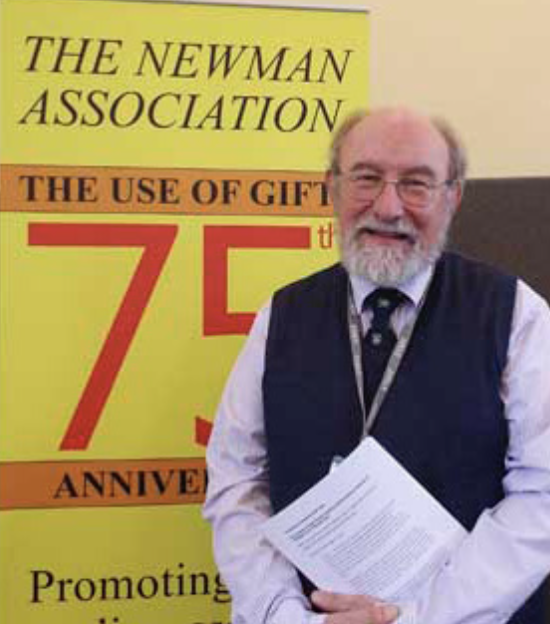
David McLoughlin
The Aparecida document has three main sections:
Part One: The Life of Our People Today
Part Two: The Life of Jesus Christ in Missionary Disciples
Part Three: The Life of Jesus Christ for Our Peoples.
This is a way of engagement with contemporary realities: with the sciences, with local cultures and with economic, political and social systems. But at the heart is the call to a preferential option for the poor, for the liberation and promotion of the poor and "for enabling them to be fully part of society" 4.
In Evangelii Gaudium he has argued that the option for the poor is fundamental to the life of each Christian and of the whole Church – he would call it the criterion of Christian authenticity – but he argues it is also fundamental for human development in general (EG 193-216). So for Francis spiritual conversion implies seeking social justice and concrete solutions in the political and economic sphere where Christians need to be involved with some urgency in fruitful dialogue with all who are concerned in the future of our planet. That isn't quite what Sister Gabriel taught me at primary school! Why did God make you? God made me to know him, love him and serve him in this world, and to be happy with him forever in the next!
In Evangelii Gaudium his underlying concern was for the poor and poverty (EG 52, 60-67 and chapter 4). He was called back to this by his weekly visits to the Villas Miserias, the slum towns around Buenos Aires and by what he learned from the Curas Villeros, the slum priests who work there. And what he learned was of the depth of faith of such people and the importance of religiosidad popular – the pilgrimages, processions and devotions to the saints, and of the quality of generosity of those who lived in little, open, homes with open tables – all rather different to the locked and gated apartments of the big city.
In Laudato Si' he returns to the poor but here, by extension, to the poor or hurting, planet. He has personal experience of the appalling scale of poverty in the Southern hemisphere, and while acknowledging the positive consequences of globalisation from the perspective of the periphery of our world he can see better than we its sometimes devastating consequences for millions of people. He describes the globalisation of indifference which can reduce whole populations to trash and garbage (EG 53) and he calls this into question so that we might better hear the cry of the poor.
His programme of a poor church for the poor is primarily an ecclesial, pastoral and spiritual programme; but already in EG and, more specifically, in Laudato Si' he points out that massive poverty and degradation is not simply inevitable but is the result of an economic approach that tends to focus only on the individual and a myth of continuous progress and meanwhile ignores social and cultural bonds (EG 67).
Planetary degradation
The social crisis we face of extreme mass poverty and planetary degradation is an anthropological crisis. The human person no longer stands at its centre, but rather the focus is on money and an unbridled consumerism which reduces all of us to producers and consumers. We are what we can make or buy. If we can't do either we have no value. In both teachings he wants us to join him in saying "no" to unbridled consumerism; "no" to social inequality which incites violence; and "no" to the widespread indifference to the consequences for our planet, our fellow-creatures and life-forms of industry; and "no" to work driven solely to meet such narrow, market-driven forces. He speaks of this as an economy that kills, that kills life in so many forms.
Pope Francis is particularly critical of the trickle-down theory of economics which can be traced back to Adam Smith (1723-1790) but during the Reagan administration developed via the theoretical writings of Milton Friedman. Then came monetarism, the approach adopted by the USA and by Mrs Thatcher's government in the UK, leading to the deregulation of markets internationally.
Francis has recognised that the alleviation of poverty cannot come simply through charity. There are structural causes of poverty that require more holistic approaches. Drawing on Catholic Social Teaching, Francis believes that the goods of the world belong to all human beings (EG 190, 192). He cites St John Crysostom: "Not to share one's wealth with the poor is to steal from them and to take away their livelihood" (EG 57). All have a right to share in the fruits of the earth; through their work all are called to be active co-creators. Often we have much to learn from the poorest of our brothers and sisters who have learned to walk lightly on the earth and to use its gifts sparingly and with respect. The destruction of such cultures is a loss to the planet and a loss of their identity.
From the angle of solidarity he addresses migration, the flight and the reception of refugees: hospitality to the stranger, the powerless and the persecuted is at the core of revelation from Genesis to the Gospels and the Acts. Francis's first trip as Pope was to Lampedusa on July 8th, 2013, where the wretchedness of refugees and the failure of the European Community was writ large.
Of course, he is not proposing a simple, alternative economics but he is calling us to construct a new culture of life and a new lifestyle which is defined not by having but by giving and sharing (EG 57). He is calling us to decide what is truly essential and necessary for all, for the Common Good. Except that the common good must now include our planet and the life forms that share it with us. We require a culture of life which includes a new attitude – caring and reverent – to creation, and so an active concern alongside all those others who are facing the ecological crisis of our time.
Our Common Home
The subtitle of Laudato Si' is On care for our common home. Oikos is the Greek for home, oikonomia is the way we organise the home, oikologia is about the logos or life that inhabits the home, and oikumene is the whole world in which we live and flourish. Our common home, which Pope Francis says is "burdened and laid waste and is among the most abandoned and maltreated of our poor so that it groans in travail" (LS), needs good administration (economics), fruitful connections between the various webs of life (ecology) and dialogue and respect among its inhabitants (ecumenism).
He calls for a new politics that "must not be subject to the economy" (LS 189). In order to overcome the myth of progress (LS 60) and find "new models of global development" (LS 194) able to produce wealth – while not destroying the world – we need creative business people but also politicians who are:
- capable of reforming and co-ordinating institutions, promoting best practice and overcoming bureaucratic inertia (LS 181)
- farsighted to see beyond immediate needs (LS 197)
- wise enough to understand global and local issue (LS 180)
- brave enough to challenge economic forces and efficiency-driven technology
- honest enough to promote transparent processes to all stakeholders involved in political/economic matters that affect people and the planet
- determined enough to break the logic of corruption
- open enough to seek honest dialogue and international enforceable agreements
All of this, but especially the inductive, bottom-up methodology, underpins and structures the whole of Laudato Si'. His approach has certain novel contributions – for instance, the appeal to a scientific consensus. The seeing is informed by the best science available. It is done in dialogue with other churches, especially with his friend Patriarch Bartholomew of the Orthodox Church; so it is ecumenical, and it draws on the revelation of God's vision in the Scriptures, which opens up dialogue with the Jews, and with other Christian groups and denominations.
The seeing focuses on the growing inequality and extremes of poverty, on the millions who have no access to sufficient food or clean water, or to safe and sustainable shelter, or to dignified work. It focuses on the huge planetary waves of migration and the prospect, with global warming and the shortages of water, that these will grow exponentially. It sees that climate change inevitably hits the poorest hardest, through extreme floods, storms or droughts.
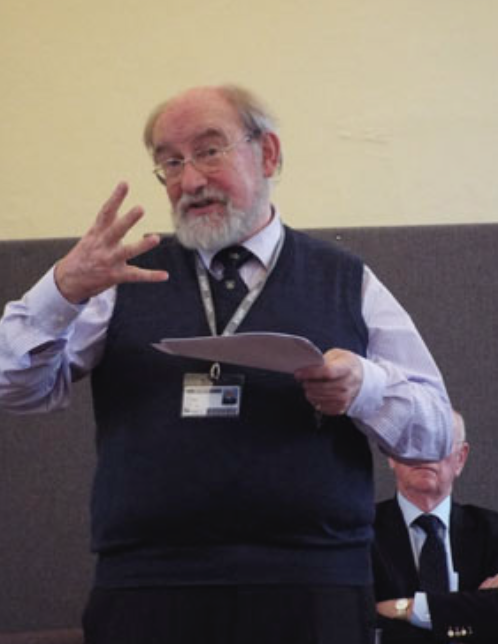
David McLoughlin
Underpinning all of this is a renewed Christian spirituality based on "an alternative understanding of the quality of life, capable of deep enjoyment free of the obsession with consumption" and so encouraging a "prophetic and contemplative lifestyle" (LS 222). Such a spirituality holds together personal and social love (LS 231) favouring "sobriety and humility" and the personal level (LS 224), while enabling the capacity for living together in communion (LS 228). There are elements of Thérèse of Lisieux's "little way of love", starting from the love of individual relationships expressed in "any small gestures which sow peace and friendship" and so countering violence, exploitation and selfishness (LS 231).
But this spirituality also extends to civic and political love to build a better world and so influencing, for the better, the macro-relationships: the social, economic and political relationships for the sake of building the common good and a culture of care which would permeate all of society (LS 231). Francis says social love is part of our spirituality. It is an exercise of charity that sanctifies us.
At the heart of this spirituality is the encounter with Jesus Christ as redeemer of humanity and of Creation. The poor, and indeed the world, cry out for help. What is required is an ecological conversion (LS 216) recognising our errors, sins, faults and failures leading to true repentance and to a desire to change, so as to be truly reconciled with others, with creation, and with the Creator.
Loving awareness
This will involve a conversion of attitude, from indifference to loving awareness, from utilitarianism to gratuitousness, from selfishness to generosity, from self-advantage to solidarity (LS 220). Isolated individual conversion is not enough: "Social problems must be addressed by community networks and not simply by the sum of individual good deeds" (LS 219).
An unresolved issue, however, is gender. Although Francis challenges ideas of dominion over creation and over the poor and the frail, and the dominion of technocratic structures over communities and individuals, he does not engage with the dominion of men over women. Despite inviting every single person on the planet to revisit the idea of progress, with reference to the option for the poor, he omits the idea of gender equality.
Equal representation
Yet we know from the latest United Nations statistics5 that the majority of the world's 1 billion poorest people are women and girls. Among illiterate people over 15 years old 65 per cent are women6. One in three women on the planet suffer from violence or abuse: they are the ones who suffer the most in armed conflicts and natural disasters. Also, Laudato Si' unprecedentedly quotes from bishops' conferences around the world on issues around ecology and development but it omits the 1991 document from the Zambian Bishops' Conference You Shall be My Witnesses which highlights that women in Zambia are not only the backbone of their families but play major roles in the economy, especially in rural areas. However, in both family life and the economy the same women are exploited and oppressed – an injustice which the bishops say "cries out to our Creator".
And so the bishops called on the government to take stronger action and promote the rightful development of women, in particular for them to be equally represented at decision-making levels. The bishops further argued that the Church must also take action to redress injustices suffered by women in Church, state and family life. So why has Pope Francis not linked the cry of women witnessed by the Zambian bishops to the cry of the poor and the cry of the Earth?
Laudato Si' appeals for a redefinition of our relationships with each other, with the planet and with God. In LS 240: "The human person grows more, matures more and is sanctified more to the extent that he or she enters into relationships, going out to live in communion with God, with others and with all creatures. In this way, they make their own that Trinitarian dynamism which God imprinted in them when they were created." In the end Pope Francis speaks to what we could be, and not what we have been or are.
The encyclical ends uniquely with two prayers, one of which can be said by Christians and another which could be said by all those who believe that God is the all-powerful creator.
This is a partial text of the talk delivered to Newman members after the annual general meeting in Birmingham Oratory on June 10th. David McLoughlin is a Senior Lecturer in Theology at the Newman University, Birmingham.
Notes
1 Cardinal Joseph Cardijn, a Belgian, was the founder of the Young Christian Workers in 1924.
2 Curran, C. Theology Today 1988, 427.
3 The Consejo Episcopal Latinamericano, or the Conference of Latin American Bishops.
4 EG 193-216
5 The World's Women, 2015
6 UNESCO International Literacy Data, 2014