Elaine Graham, Grosvenor Research Professor at the University of Chester, examines the place of religion in contemporary Britain and calls for a renewed apologetics — not as a weapon of conversion, but as an expression of hospitality and a gesture of solidarity.
By Elaine Graham, the Grosvenor Research Professor at the University of Chester
Religion in Britain today: resurgence, decline, resistance
Some brief cameos from recent news items:
Communities of faith
Following the terrible fire at Grenfell Tower in Kensington in London, criticism of the local council and statutory authorities was rife. As the local community rallied to organise relief, and as people gathered to mourn the dead, one area of local civil society was prominent by its actions: the faith communities. Stories circulated that it was local Muslims returning from a local mosque who were amongst the first on the scene – by virtue of their observing Ramadan, they had been awake and up and about on the streets and spotted the fire. Muslim groups continued to contribute practical aid in the days following; and the local Anglican parish, St Clement and St James, also provided a place of refuge for relief workers, charity volunteers and traumatised residents. The parish priest described how he was woken by a call from a friend who had seen the fire; the first thing he did was to open the doors of the church. Subsequently, the following Sunday, the church building became a focus of a community act of worship attended by the Mayor of London, Sadiq Khan.
It's maybe not so much of a surprise to discover that religious people were so quick to become involved. People of faith are statistically more likely to volunteer in their communities; and, whether it's a matter of an accident of religious observance, or possession of physical capital such as church buildings, parish halls and community centres, here we saw the tremendous – and unparalleled – ability of religion to muster up what is called "social capital".
But perhaps what is surprising is how we are constantly told that religion is marginal; that it's part of the problem, not the solution; or that mosques, churches and other faith communities can't welcome people on to their premises or offer hospitality without proselytising, or trying to convert them.
And yet we know, too, that whilst religion can be a focus of unity, it is also a source of division and even hatred. Following the bomb attack on the Manchester Arena in May last year, reported incidents of hate crime and Islamophobia in Manchester increased. We then heard of the distressing incident outside the Finsbury Park mosque which may be classed as an act of terror or a hate crime; but clearly, people were being targeted for their religious affiliation.

Tim Farron: an illiberal Liberal?
Shortly after the General Election last June Tim Farron resigned as leader of the Liberal Democrats, claiming that he found it incompatible to be the leader of a progressive liberal party with his beliefs as an evangelical Christian on the nature of same-sex marriage. Whilst Farron had never claimed he would seek to change legislation in line with his beliefs, his views on "gay sex" had been a source of media scrutiny – some would say to the detriment of his party's wider policies. It raises all sorts of issues about the relationship between private faith and public policy, and the question of whether those who appear to the public to be unreasonably religiously enthusiastic can be trusted in public office. As Tony Blair former PM himself admitted on leaving office, when public figures venture to mention religion or attempt to "do God", they are branded as "nutters".
However, the question with Farron is whether it was simply the fact of being an evangelical Christian or, as one commentator has suggested, his lack of adroitness at being able to field those difficult questions; his inability to be sufficiently coherent and fluent about both defending his own personal values and being capable of mediating them into something more comprehensible to the world at large.
From Secularisation to the Post Secular
We live in unprecedented times. A generation or so ago, most social scientists or political commentators would have told you that religion was on the decline. In some circles, it was known as "the Secularisation Thesis". As the world became more modern, more scientific and technological, more urban and industrial, the traditional bonds of church and religion were loosening; the cultural hold of Christianity on people's hearts and minds was waning; science and reason would rule human affairs, whilst the things of religion, superstition and theology would gradually move to the margins of public life and silently wither away. And many people welcomed that, since they believed that any incursion of religion into public life represented a diminishment of our human freedom, and was incompatible with modern values of science, reason, enlightenment and progress.
But that's not what has happened. Instead, we find ourselves confronted by new waves of religious faith that in their novel and unexpected qualities pose considerable new challenges for the way we think, speak and act in relation to religion. What we have had instead is the unexpected (at least to many Western eyes) resurgence of religion as a global political and cultural force. Even Britain, indeed the whole of Europe, is hugely more culturally and religiously diverse in 2015 than in, say, 1945 or 1965. This is largely due to patterns of migration from former colonies such as the British Commonwealth and Eastern Europe. And so one of the characteristics of the past thirty years has been the way in which religion has become newly visible and experienced as global phenomenon of considerable political and cultural power – whether for good or ill.
But this isn't simply a religious revival; some communities may be more numerous, such as British Islam, but by and large traditional mainstream Christian denominations are really struggling. The most recent statistics on Church of England attendance record for the first time a dip below 1 million weekly attendance. Numerically, all the mainstream (Protestant & RC) denominations are losing members at a catastrophic rate; in some areas, the Christian churches are kept alive by migrant congregations from Eastern Europe and Africa. So Christianity is institutionally struggling and changing, too.
Another trend alongside religious diversity and decline is that of the mutation and reinvention of what we think of as "religion" – away from institutional and creedal forms into more eclectic, possibly more individualistic forms of spirituality. Hence the rise of those who call themselves "spiritual but not religious": and for whom, very often, it is not the teachings of the churches, or the figure of Jesus, but the institutional reputations of the churches that keep them away. Perhaps the most serious finding of recent research, and one which is quite relevant to our concerns, is the conclusion that religion is viewed increasingly not as something innocuous or marginal, but, as Linda Woodhead has put it, "a toxic brand". Reasons given are things like the Catholic Church's record on the role of women, its opposition to same-sex marriage and its failures on child abuse.
Such resistance to religion comes out in the open in the shape of groups such as the National Secular Society, which continue to keep the flame of secularism and Enlightenment rationality alive. In the face of religion's new visibility, they continue to argue that religion has no place in the modern world. They would argue that the death of God is the beginning of human freedom. Religion is inherently irrational, infantile and abusive. Such campaigners object to any religiously-motivated intervention in public life, such as policies around same-sex marriage, assisted dying, faith schools, and so on.
Hence the focus of attention on Tim Farron – as an evangelical Christian, his views on sexuality outweighed, for many, other progressive values. He was not trusted to keep his own Biblical views out of public policy – reflecting widespread unease and misunderstanding of how a Christian politician mediates his or her personal values into politics.
As I have put this elsewhere, we find ourselves "between a rock and a hard place" – between the re-emergence of religion on the one hand, often in ways we couldn't have predicted, alongside continuing and often vociferous resistance to its presence in public. This unprecedented co-existence of the sacred and the secular is why I don't think of our current situation as merely a religious revival, but as something quite novel and distinct. It is clear that against many expectations, religion has not vanished from Western culture. If anything, it is both fascinating and troubling; and we are still struggling to find a framework or narrative to encompass this.
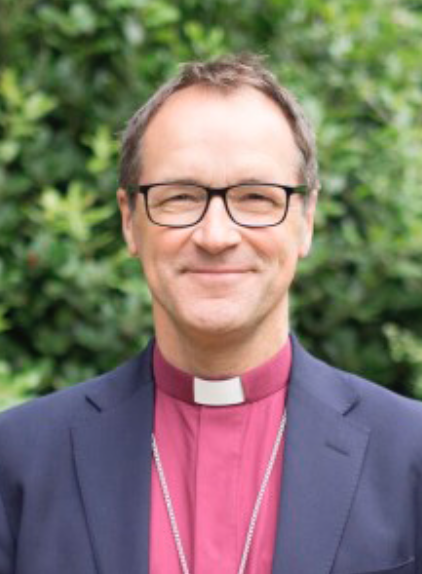
Graham Tomlin, now Bishop of Kensington – who has been heavily involved in community responses to Grenfell Tower – in a recent book described people's cultural attitudes towards religious faith as follows:
Not hostile to or uninformed about Christianity, often interested in spiritual questions and prepared to face the difficult issues of mortality and meaning. And yet the Church is the last place they would look for answers.
The Post-Secular Paradox
The rise of militant Islamism, the growth of non-affiliated spiritualities, together with the marked discomfort towards expressions of religion in public, all reveal significant aspects of the shifting and convoluted fault-lines between religion and secularism. We find ourselves in what some people term a "post-secular" society, in which in which there are paradoxes of belief and unbelief, sacred and secular. As the philosopher Terry Eagleton has put it: "The world is … divided between those who believe too much and those who believe too little."
I've been arguing that, as evidenced in the continuing interest in spirituality and the sacred, people have not lost faith in experiences that offer them a sense of wonder; which enable them to be caught up in a vision larger than themselves; that offer them some kind of personal and moral compass. And yet our culture is sceptical about the shortcomings of organised religion. What is to be done?
Learning to "Speak Christian" in a world troubled by religion
Is it necessarily the case that as the world becomes more religious, then religion becomes more of a problem? How do we balance conflicting ideas of freedom in a liberal democracy; are they absolute, or do they have to be negotiated?
However polarised and fractured the public domain may be within this new post-secular dispensation, I'd want to insist that it is incumbent upon Christians to consider the basis on which they communicate with a public both fascinated and troubled by religion. Everyone, from church leaders and congregations to local activists and campaigners, needs to learn again how to "speak Christian" in these contexts. I suggest that this effectively calls for the recovery of a more apologetic dimension to our theology, in terms of Christians being prepared to defend their core principles and convictions in public.
Apologetics Old and New
Apologetics is the term that refers to a type of Christian discourse that endeavours to offer a defence of the grounds of faith to a range of interlocutors. It has been described as "the attempt to defend a particular belief or system of beliefs against objections". Traditionally, Christians always have been charged with the task of defending and commending their faith to a wide variety of sceptics and enquirers. Apologetics derives from the Greek term απολογíα (apologia), meaning a carefully-reasoned defence of one's actions or beliefs, especially in a court of law.
In the first two or three centuries of Christianity an apologia or apology came to mean the strategies adopted by Christians to justify their convictions to their religious, political and intellectual adversaries and interlocutors. So apologetics is essentially a question of how to engage with a non-Christian interlocutor in order to persuade that person of the validity of Christian faith and practice.
In contemporary theology, however, apologetics has perhaps somewhat fallen from favour, and has tended to become the exclusive province of mainly North American Protestant Evangelical theologians, referring to rational propositional argument that is intended to lead to conversion. This is not to say that defending and commending the faith should not be carried out as an essential part of Christian witness. However, Christians today need an entirely different paradigm for their apologetics. And that's why I wonder what can be learned from some of the practices of early Christianity, when the Church was also surrounded by many different faiths.
Some brief examples from the New Testament will have to suffice in the time available:
- Beginning with the day of Pentecost (Acts 2) the disciples communicated the Good News through the medium of the cultural and philosophical world-views of their audiences. Acts of the Apostles records how on the day of Pentecost (Acts 2.14–36), Peter's address to the crowd was couched in a way that placed Jesus as Messiah, prophet of Israel and fulfilment of the Hebrew Scriptures.
- The apostle Paul's journey to Thessalonica (Acts 17.1–9) included a visit to a synagogue, where he presented Jesus as the fulfilment of the Jewish Scriptures and prophets, which appeared sufficient to generate a hostile reaction from his audience. But then, in the story of his visit to Athens (Acts 17.16–33), his task of preaching the Gospel switches to the adoption of altogether different philosophical assumptions.
- Then, when on trial in Caesarea (Acts 24.1–8), Paul has to defend himself against the orator Tertullus, he does so by appealing to the Jewish Laws and the Prophets. He is then transferred to Jerusalem (25: 1-12) where he avails himself of his rights as a Roman citizen to be heard by Caesar's court.
So apologetics has always responded to the challenges of its intellectual, religious or political context and attempted to "speak Christian" in terms accessible and comprehensible to people where they are and in ways that make sense of their existing world-views. The primary characteristics and objectives of apologetics during the first two or three centuries of Christian history were these:
- Deliberately adopting the world-views of one's interlocutors to commend the Gospel
- Refutation of ill-informed or specious representations of Christianity
- Responding to enquirers and seekers from beyond the community of faith
- Removal of doubt and obstacles to faith from within and without
Later apologists sought to show points of continuity between Christian thought and Greek philosophy, whilst others presented Christ as the fulfilment of the Hebrew Scriptures and prophets. Increasingly, as Christianity consolidated its position within the Roman Empire, apologies were addressed to civil authorities, in order to defend the reputation of Christianity against charges of immorality or sedition.
Other apologetic arguments were developed in order to uphold those amongst the faithful themselves who were experiencing doubts or persecution, apologetics playing no small part in Christian formation and nurture as well as the conversion and persuasion of non-believers. The tales of the martyrs may have had a significant apologetic function in this respect.
The first letter of Peter (3:15) offers a study of how Christians in the first couple of centuries negotiated their relationships with the outside world, especially in the face of scepticism from neighbours and hostility or worse from Imperial State power. For them, the main warrant of the Church's credibility (and that of the Gospel) is the proclamation in deed and word of Christ crucified.
"Always be prepared to give an answer to everyone who asks you to give the reason for the hope that you have. But do this with gentleness and respect, keeping a clear conscience, so that those who speak maliciously against your good behaviour in Christ may be ashamed of their slander." (1 Peter 3.13-17).
This is a text forged out of the collective experience of those who perceive themselves as suffering for their faith, which by all accounts was not uncommon amongst first and second century Christian communities. Such a social and political climate called for a particular kind of resilience, which the writer argues rests in the example and inspiration of Christ himself. The community is advised to see no contradiction between whatever difficulties they experience in the present and the reward or vindication that is to come, since this mirrors the logic of Christ's suffering and death and the promise of his resurrection. This is the "hope" that sustains them in their privation.
As the discipline of apologetics developed throughout Christian history, it became a sub-discipline of theology and took particular directions. Historically, it has encompassed evidentialist arguments, such as the historicity of the resurrection or the miracles; philosophical arguments for the existence of God; defences of Christian orthodoxy against theories of evolution or the origins of the universe. Within contemporary theological studies, however, apologetics is somewhat out of vogue and has become associated with a particular kind of Protestant evangelicalism founded on the exercise of largely deductive doctrinal reasoning.
Post Secular Apologetics
I would argue, then, for a Christian apologetics framed less around the criteria of rational, evidentialist argument, and more as something that witnesses, in deed and word, to the wider canvass of an entire lifestyle. It narrates and renders transparent an entire world-view of loyalties, affections – and, most significantly, everyday practices. Apologetics isn't really a discipline of "proof", but more an art of persuasion and testimony, of bearing witness where one's own personal integrity is the greatest warrant.
Such an apologetics of presence and witness is, for Christians, rooted in their response to the initiative of God through Jesus Christ. That's very strong in the first letter of Peter: a sense that apologetics, of commending and defending the faith, is ultimately in the words of the Quaker George Fox, about "letting your lives speak". I would argue that apologetics is best understood as the testimony – in word and deed – to the presence of God in the world, addressed to the world. That's always a public theology: one that is open to public scrutiny – bilingual, communicative, rooted in, but not confined to, a particular heritage of faith.
So, this "new apologetics" – which in many respects is very old – is, I believe, grounded in an understanding that Christian apologies spring from the experience of participation in the life of God. That includes Christians' incorporation – traditionally, through baptism – in the activities of God as creator, redeemer and sanctifier, which might be summarised as the missionary work of the Triune God in the world.
I would want to link this post-secular apologetics with the wider category of Christian mission, mindful of the retrieval in recent years of the notion of the missio Dei as the fulcrum of Christian presence and witness in the world. The imperative of common grace means evidence and warrant for our faith will be rooted in God's work in the world, not in creedal or institutional dogma. Discerning and participating in the missio Dei takes us beyond the Church, locating God's activity in the world. This requires a hermeneutic of discernment, participation and witness in order to be fluent in "speaking Christian" to the public square.
So a postsecular, "mission-shaped" style of apologetics might be characterised as having three principal dimensions or movements:
i) Discerning the actions of God in the world;
ii) Participating in the practices of God's mission;
iii) Explaining and articulating to others the theological values by which such praxis is sustained.
As a final observation, I would say that this places a clear onus on Church leaders and theological educators to put renewed energy into basic Christian catechesis and adult formation so that ordinary Christians are better equipped to "speak Christian" with confidence in their daily lives, especially as they face the challenge of justifying and defending the very relevance of the Christian faith in a culture that no longer grants automatic access or credence. The education of the laity, and their "theological literacy", becomes a pressing priority for the credibility and effectiveness of Christian presence and apologetics. (The RC Church has been saying this since Vatican II).
In much of what I have to say readers may detect an indebtedness to many great historical Christian apologists—such as Schleiermacher's appeal to the "cultured despisers" of religion, or Thomas Aquinas' insistence on the marriage of reason and revelation at the heart of Christian theological thinking. Overall, however, it is my intention to capture some of the salient features of an approach to Christian apologetics which is capable of addressing a world that was, like our own, both religiously plural and deeply sceptical.
I see apologetics not as a weapon of conversion, but an expression of hospitality and a gesture of solidarity.
This talk was delivered to the Wrexham Newman Circle on June 30th 2017.
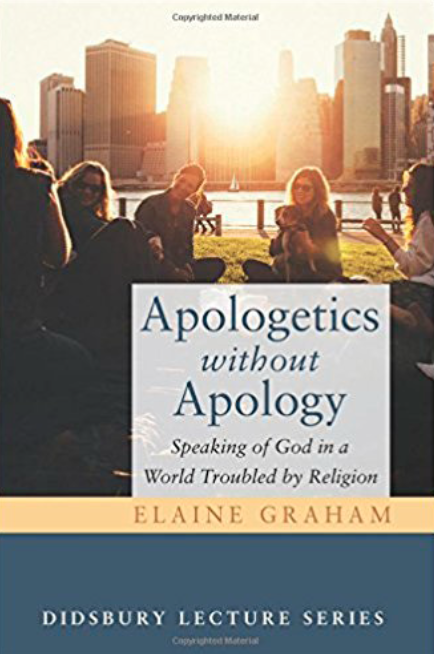
Elaine Graham's book Apologetics Without Apology is published by Cascade Books.
Notes
- The Problem of Proselytism by Paul Bickley, published by Theos, 2015
- That Was the Church that Was by Andrew Brown and Linda Woodhead, published by Bloomsbury, 2017
- The Provocative Church by Graham Tomlin, 4th edition, published by SPCK, 2014
- In a book review in The Guardian on November 12th 2014
- Thinking About Christian Apologetics by James K Beilby, published by Inter-Varsity Press, 2011.