Inequality and globalisation
The Catholic Church, in its teaching about globalisation, has tended to take a nuanced or qualified view. The papal encyclical Populorum Progressio, which was published in 1967 and was the inspiration for a number of the development charities, including our own Cafod, was not especially welcoming of free trade. The encyclical certainly did not encourage the sort of movement to global free trade that we have seen since 1980 and it implied that poor countries might not benefit. This position continued to be reflected in later teaching documents until Centesimus Annus in which Pope John Paul II said:
Even in recent years it was thought that the poorest countries would develop by isolating themselves from the world market and by depending only on their own resources. Recent experience has shown that countries which did this have suffered stagnation and recession, while the countries which experienced development were those which succeeded in taking part in the general interrelated economic activities at the international level.
Pope Francis seems largely to have adopted the qualified view of John Paul II's predecessor and takes a more sceptical view of globalisation, though he has mentioned its advantages on occasion. For example, Pope Francis has launched a cultural critique:
In many countries globalisation has meant a hastened deterioration of their own cultural roots and the invasion of ways of thinking and acting proper to other cultures which are economically advanced but ethically debilitated. (Evangelii Gaudium).
The Pope has also criticised consumerist mentalities that come with globalisation. He has gone further, though, commenting in an interview:
I recognise that globalisation has helped many people rise out of poverty, but it has also damned many others to starve to death. It is true that global wealth is growing in absolute terms, but inequalities have also grown and new poverty arisen.
Given this perception, it is worth examining the facts. In recent years, there has been a great deal of discussion about poverty and inequality in the world. This has included books by authors such as Thomas Piketty on the supposed growth of inequality.
It is amazing how ignorant we are in general about progress in the world. When British people were surveyed about improvements in measures such as literacy rates in poor countries and given four answers to choose from, only 12 per cent of graduates chose the correct answer for the fall in poverty (10 per cent of non-graduates) and only 4 per cent of graduates chose the correct answer for the world literacy rate: 96 per cent underestimate it (8 per cent of non-graduates chose the right answer). The late Hans Rosling, the Swedish statistician, pointed out that, when asked simple questions about human progress with the answers written on bananas, a chimpanzee would get the answer right 25 per cent of the time and do much better than British graduates. And there are real dangers arising from ignorance of the facts about poverty and inequality as ignorance of the facts is likely to lead us to choose the wrong policies – and choosing the wrong policies is a matter of life and death for the world's poorest people.
The reality is that the change in the economic prospects of the world's poorest people in the last 30 years has outstripped anything we have seen in the economic history of the world and globalisation has been responsible to a large degree. The question of inequality will be discussed below, but when it comes to poverty, there has been a huge decline in the recent period of globalisation. Since 1980, the proportion of people in the world who are in absolute poverty has fallen from well over 40 per cent to under 10 per cent.1 In other words, there has been more progress in reducing poverty in the last 35 years than in the previous 6,000 years put together. The 44 per cent of the world's population who were in absolute poverty in 1980 would have been one bad harvest away from malnutrition or even starvation. This is not a trivial matter.
Globalisation has played an important part in this rapid improvement of the position of the poor. It is the participation in globalisation by an increasing number of countries, together with their improved governance, that has really made a difference to poverty. So, what is globalisation? Globalisation manifests itself most obviously in the free movement of goods and services. The UK imports and exports about £500 billion of goods and services a year – in other words about one-third of national income. We export higher education (foreign students come to the UK and pay for a university education), financial services, and so on. And we import large volumes of manufactured goods.
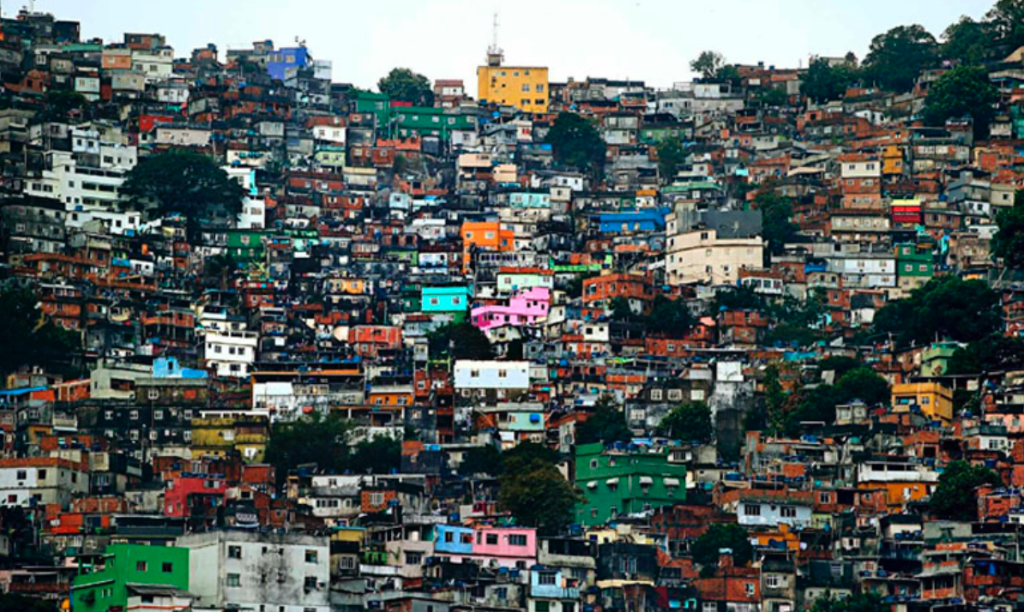
Perhaps the most remarkable aspect of globalisation since the 1980s is the development of global supply chains. What you might think of as being a British car is, in most cases, likely to be about 60 per cent non-British. A Honda Accord bought in the US is actually more American than a Chevrolet Traverse made in the US. Honda is a Japanese company, of course and Chevrolet is a US company. These global supply chains have connected the production of goods and services in the West to production elsewhere. This means not only that we trade in goods and services with people and businesses in other countries, but that we co-operate in different aspects of the production of goods and services with other countries. Globalisation requires cross-country co-operation day-by-day in everyday business activities.
Globalisation also manifests itself in phenomena such as the free movement of capital and also, perhaps more controversially for some, the free movement of people – something on which Pope Francis is in fact quite keen. The main effect of globalisation has been to raise the incomes of the world's poorest people: in countries such as Vietnam and China. It is these once-poor countries that have benefited most from being part of integrated supply chains. Amongst less-well-off countries, there is a strong relationship between economic growth and the extent to which countries are free to trade.
The inhabitants of already rich countries, that were already largely globalised, gain much less than those of poorer countries. So, the reality of globalisation is "catch-up" growth by previously poor countries. For example, South Asia has seen annual economic growth of 7-8 per cent in last 30 years. Even Africa has grown at 5 per cent in the last 15 years – a much higher rate than in previous decades, partly at least as a result of the falls in civil conflicts and the beginnings of greater integration in the world economy.
Globalisation and inequality
So, what is the impact of all this on inequality?
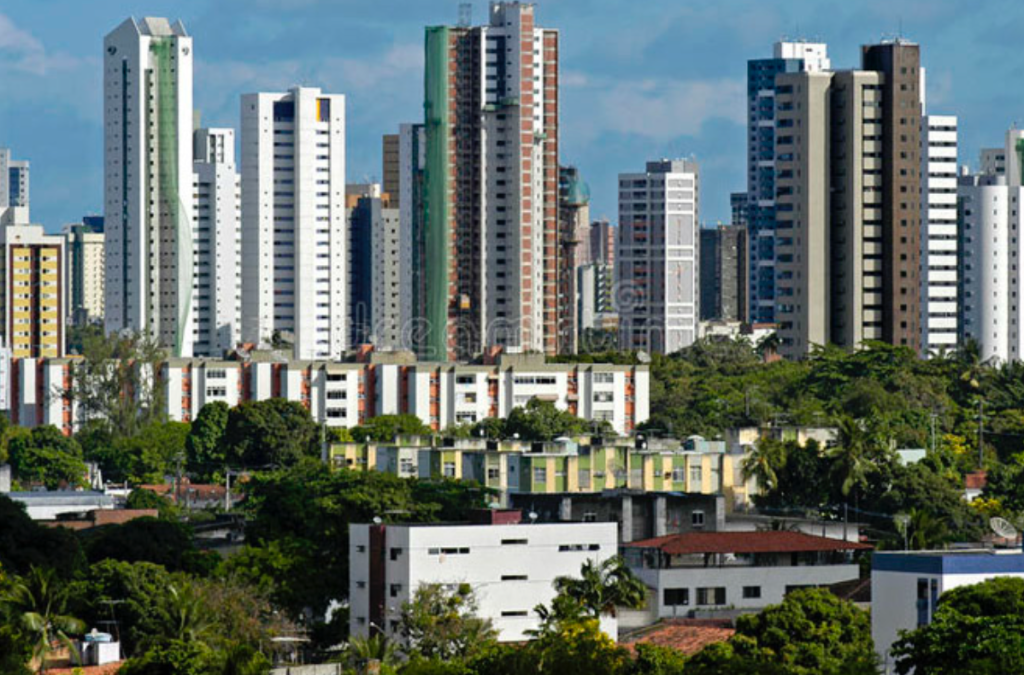
The world as a whole is getting more equal. This trend of falling inequality is likely to continue until 2035 at least, as a result of the poor world catching up with the rich world. The rich are not getting richer very fast, but the poor are. The major reason for the huge fall in inequality is globalisation and the increased participation of many countries in world trade which has led poor countries to catch up with rich countries.2
Of course, during a process of liberalisation, inequality can often increase within a country, especially if the country has a huge proportion of its populations on the edge of starvation or malnutrition as was the case with China. Some people will get rich more quickly than others. But, even this is not universally true. Often, prior to a country opening up, it is the poor who are shut out of markets and inequality actually falls when countries undergo reform. Even in China, inequality has levelled off and then fallen since 2008. The Gini coefficient, the most-used general measure of inequality, was 0.3 in 1984, 0.5 in 2008 and 0.45 in 2016.3
In rich countries, the picture is mixed. In the US, inequality has increased. However, in the UK, inequality is at its lowest levels since the mid-1980s. It can be the case that the gains of the poor from globalisation in richer countries are limited because they work in industries that compete with those from more rapidly growing, previously-poor countries. However, counteracting this, poorer people in rich countries tend to buy more imported products the prices of which have fallen dramatically as a result of globalisation.
When it comes to inequality, the most legitimate concern is perhaps the growth of the incomes of the super-rich. A feature of globalisation is the rise in the income share of the top 1 per cent. For various reasons, people are uncomfortable with this and they see the phenomenon as a manifestation of increasing inequality – rather than as an exception to the general trend of decreasing inequality. Certainly, some people, from top sportsmen and women to entrepreneurs, have the opportunity to benefit from marketing their skills to a global and not just a national market and that, together with the technology, allows them to leverage the benefit of their skills. Even if, for example, Bill Gates receives a tiny proportion of the value of the products that Microsoft products add to those who buy them, he will become very rich. That tends to create the phenomenon, which may dissipate over time, of the global one per cent.
Some might regard this as an undesirable side effect of globalisation. My own view is that great riches are a serious responsibility to those to whom they accrue. It is a problem for the rich rather than for the rest of us.
Globalisation and business responsibility
Given that globalisation has been responsible for a huge fall in poverty and inequality – and we should not under-estimate the significance of this for people living on the edge of subsistence, one bad harvest away from death – it deserves a better press. Globalisation does, however, increase the responsibility of business to behave ethically.
Firstly, the more extended that relationships are in an economy, the more important trust is. In a more globalised business setting, relationships are shallower. Secondly, people in poor countries may be better off as a result of globalisation, but they are still very vulnerable – and their alternative economic opportunities are often very limited. Business has to operate whilst being conscious of this. Thirdly, companies are often working in a situation in which governments do not perform their fundamental functions properly, there may not be proper court systems and so on. The absence of good governance increases the responsibility of business to behave ethically.
Business is about human action in the economic sphere. It is a field in which, as in every other field of social activity, ethical behaviour is essential. This has been noted by economists, such as Kenneth Arrow, who said:
Virtually every commercial transaction has within itself an element of trust.…It can be plausibly argued that much of the economic backwardness in the world can be explained by the lack of mutual confidence.
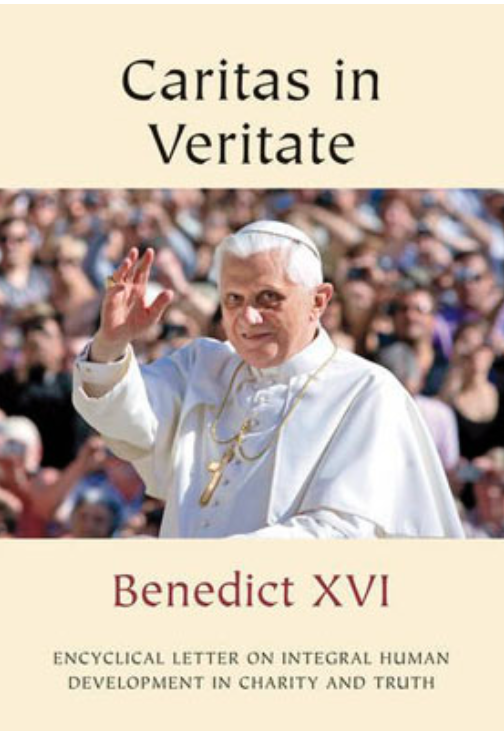
And, perhaps less surprisingly, it has been written by Pope Benedict XVI in his encyclical letter Caritas in Veritate: "Without internal forms of solidarity and mutual trust, the market cannot completely fulfil its proper economic function" (italics in original).
It has to be said that the environment in which companies are operating in developing countries can be very difficult. It can be very difficult to behave ethically if bribes are the expectation; if there is no proper way of ensuring that people's property rights are protected; if contracts cannot be justly enforced through court systems; and so on.
When governments are corrupt, it raises the costs of bidding for contracts. It increases uncertainty surrounding business. The profits from business ventures can be expropriated and therefore investment becomes very precarious. Competition can be prevented as a result of tacit agreements (tainted by corruption) between big firms and the government. Rent seeking can take place whereby big firms ensure that the regulatory system is stacked in their favour, and so on. Bad ethical behaviour in business can combine with poor ethical behaviour in government so that the whole of economic and public life becomes corrupted. It is perhaps the various manifestations of this in South America that help explain why Pope Francis is so repelled by corrupt business behaviour. For example, this is Pope Francis in Laudato si (197):
Often, politics itself is responsible for the disrepute in which it is held, on account of corruption and the failure to enact sound public policies. If in a given region the state does not carry out its responsibilities, some business groups can come forward in the guise of benefactors, wield real power, and consider themselves exempt from certain rules, to the point of tolerating different forms of organised crime, human trafficking, the drug trade and violence, all of which become very difficult to eradicate.
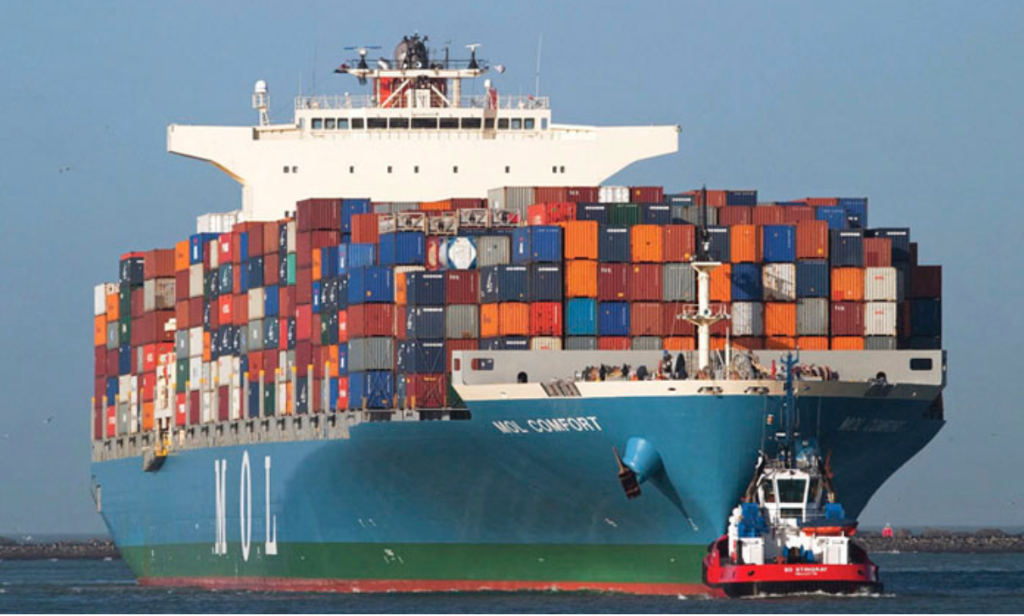
So, if the state is corrupt, powerful business influences benefit to a much greater extent from behaving unethically, for example by bribing state officials to prevent competitors receiving licences or to allow laws to be circumvented. This can then be a continuing cycle which is difficult to break because both business interests and powerful government interests benefit from the status quo.
It is, of course important for business to respond to these challenges ethically. But, what are the ethical responsibilities of business? The starting point is outlined by Pope Benedict in Caritas in Veritate. He said:
It must be remembered that the market does not exist in the pure state. It is shaped by the cultural configurations which define it and give it direction. Economy and finance, as instruments, can be used badly when those at the helm are motivated by purely selfish ends. Instruments that are good in themselves can thereby be transformed into harmful ones. But it is man's darkened reason that produces these consequences, not the instrument per se. Therefore it is not the instrument that must be called to account, but individuals, their moral conscience and their personal and social responsibility. (36) (my emphasis).
In other words, we should be willing to call out unethical behaviour in business, but we should be careful before dismissing whole sectors of the economy as unethical. Pope Benedict was very strong on this. We need ethical bankers; we need ethical heads of multi-national corporations. It is unacceptable to make profits whilst acting unethically, but what does behaving ethically mean? This article will end with some suggestions.
Firstly, businesses should ensure that they respect human dignity, regardless of whether it is respected by the laws of the country in which they are operating. For example, businesses can, in particular circumstances, use their power – sometimes in conjunction with corrupt governments – to ride roughshod over the property rights of others. Mining companies may bulldoze houses, ignoring the wishes of the owners; some businesses may destroy rain forests without providing appropriate compensation to inhabitants; water supplies may be polluted by industrial activity; and so on. Whether these things are legal or not in a particular country and whether or not the law is enforced, they are unethical. Some of these issues require careful discernment – sometimes, for example, property rights of indigenous communities are implicit and poorly-defined.
Indeed, to a large degree, behaving ethically in this context is what the Church has meant by "social justice" in her teaching. Businesses should act with the virtue of justice, treating people ethically, which is not limited to the demands of commutative justice through the enforcement of contracts. Businesses should also not produce and market products that are intrinsically immoral. There will not always be agreement about which business products and services are immoral. People will have different views about, for example, alcohol, arms and cigarettes. However, other products such as pornography are always morally unacceptable.
Similarly, products should also not be marketed in ways that are morally dubious. Advertisements should tell the truth and they should not use temptation to sin as a way of selling a product. It is also an important social responsibility of business to help create a culture conducive to ethical behaviour. It is harder for businesses to choose what is good in a hostile cultural climate. As such, all actors within business have a responsibility to promote a cultural climate more conducive to ethical decision-making.
Finally, we should not necessarily be fooled by businesses that describe themselves as ethical or belong to what is often thought of as an ethical sector. Again, as Pope Benedict put it in Caritas in Veritate:
"The word "ethical", then, should not be used to make ideological distinctions, as if to suggest that initiatives not formally so designated would not be ethical. Efforts are needed — and it is essential to say this — not only to create "ethical" sectors or segments of the economy or the world of finance, but to ensure that the whole economy – the whole of finance – is ethical, not merely by virtue of an external label, but by its respect for requirements intrinsic to its very nature. The Church's social teaching is quite clear on the subject, recalling that the economy, in all its branches, constitutes a sector of human activity."
Conclusion
At least partly because of the process of globalisation, the distribution of world incomes actually looks as if we all live on the same planet rather than there being an obvious "first" and "third" world as there was at the beginning of the 1980s. That is not to say that there are not destitute people still, but the number of people in desperation is much smaller. Not only that, people are living longer, more are receiving education and medical care and people are living better lives materially because of the extension of globalisation.
The extension of the market economy in this way has helped more people to get out of poverty than foreign aid or any amount of charity. That is not to say that charity is not important – especially the missions because they look after your soul as well as the body and ensure that people receive healthcare and education which sets them up for life. But, the fact that a free economy extended globally is responsible for so much progress does not mean that business does not have a responsibility to behave ethically. If anything, the ethical responsibilities of business are greater.
Business relationships are a crucial part of everybody's lives. Businesses are sometimes dealing with very vulnerable people. The quality of other people's lives depends on how we choose to behave in our business and working lives. This applies not just to the chief executive of Goldman Sachs but to every person who works in a business (or in any work situation) every day.
We are empowered to make ethical choices and the choices we make when we are supervising staff, dealing with customers, dealing with suppliers and so on have the ability to affect the lives of others for good or for ill. Good ethics in business is just as important as the practice of good ethical values in any other area of our lives. Business is a noble vocation that should be practised ethically. That has always been important, but perhaps globalisation has put this imperative in sharper focus.
Philip Booth is Professor of Finance, Public Policy and Ethics, St. Mary's University, Twickenham. This article is based on a talk he gave to the Coventry Circle in November 2017.
Notes
- https://ourworldindata.org/wp-content/uploads/2013/05/World-Poverty-Since-1820.png
- This is very well illustrated by the chart showing world income distribution in 1800, 1975 and 2015 which can be found at: https://ourworldindata.org/income-inequality.
- Each year, Oxfam produces a report about wealth inequality which contains some extreme statistics such as the assertion that around 60 people in the world have the same total wealth as the least wealthy 50 per cent of the world's population. It is difficult to know where to start in critiquing this, though there are many published critiques. The figures are meaningless. Firstly, the statistics relate to net wealth so that a Harvard graduate who has a student debt will be counted amongst the poorest in the world. Secondly, about 50 per cent of the world's population is below the age of 30. It would not be expected that young people would have assets, so huge numbers of "zeros" are being added up and compared with the wealth of the wealthiest. Thirdly, it is income and not wealth that is important for most people's standard of living. Fourthly, in welfare states, the least well off do not tend to accumulate wealth because they receive an income and healthcare in old age from the state.