Manchester Newman Lecture, April 26th 2018
I chose this slightly pompous title because it has some significance for me. What I want to do is explore some ideas around what conscience might evoke in you when you think about the stories of refugees; and what it has taught me working at JRS, both in the UK office and in the international office; and what for me that has revealed about the image of God. But this will be my personal story, not an hour-long academic treatise.
I am Director of the Jesuit Refugee Service in the UK. We are part of an international organisation operating in, at the moment, 51 countries. Our mission is to accompany, to serve and to advocate on behalf of refugees and those who have been forcibly displaced. We are facing some of the most difficult situations in the world today: we have quite a large operation inside Syria, for example, and in Northern Iraq, and we are also in South Sudan. But we also work in most countries in Europe, including the UK. We were set up in response to a very, very visible refugee crisis – it was the Vietnamese boat peoples' crisis.
The JRS was envisaged as an organisation that would be a mix of Jesuits and lay people, of men and women, of people of different faiths coming together to be able to respond. But it is very definitely a mission founded on faith: our charter says that to accompany refugees is to affirm that God is present even in the most tragic situations of human history. That God is present – and we hope that we will be a visible sign of God's love, and also that working with refugees will conscientise the Society of Jesus: there will be a touch in the conscience that will be an awareness of the need for social change.
I worked in South Sudan and the Middle East for the international organisation and what I saw, in sometimes very challenging situations, left a deep impression on me. Around the world we do a great variety of things: we work on education – either providing schools or training teachers – and giving psychosocial support. But in Europe we do other things: we have a focus on giving support to those in detention, and those who find themselves made destitute, which is what we do in the UK. We have had a focus for a long time on supporting those who are in immigration detention, or who are made destitute as part of the asylum process. They are the people who are the subject of the hostile environment agenda that I am going to turn to in a moment.
There are thought to be around 65 million people who are displaced from their homes, either classified as refugees or as internally displaced. Catholic Social Teaching uses a slightly broader definition so that we don't distinguish between those who are forced across a border or who are displaced within a border, recognising that there are all sorts of reasons for which people might be displaced from their homes. I particularly like working for JRS because of the focus on the individual.
Why do people leave their homes? Why are they forced to? Conflicts, war – you have seen the situation in Syria, the country which is producing the largest number of people who are displaced. Around half the people in Syria are displaced from their homes – a staggering thought. But there are plenty of other countries too, with human rights abuses: Eritrea, for example, has forced conscription. Extreme poverty, too, forces people from their homes, and lack of water.
But whatever the media suggest there are not enormous numbers of refugees and asylum-seekers in the UK. There were 26,000 asylum-seekers last year; that sounds like a big number, but here's a thought experiment, apparently there are around 100,000 students here in Manchester, so that is four times as many students in this City alone as asylum-seekers in the whole of Britain. When we think about it 26,000 is not such a large number, after all. The number of resettled refugees is also, sadly, really very small – there have been 11,000 refugees resettled through the Syrian vulnerable persons resettlement scheme since 2015, a very small number.
We don't treat asylum-seekers very well in Britain: in fact, it is difficult to understand just how badly we treat such people. If you claim asylum in the UK you will get accommodation and a small amount of support but it is a very small amount financially: it is not enough to buy winter coats if you come from a very different climate, for example. You may be moved a long way away from where you first claimed; you may be moved more than once. If you are really lucky your asylum claim will be decided quickly and you will know that you will have a chance to stay – but that is not the case for most people.
For an awful lot of people there is no straightforward solution.
The asylum determination system in this country is notorious for a culture of disbelief. People struggle to get their story heard. If you have been a victim of sexual assault, if your claim is based on sexual orientation, if you have converted to Christianity, you are going to have a really difficult time in getting your case heard and understood and recognised.
You might have heard some of the stories about the Windrush generation over the last few weeks, and some of the themes which have emerged from that group are also true for those who seek asylum: issues around targets and incentives. There have been stories about immigration staff being given incentives to get claims rejected – during appeal stages, for example, where there was one story about Marks and Spencer vouchers being given as an incentive for to make sure that somebody had a claim rejected. There are lots of investigations into the training of those who are making decisions: they are often very young, and feeling immense pressure. The caseworkers on the front line are really struggling with the case list that they are watching.
Information about the countries of origin is often very poor and is riddled with errors. There have been court challenges, for example, on the country information which is used to determine whether you should be given refugee status if you come from Eritrea. It is notoriously bad information. There are many frustrating stories about paperwork going missing inside the Home Office, including really vital identification documents. If you feel that you've not had a fair hearing, that's when your problems really start. That's when the "hostile environment" agenda really kicks in.
You are not allowed to work if you are claiming asylum. When you are rejected the small amount of financial support you are given is cut off. You have no money and you are not allowed to work. A complex web of other policies also kick in that are deliberately intended to make your life unbearable. That is the purpose of the hostile environment agenda. Not all refugees are poor, but their assets are frozen. Working becomes a criminal offence. You are not allowed to drive, your access to the health service is limited. You are banned from study, which is particularly painful. And you probably have to report to the police station regularly.
This experience is absolutely devastating for people. It becomes very easy to breach your conditions and commit an offence. But more than that, people who are not border enforcement officers will find themselves required to check on you. Banks, for example, are required to check your immigration status. So are the health service, health practitioners, education officials, employers – and for them there is a duty to be hostile. This has quite a profound effect on the way in which we think about people who find themselves without immigration status because it switches round the ethical frame. You find yourself morally bound to be hostile to the undocumented.
The people who came during the Windrush era found themselves caught up in this dreadful mess. There is a hermeneutic of suspicion for all migrants within the system. And there is an active policy of treating those who find themselves undocumented as being undesirable, and there are duties on officials and others to ensure that such cruelty is meted out to push people into leaving.
It doesn't make any sense, does it, that we would deny people access to the health service? But when you think about it, through this duty of hostility it starts to make a little bit more sense, because you prioritise that hostility over other things that ought to be good for society. Then you can start to understand how we get ourselves into this peculiar mess: it makes no sense to deprive people of health treatment, and yet the policy has a kind of internal logic.
Now I will return to the subject of conscience. John Henry Newman said that conscience is the voice of God in the nature and heart of Man. He was very clear that he didn't mean that we could do whatever we like. He contrasted the Christian view of conscience with what he described as the counter view of conscience, which he described as "sheer will" – conscience should be challenging, unsettling. In his latest Apostolic Exhortation, Gaudete et Exsultate, Pope Francis says that we need to open our hearts to Jesus, who stands and knocks. Sometimes I wonder, though, if Jesus is already inside us and knocking on the door to let him escape from our stale self-centredness.
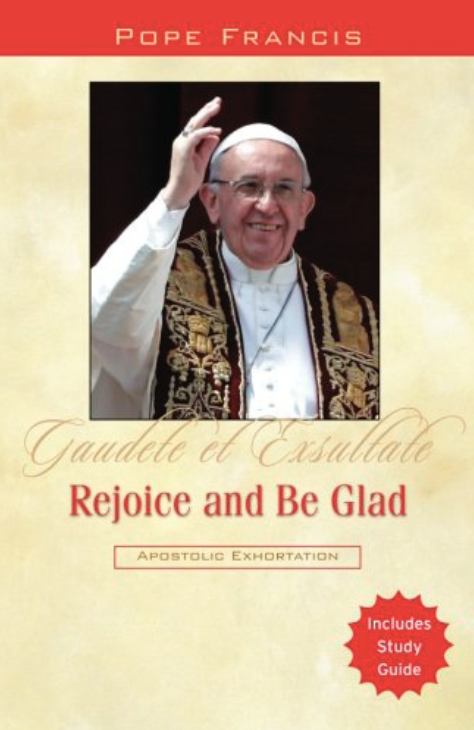
Francis says elsewhere that lively recognition of the dignity of each human being requires constant and healthy unease: specifically, an unease which will demand social change.
It is not accidental that both Francis and Newman ground morality in human experience. With Newman you cannot have an abstract moral rule – he called it the Science of Life – because such rules cannot encompass the circumstances encountered by real people in real life. He said that an ethical system may supply laws, general rules, guiding principles, a number of example suggestions, landmarks, limitations and cautions, distinctions and solutions of anxious or critical difficulties, but these require the moral discernment of a living intellect to be applied to life.
Francis also speaks of holiness being much more than "head stuff" if you like, that separates knowledge from human encounter. He said that amid the thicket of precepts and prescriptions Jesus clears a way to seeing two faces: that of the Father and that of our Brother. He does not give us two more formulas or commands, he gives us two faces – or better yet, one alone, the Face of God, reflected in so many other faces. For in every one of our brothers and sisters, especially the least, the most vulnerable, the defenceless and those in need, God's very image is found.
If you really look you can see quite clearly that this duty of hostility is a kind of counterfeit moral obligation. What you need is that lively intellect, the heart of flesh that is able to hear God's unsettling voice. If you really listen to the stories, and you look at the people's faces, it is quite easy to recognise that such people have a moral claim on us that our rules are somehow not quite managing to allow. That is what we saw when the Windrush scandal hit the news.
The IRS earlier this year produced a report which you will find on our website: it is called Out in the Cold. We surveyed those attending our Day Centre to try and understand what kinds of situations they were really living in. Our work focuses on those who are made destitute by the asylum system and what we have found from listening to the people is that issues of housing have been coming up all the time. We did a survey and I was shocked by what we found. I realised I had barely touched on the difficulties of these people's lives. We found that 60 per cent of those who came to our Day Centre had been street-homeless within the previous twelve months, some of them for extended periods of time. These were men and women of all ages, young and old.
There is a very different pattern to other forms of street-homelessness. These are people who have nowhere they are allowed to stay, and they are reliant completely on charity, and on the goodwill of friends and family. They are surfing around a whole series of addresses. It has a devastating impact on their lives, for they are constantly living in fear. And even of those who have somewhere to live, a third say that they are frightened of the people that they live with.
So the policy that we have of deliberately making people destitute leaves them so vulnerable that they are frightened of the people that they live with. I want that thought to make you uneasy and unsettled. One of the stories that we put in our report was about a young woman who had been street-homeless for more than six months when we spoke to her, sleeping outside on her own. She moved around from place to place each night, depending on the weather, and explained that she was often in physical danger. She said: "People like me have an impossible life to lead". What we heard most commonly from those that we work with was a desperate plea to be treated as a full human being.
I think it's impossible to listen to that story without awakening in you that sense of unease. The echo of the pain that you feel in your own heart is surely God's voice in your conscience, telling you that it is not right that our society is willing to do such things. And the problem is that the people we work with are so excluded that they don't have the luxury of the people from the Windrush generation in getting that story heard. Time is being wasted, and their lives are left without purpose and focus when they have so much hope and desperation to study, to work and to progress their lives.
What most people want, it seems to me, is to give themselves back to society. The agony of being denied the chance to work is much more than just the frustration of idleness, it's that you know you have a gift that you want to be able to give to others. The denial of that tells you something quite profound about what it is to be a human being. At JRS UK we give people an opportunity to volunteer their skills and the change that comes over people when they are allowed to use the abilities that they have is just huge and inspiring. We have such a mix of religions, of lay people, of different ages, and we have refugees who are already settled and are volunteering. It just unleashes a huge torrent of energy. People get so much meaning and purpose if they are able to become involved, and it's such a joy for us to see. It facilitates the forming of relationships, of community, across all sorts of different boundaries.
We see that particularly in our volunteer cooks; in our Day Centre, once a week we cook for around 120 people but our cook doesn't have immigration status. We were buying sandwiches to feed people and he was horrified. He said: "If you just give me a bit of cash, I'm a trained cook. I'm not allowed to go to work but trained cooks know how to use small amounts of money and small amounts of food to go a long way." So he goes and buys food from the market and he conjures up hot food for between 80 and 120 people for just the £30 in cash that we give him. It's amazing, it's like the Gospel story of the loaves and fishes.
So conscience is not just about a kind of correction of behaviour but sometimes it can also be a widening of perspective. Conscience is a kind of consciousness of truth. Because there are truths you can learn by drawing alongside refugees, truths about what it means to be a human being. That for me is what I have learnt about doing this work. I've learnt something about what happens when you have everything taken away including the most important thing which is the power to give of yourself. As Christians we cannot possibly support the policy which denies fundamental aspects of what it is to be a human being. The Hostile Environment Agenda, it seems to me, has no place in Christian thinking because it sets out to exclude, it sets out to crush human life as comprehensively as possible.
Many of our conversations in the Day Centre are about faith, as they are when we go into the immigration detention centre. I don't want to say that for every refugee faith is everything. Faith is as varied for refugees as for everybody else. And these people are not paragons of virtue either, they come with complicated lives, and hopes and dreams, character flaws and irritating aspects of themselves, just like we all do. But there is something that I have seen so regularly that it makes me think there is something truly there to look at. And that is people's experience of God being very present to them. This highlights to me something else from Pope Francis' recent encyclical, about holiness being for everybody. I have seen something of that in our work.
I will tell you two little stories. The first person I will call Mahmoud (not his real name) whose story appeared in our Out in the Cold publication. He spent an extended period of time street-homeless and for quite a while he was sleeping in a tent. He spoke to us about the frustrations of not being able to keep dry: he always had wet feet, he said, and for him this was the agony of being homeless. This tent, where he kept his belongings, was really important to him. He went out one day to one of the Day Centres and when he came back it had rained very heavily and a branch had crashed down and torn the top of the tent and the water had poured through, soaking everything. What did he do? "I praised God," he said. "If I had been in the tent and that branch had fallen on my head I would have died." I was blown away, astonished that this was his immediate reaction.
The other, more recent, story comes from our efforts to start a choir. Many of the people we work with are West African, and music and singing are such a big part of their lives. We decided to set up a refugee Gospel Choir. One lady arrived, on her first day at the Centre. When she performed at our Carol Service, just before Christmas, somehow she radiated joy: she was almost luminescent for me.
Afterwards I asked her whether she would fill in an evaluation, to help us to obtain more funding for the choir, and she started to tell a story. She had been destitute for some time and the pressure had meant that her marriage had broken up. The day of the Christmas Service would have been her 20th wedding anniversary, and she said that she had never imagined that God would give her such a celebration, and how precious that was. "He allowed me to sing, which I have not been able to do since I was a teenager." I was so moved by this. It is just impossible not to see the tell-tale signs of God's presence here.
In our charter we say that God is present even in the most tragic circumstances of people's lives. These people are not unusual saints, and yet you have such a sense that God is there walking with them. You can't help but think that God really does hear the cry of the poor; he really is close. I hear the words of that hymn, the setting of Psalm 34, The Lord hears the cry of the poor, Blessed be the Lord.
There's conscience which is unsettling, there's conscience which begins a process of conscientisation, and there's conscience that widens perspective, that teaches you – and there's conscience that somehow points you towards the face of God. That has been my experience of working at the Jesuit Refugee Service. It has been my experience that God is very present. It began with that unsettling sense of conscience, and I have the great privilege of seeing God's face reflected in the faces of those that we serve.
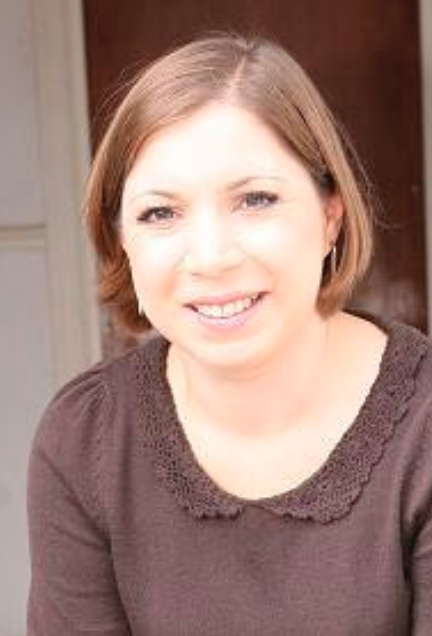
Sarah Teather is Director of the Jesuit Refugee Service in the UK