An introduction and poem contributed by Tony Jenkins before a talk to the Manchester and North Cheshire Circle on World War I poets, reflecting on the Menin Gate, Thiepval, and his uncle Charles who returned from the war with shell shock.
This introduction, and the poem, were contributed by Tony Jenkins, a member of the Manchester and North Cheshire Circle, before a talk to the Circle on November 13th by the Rev Geoffrey Barnard, on World War I poets.
As you listen to my words and those of our speaker tonight on the World War 1 poets, I would ask you to reflect upon and pray for events and people with which you have a personal connection, as will I. In my opinion, authentic mental images regarding WW1 can be big and/or small. I will offer you two of each kind.
In the summer of 1968 I found myself on the Belgian coast near Ostend on honeymoon. My wife, from a Belgian family, was delighted to show me many local places of interest, one of which was Ypres ("Wipers" to the Tommies). There I first saw the Menin Gate with quite mixed, but strong emotions. It bears the names of more than 54,000 British and Commonwealth soldiers who have no known graves. That number of names and its sheer size was a great shock to me (I was still a very young man) only alleviated somewhat by the calming balm of the playing of the Last Post.
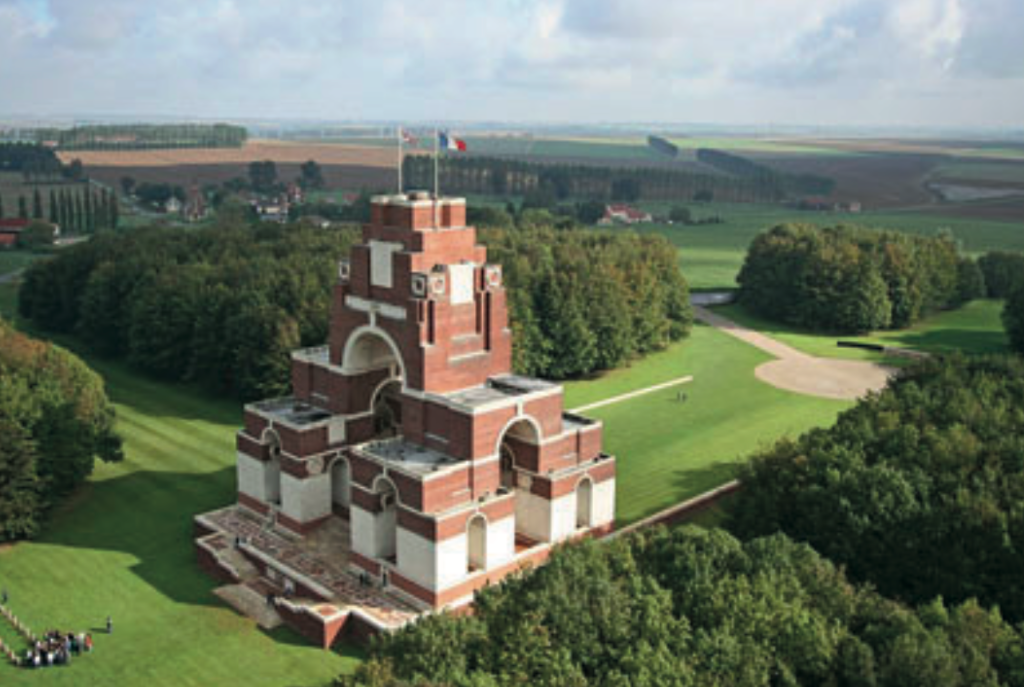
Nearly forty years later I stood humbly (more mature and worldly wise?) in front of the Thiepval Memorial in Picardy, France, which is even larger! It has over 72,000 names (mainly of British and South African servicemen) recorded (again without known graves) as casualties of the Somme battlefield where 19,240 British soldiers died on the first day, July 1st, 1916. Thiepval, designed by Sir Edwin Lutyens, has been described as "the greatest executed British work of monumental architecture of the Twentieth Century." It is truly awesome and memorable.
But to reflect deeply on the pain, loss and suffering of WW1 you don't have to be overawed solely by huge memorials or mind-blowing statistics. The micro picture can be just as, if not more, powerful. Two examples will suffice. In Altrincham where I live there was a street (Chapel Street), now a car park, which King George V dubbed "The Bravest Little Street in England" (also the title of a very recent book by Karen Cliff). From Chapel Street (also the title of another recent book, by Sheila Brady) 161 men, very many of them Catholics, volunteered from just sixty houses. Twenty-nine men were killed in action with another twenty dying from injuries soon after the war. The local community was both shocked and shattered.
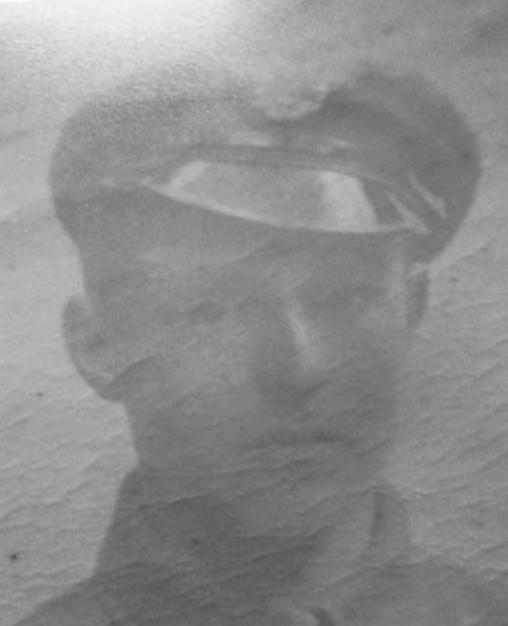
My last example is both poignant and very personal to me. It concerns the life and death of just one person, Charles Cyril Jenkins, one of six brothers. Charles was my own uncle who returned home from the war with shell shock (PTSD) and spent over fifty years in a Liverpool hospital till his death. Unfortunately I never met him.
As our talk is about WW1 poetry I will modestly conclude by adding one more poem to the canon, written especially for tonight.
"Hello Uncle Charles"
Hello Uncle Charles, this is your nephew, Tony, speaking,
Son of your brother Dick,
Just wanted to say a few things to you,
But I promise I will be quick.
I know so little about you,
Except your war was much longer than most
Fifty years in a Liverpool hospice,
Before your own last post.
I've been to Ypres and the Menin Gate,
And Vimy Ridge as well,
So I've some idea where you endured,
Your personal experience of hell.
God bless you, dear Uncle Charles,
And all your comrades too,
We will meet again some sunny day,
Where the sky has a kinder hue.
Amen