It is easy to forget that in addition to well-known verses such as the Dream of Gerontius, Newman wrote many other poems.
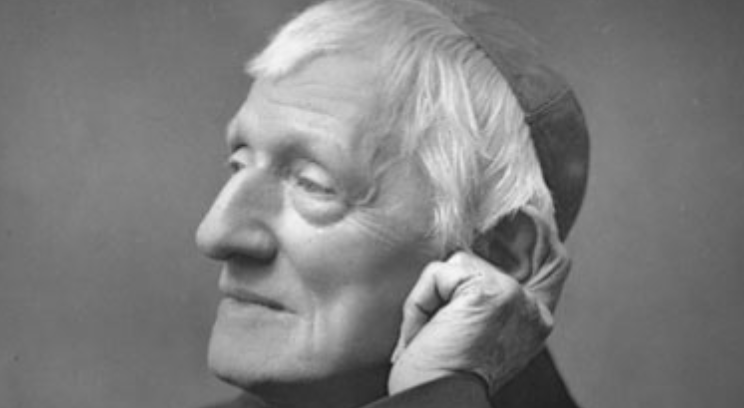
It is easy to forget that in addition to well-known verses such as the Dream of Gerontius, Newman wrote many other poems and, when we are now marking his canonisation in this issue, it is appropriate to look at some of them. The following examples were all composed during his visit to the Mediterranean in 1832-1833 and on his journey home by sea. Clearly he was in a rich vein of poetry as at the same time he composed The Pillar of the Cloud, better known by its opening lines: Lead, Kindly Light.
The first of these is titled Hope and was composed at Valetta on February 5th 1833:
We are not children of a guilty sire,
Since Noe stepp’d from out his wave-toss’d home
And a stern baptism flush’d earth’s faded bloom.
Not that the heavens then clear’d, or cherub’s fire,
From Eden’s portal did at once retire;
But thoughts were stirr’d of Him who was to come,
Whose rainbow hues so streak’d the o’ershadowing gloom,
That faith could e’en that desolate scene admire.
The Lord has come and gone; and we now wait
The second substance of the deluge type,
When our slight ark shall cross a molten surge;
So, while the gross earth melts, for judgment ripe,
Ne’er with its haughty turrets to emerge,
We shall mount up to Eden’s long-lost gate.
The second is titled The Power of Prayer and was composed “at sea” on June 24th 1833:
There is not on earth a soul so base
But may obtain a place
In covenanted grace;
So that his feeble prayer of faith obtains
Some loosening of his chains,
And earnests of the great release, which rise
From gift to gift, and reach at length the eternal prize.
All may save self; - but minds that heavenward tower.
Aim at a wider power,
Gifts on the world to shower.-
And this is not at once; - by fastings gained,
And trials well sustain’d,
By pureness, righteous deeds, and toils of love,
Abidance in the Truth, and zeal for God above.
The last one is titled Sensitiveness and is a call to all of us to be firm in defence of Christian truth and values. It was composed at Lanzaret, Malta, on January 15th 1833:
Time was, I shrank from what was right
From fear of what was wrong;
I would not brave the sacred fight,
Because the foe was strong.
Bur now I cast that finer sense
And sorer shame aside;
Such dread of sin was indolence,
Such aim at Heaven was pride.
So, when my Saviour calls, I rise
And calmly do my best;
Leaving to Him, with silent eyes
Of hope and fear, the rest.
I step, I mount where He has led;
Men count my haltings o’er; -
I know them; yet though self I dread,
I love his precept more.
Readers may like to know that Newman’s verse is collected in John Henry Newman, Collected Poems and the Dream of Gerontius, published by Fisher Press in 1992. It appears to be out of print but is available second hand.
Anne and John Duddington