Being a Christian Today
An extended letter to the Editor by Edward P. Echlin
A note on Edward P Echlin
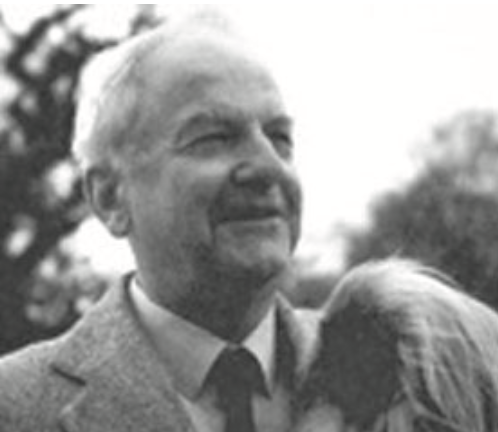
A few months ago Edward Echlin sent in the following contribution to The Newman. Sadly, it has turned out to be a final statement of his lifetime commitment to Christian ecology because he died on December 23rd only three weeks short of his 90th birthday.
The Church is in a new situation today, certainly unprecedented in my lifetime. We no longer live in a context of respect for biodiversity, soil fertility, equable climate, and healthy rivers and seas. The (alarmist) news media reports daily on looming crises, especially a worldwide food shortage and life-threatening climate breakdown. Politicians speak insultingly to and about each other, encouraging militarism and homelessness, most noticeably in Turkey and Syria.
Above all there is obsession with a so-called Brexit, a departure from values of shared community with, and care for people, of other countries and cultures, including people of other religions and even fellow Christians. In brief, we live in an unhappy time when even people of faith hesitate to share concerns and resources and community with contemporaries confronted with climate breakdown and warfare.
This is a concise picture of the worshipping context in which we now live and practise as Christians. There should be a concerned response by practising Christians and Christian communities. In the spirit of our new Saint John Henry Newman we can, and should, respond to this widespread suffering. God is present in suffering and in hope, as Newman wrote: "One day the lights of heaven will be signs: one day the affairs of nations also will be signs; why, then, is it superstitious to look towards them? It may show our ignorance in doing so; but there is nothing ridiculous or contemptible in our ignorance, and there is much that is religious in our watching. It is better to be wrong in our watching than not to watch at all." 1
The first thing to recognise is that, as baptised Christians, we are different; we are a blessing and a challenge within the wide and suffering earth community. We are in a real sense God's people within a suffering world, with special gifts to share with fellow creatures. We are surrounded by hunger and other necessities in a time when community should flourish. As baptised into Christ, Jesus incarnate in the world today, we are endowed with gifts of service to suffering contemporaries. We can and should form local Christian communities serving fellow creatures wherever we live.
As Ignatius Loyola wrote in his compelling Contemplation for Obtaining Divine Love, in the beautiful translation of Thomas Corbishley: "Take, Lord, into Your possession, my complete freedom of action my memory, my understanding and my entire will, all that I have, all that I won: it is Your gift to me, I now return it to You. It is all Yours, to be used simply as You wish. Give me Your Love and Your grace; it is all I need."2
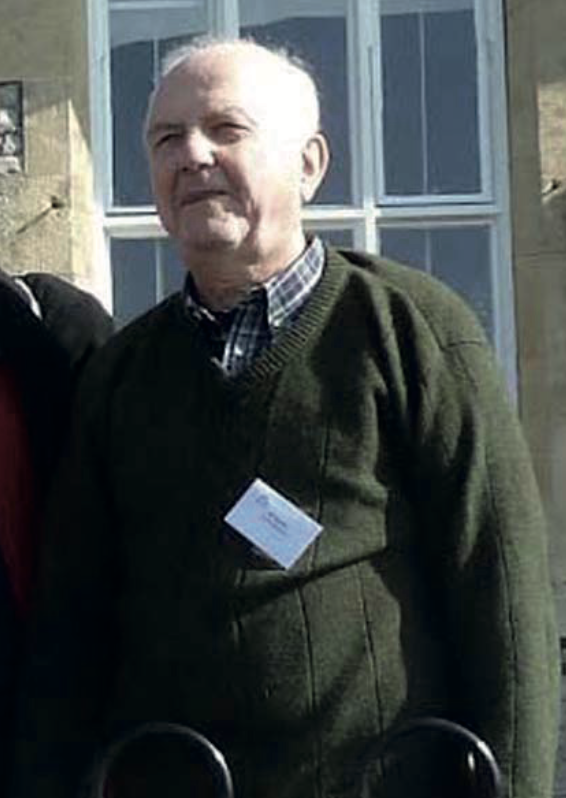
In the remainder of this article I hope to suggest some of the ways Jesus became flesh among us and dwells as the beginning of God's kingdom today. Jesus entered our world as a Suffering Servant. He founded, and left behind, and still lives within a Christian community dedicated to today's suffering world. We are Jesus as community in this suffering and confused time.
We live at a time when human monies have almost replaced God as the goal and source of life on earth. Famously in the fourth century St Ambrose of Milan wrote in words that seem familiar today: "The world has been created for everyone's use. But you few rich are trying to keep it for yourselves. For not only the possession of the earth but the sky, the sea, and the air are claimed by the rich few." Similarly, in our time, the Swedish teenage prophet Greta Thunberg repeats Ambrose's thoughts in today's context of deadly climate change when what is called "Extinction Rebellion" is around and fashionable. "This is all wrong", she said at a recent climate action meeting at the United Nations in New York dedicated to our response on climate change. "I should not even be here – I should be in school on the other side of the ocean."
Seldom before have so many people been aware of human dependence on an equable climate. So important is climate change, and its deadly effect on our lives, that climate has become a regular – and sometimes welcome – story in our daily press. People are recognising that living creatures depend on a balanced climate for our very survival. Christians are also recognising that we Christians have a special responsible role in contemporary climate care. By planting an apple tree near our church buildings, we witness not only to the importance of the inclusiveness of the Incarnation, but also the influence of Christian Eucharists on our climate
Serving other creatures
As far as I know, no other planet is populated by thinking people capable of growing food and building shelters for themselves and other people. As such we are responsible, with God our Creator, to serve other creatures. We form joyful communities of "faith, hope, love and service" among those with whom we share this unique planet earth. We are Jesus Christ's followers as servants within our communities, Christ existing as community as we are described by thoughtful writers. Our buildings everywhere – which are called churches – are reminders of our presence and hopes.
Christian people gathered in these churches soon began to serve our needy contemporaries who may not even have heard of God the Servant in God's Son Jesus Christ. Led by women and men ministers we live to serve, especially where people are hungry, sick, unlearned, or in need of shelter, all of which we can and do provide for in ways large and small. As I mentioned, near our buildings, where Mass is celebrated and baptisms take place, we can plant an apple tree as a companionable symbol of the wider meaning of God's incarnation on Planet Earth. In other words, we witness that God became flesh in the human Jesus centuries ago, including in that interdependent flesh the rest of the soil community in which human flesh exists and serves.
God became flesh in our world when Judaism and Rome were powerful, as John's Gospel indicates in his descriptions of the Sanhedrin and Pontius Pilate. In this same world where Jesus lived and served while here, and in which he was executed, we now live and serve as parents, teachers, traders, technicians, students and countless other roles in our teeming cities. It is important that we remember that we are Jesus present as community today and it is through us that he serves.
Joining the Jesuits
When in my late teens I left home and joined the Jesuits, I used to enjoy fruit harvests in our own local orchard which included Bramleys. When now I eat a delicious cooked Bramley I remember the story of the little girl called Maryanne who planted an apple pip in the back garden of her terraced house in Southwell, near the Cathedral. That pip developed into the original Bramley apple tree, named after a later occupant of the house.
I once visited the terraced house and saw the original tree had fallen to the ground, but one of the branches had grown upwards to form a new large fruitful Bramley apple tree. I came away with a bag of apples kindly given to me by the owner of the tree. I also visited and enjoyed harvests from the orchard at the Yorkshire Benedictine Abbey of Ampleforth. Through religious houses, with their traditional orchards, apples are prime educators and encouragers of holistic spirituality. I try to share their wisdom as an eco-theologian.
As the presence on earth today of the human, rural Jesus we are responsible for a world with a damaged climate. We can and do support numerous caring groups like Green Christian, Friends of the Earth, CPRE, the Woodland Trust, and more locally, those such as Rother Environmental Group and Bexhill Environmental Groups in my own area. As the cosmic Christ today we include other earth creatures in what we are and do. We are especially concerned to heal and promote healthy life supporting climate. Trees are special friends of good climate, and, with their seeds, exist to feed other living creatures (Gn. 1.3) Together we serve an inclusive earth community As Pope Francis says: "One day we will be all animals again in the eternity of Christ. Paradise is open to all God's creatures".
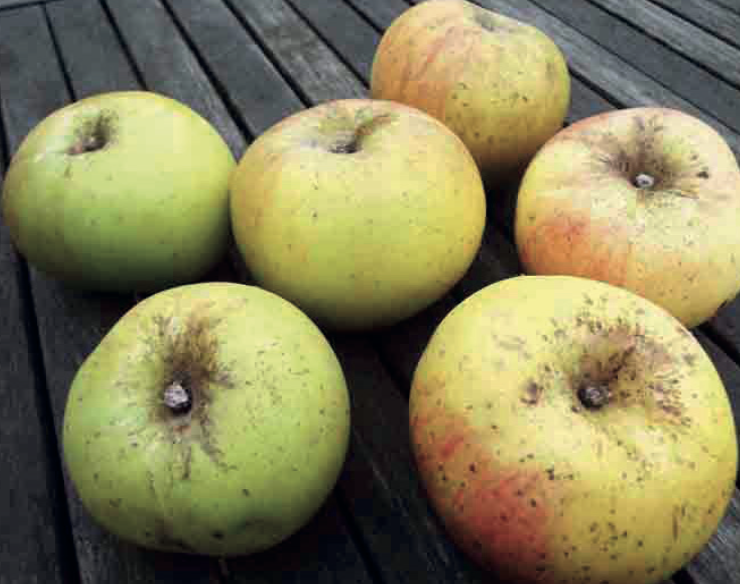
Bramley apples from the Editor's bumper harvest for 2019
As in our earth suffering from human-induced climate disruption, as we become included in the Incarnation God is related to all fellow earth creatures. We especially witness to this beautiful and climate-friendly reality by planting apple trees near where we celebrate the Eucharist, bringing God to earth again in bread and wine. Bread and wine include the whole earth community with which we infleshed humans are related and interdependent. Significantly, God on a tree is our pre-eminent symbol influencing even the very shape of our churches. In Joyce Kilmer's words concluding his beautiful and famous poem: "His crown of thorns is twined with every thorn. His cross is every tree".
Our communication, infleshed among us today, is to preserve memories of Jesus friend and supporter of good climate. I conclude with some suggestions through which we, as Christians, can be special climate friends.
Suggestions for church grounds
- A garden pond – if it is possible to find water.
- Well-managed grounds
- A wildlife "corner"
- Bird feeders
- A butterfly feeder
- A bird house
- Tidy well-managed footpaths in the grounds
- An area for the burial of ashes marked as are traditional areas for bodies; include a crucifix
- A few trees if there is space
- Lastly, offer the neighbours the opportunity to use room in our buildings for meetings
Edward Echlin was a member of the Eastbourne and Bexhill Circle
Christianity and the Earth Community
One spring day Edward Echlin sat on the Mount of Olives. He noticed a wide variety of birds and the sheep grazing beneath the trees. He related this to the passage in Luke's Gospel in which Jesus is described as staying at night on the Mount of Olives after teaching in the temple. This brought alive to Edward Echlin the sayings of Jesus about birds and sheep and other wildlife.
With imagination, he could place himself in hilly Nazareth, with its few hundred families and their sheep and goats, oxen, cattle and donkeys. He imagined the growing Jesus learning about the useful elder trees, the scattered tabor oaks and aleppo pines, the nettle, bramble and mallow and the startling yellow chrysanthemums of April. Here in the olive groves was that startling biodiverse world of the psalms, prophets, Genesis and the rabbis.
Sheep symbolism pervades the Christian story. There were shepherds and sheep in Luke's nativity story. The shepherd metaphor for Jesus has priestly and kingly associations; the Shepherd King, as a biblical ideal, was to rule with compassion and wisdom, his justice including hills, fields and weather – in a word, soil fertility.
Beyond our planet there may exist a plurality of worlds, whole thinking kingdoms, some with lives of unexpected shapes and forms and complexities. The possibility of aliens out there, of strangers to us, should be for us not a source of anxiety, much less of earth abuse, but of wonder at what God has done for ourselves and our earth in Jesus. Jesus, God's personal Wisdom incarnate, fills all worlds of life wherever they may be.
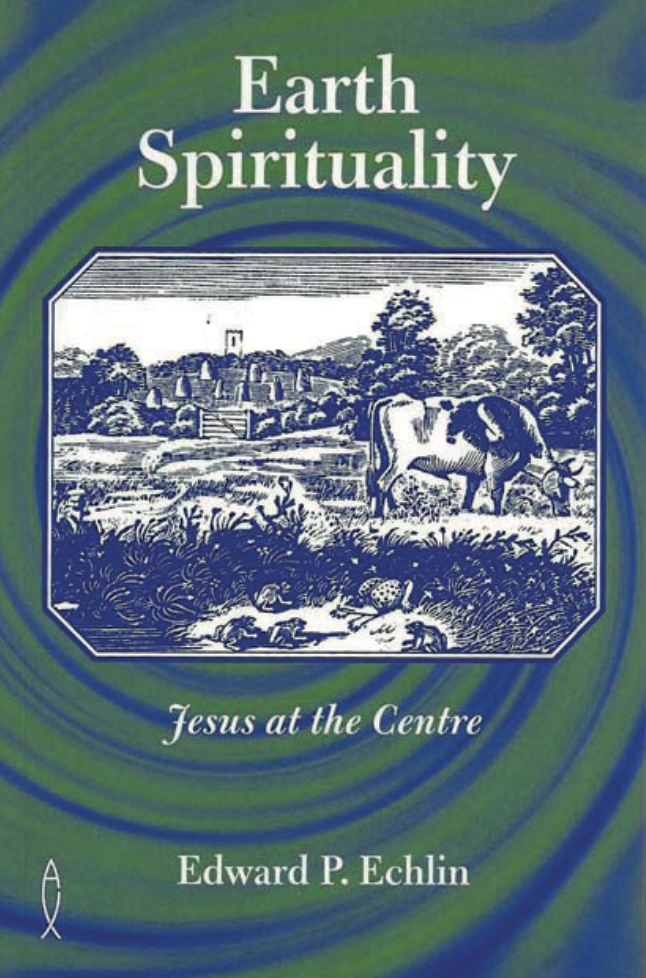
These are a few observations from Edward Echlin's book Earth Spirituality: Jesus at the Centre, published in 1999 by John Hunt Publishing. B.R.
1 Parochial and Plain Sermons, Rivingtons, London, 1928. P. 238
2 The Spiritual Exercises of Saint Ignatius, Thomas Corbishley, S.J. trans., Anthony Clarke, Wheathampstead, 1963.