Human Values or Human Rights?
By John Duddington
Human Rights – ripe for re-examination?
The manifesto of the incoming Government, elected on 12th December 2019, included a commitment to:
update the Human Rights Act and administrative law to ensure that there is a proper balance between the rights of individuals, our vital national security and effective government……In our first year we will set up a Constitution, Democracy & Rights Commission that will examine these issues in depth, and come up with proposals to restore trust in our institutions and in how our democracy operates
This interest in looking at the nature and scope of the Human Rights Act, 1998, need cause no surprise. For one thing it is now twenty years since it was first enacted and all such pieces of legislation need as time passes to be looked at afresh to see that they meet current needs. Secondly as Lord Sumption pointed out in his 2019 Reith Lectures the Human Rights Act, which gives effect to the European Convention on Human Rights, has been, in the hands of the courts, subject to mission creep.
The most striking example is Article 8, which provides a right to respect for a person's 'private and family life, his home and his correspondence', subject to certain restrictions that are 'in accordance with law' and 'necessary in a democratic society'. This unexceptionable statement was, as Lord Sumption says, designed as 'a protection against the surveillance state in totalitarian regimes'. In fact, it has been extended to cover 'anything that intrudes on an individual person's autonomy'. This includes
'the legal status of illegitimate children, extradition, criminals sentencing, abortion, artificial insemination, homosexuality and same sex unions, child abduction, the policing of public demonstrations, employment and social security rights, legal aid, planning and environmental law, noise abatement, eviction for non-payment of rent and much else besides'
Need for re-examination
Lord Sumption's point is not that these are unworthy subjects of legal protection, but that this great edifice, built upon one sentence, is something that needs re-examination on the basis that unelected judges and not Parliament have created all of this new law. I would go further and ask whether we need a fundamental re-appraisal of the concept of human rights and, if this is so, then it is essential that there is a Christian input.
Present-day concepts of human rights date from just after the Second World War: the Universal Declaration of Human Rights was agreed at the United Nations General Assembly gathered in Paris in 1948 and the European Convention on Human Rights was agreed at Rome in 1950. Both were, of course, influenced by the need to protect people from the excesses of totalitarian states and so the emphasis was very much on personal freedom and personal autonomy. However, as pointed out by Nicholas Wolterstorff, 'the UN documents do not explain what a human right is; after a few introductory comments, they each just give a list of human rights'. The same is true of the European Convention on Human Rights.
This means that there is no attempt to place human rights within any religious perspective. Rowan Williams remarks that: 'What makes the gap between religion and the discourse of human rights worrying is that the language of the Universal Declaration is unthinkable without the kind of moral universalism that religious ethics safeguards'. Moreover, there is a practical concern, as David McIlroy points out: 'The problem with the idea of rights as a human invention is that if rights are just a human invention, although we need rights to protect ourselves against the state, we also only have rights if they are created or enforced by the state'.
A Christian Basis for Human Rights
It remains true that many Christians are suspicious of the concept of human rights. This is, I think, for three reasons. The first is that they are seen as weapons in the hands of aggressive secularists. There is some truth in this. Vanessa Klug for instance, says that: 'Human rights are seen as a possible alternative common morality for the UK'. Her implication is clear: now that society no longer speaks a religious language common to most of us human rights can supply this. Secondly, the notion of a right is seen as itself fundamentally unchristian. The language of rights, with its connotations of individuals asserting what they want at the expense of a Christian concern for others, is seen as selfish. Finally, the notion of human rights is seen as coming from the Enlightenment idea of natural rights rather than having a specifically Christian basis and in particular a Catholic one.
There is something in all of this but not so as, in my view, to destroy any Christian concern for human rights. To take the last point first, it is true that thinkers such as John Locke (1632-1704) took the existing concept of natural law and natural justice and turned this into one of natural rights, one of which was the right of freedom of religion. However, he went further and built his idea of natural rights around that of property. Private property was not seen as theft from the common good but was instead 'compatible with the natural common ownership which existed in the beginning of things'. Few would disagree with the principle of this but the emphasis on rights of property as natural rights rather than, for instance, the right to freedom from poverty, made this, in McIlroy's phrase: 'a theory of human rights for rich men'. Locke's ideas undoubtedly inspired the American Revolution and influenced the framers of the U.S. Declaration of Independence.
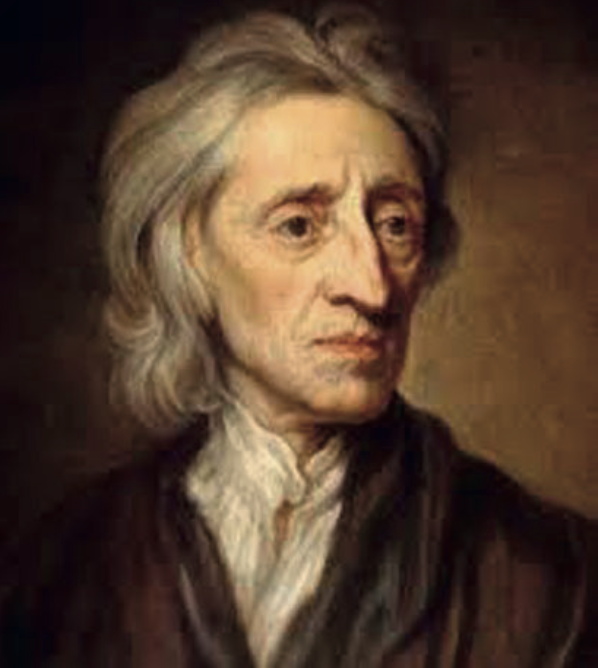
John Locke
However, to see such thinkers as Locke as the progenitors of human rights is to ignore the evidence of Christian concern for human rights. As Newlands points out: 'The Bible talks of release of captives, and Jesus speaks of visiting prisoners'. In a more modern context St. Wulfstan, Bishop of Worcester, visited Bristol, then part of his diocese, in the late 11th century to preach against the slave trade. Take, too, this sermon of St. John Chrysostom: 'The rich man is a kind of steward of the money which is owed for distribution to the poor. He is directed to distribute it to his fellow servants who are in want….for his own goods are not his own but belong to his fellow servants'. What St. John Chrysostom is in effect saying is that the poor have a right to that money. This example could be multiplied many times.
Moreover, it is clear that this emphasis for rights was carried on into the Middle Ages, as Brian Tierney has shown, and was most memorably demonstrated by the Dominican friar Anton Montesimo in 1511 in a sermon in what is now the Dominican Republic. The place was a makeshift wooden church on the island of Hispaniola. The text of Montesimo's sermon was: 'a voice cries in the wilderness' and his audience, as Ruston puts it: 'were Spanish who had crossed the ocean to get rich in the Indies as quickly as possible'. The context was oppression by the Spaniards of the native Indians. Montesimo's central words were these:
I am the voice of Christ in the wilderness of this island…such a voice you have never yet heard, more harsh, more terrifying and dangerous than you ever though you would hear. This voice says that you are all in mortal sin and that you will live and die in it for the cruelty and tyranny with which you use these innocent people. Tell me, with what right, with what justice, do you hold these Indians in such cruel and horrible slavery? …. Are they not men? Do they not have rational souls? Are you not obliged to love them as yourselves? Don't you understand this? Can't you grasp this?
Nor must we forget the noble part played by Protestant Christians in ensuring that human rights were included in the United Nations system after the Second World War and it is worth recalling that they received inspiration from the Christmas wartime radio broadcasts of Pope Pius XII. When, moreover, the United Nations General Assembly gathered in Paris in 1948 the future Pope John XXIII, then Nuncio in Paris, was active in promoting what became the Universal Declaration on Human Rights.
The third objection
It is clear, I think, that the third objection to a Christian concern for human rights, namely that they lack a specifically Christian basis and, in particular, a Catholic one, is false. This, too, disposes of the first objection, that the language of human rights is used as a weapon against religion by aggressive secularists. If that is so then that is our fault for not putting forward a clear Christian commitment to the cause of human rights.
What, then of the second objection, that a concern for 'rights' as such is frankly not Christian? Not only is this true in itself, but logically the existence of a right must be preceded by a duty to give effect to that right. Simone Weil in The Need for Roots begins with this arresting passage:
The notion of obligations comes before that of rights, which is subordinate and relative to the former. A right is not effectual by itself, but only in relation to the obligation to which it corresponds, the effective exercise of that right springing not from the individual who possesses it, but from other men who consider themselves as being under a certain obligation towards him…
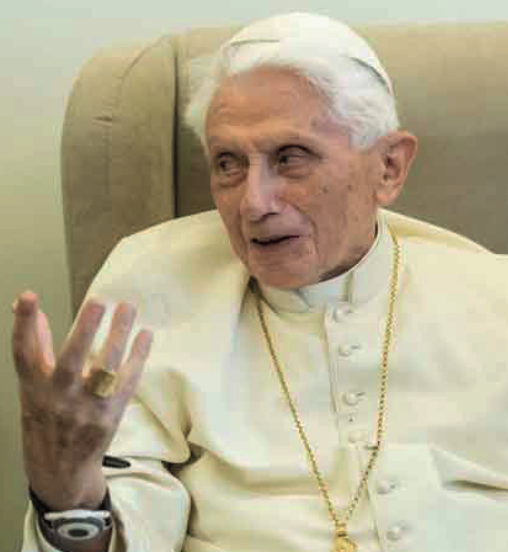
Pope Benedict XVI.
Pope Benedict XVI reflected this concern when he suggested that: 'Perhaps the doctrine of human rights ought today to be complemented by a doctrine of human obligations and human limits'.
A Way Forward
Given the Christian commitment to human rights what should be our attitude to any future reshaping of human rights legislation? I suggest that it should be informed by the following:
We start from the words of Pope Benedict in his address at Westminster Hall in 2010: 'The Catholic tradition maintains that the objective norms governing right action are accessible to reason, prescinding from the content of revelation. According to this understanding, the role of religion in political debate is not so much to supply these norms, as if they could not be known by non-believers – still less to propose concrete political solutions, which would lie altogether outside the competence of religion – but rather to help purify and shed light upon the application of reason to the discovery of objective moral principles'. The point here is simple: it is not for us as Christians to insist on the details of laws or political programmes although as individuals acting on our faith we will undoubtedly wish to argue for particular positions. What we can do is to put forward certain fundamental arguments.
These arguments should not be based on the notion of autonomy which appears to underpin much of existing human rights laws. As Wolterstorff puts it, the language of the Universal Declaration of Human Rights (and it may be said, of the European Convention on Human Rights too) is directed to 'the rights of normal adults and children in typical situations in the modern world'. As he puts it: 'They did not have in mind infants, those in a permanent coma or those with advanced dementia'.
Suppose that I am compulsorily detained in a hospital for patients with acute mental illnesses: I am totally disorientated, possibly lacking in any kind of support from family and friends with my liberty removed. No doubt that this is necessary but what use is the language of human rights to me? Or what about the aborted foetus or the elderly, slightly confused but quite rational, person under pressure from family members to commit euthanasia as they can no longer be bothered to care for him/her? What, in short, about the most vulnerable members of our society?
For the Christian the way forward is to stress the unique dignity of each person as made in the image of God. Note that the word is not 'individual' but person with all that connotes. As Maritain puts it: 'Man is an individual who holds himself in hand by his intelligence and his will'. But there is more: Man (and woman) is a person and 'it is the spirit which is the root of personality'. It is the dignity of each person bringing with it the fundamental and inalienable worth of each and every human person which must be the bedrock of human rights.
Should I, however, have used the term 'rights' at all? It does have some value in general discussion because that is the way in which the discourse in this area is couched. However, if we are to respond as Christians to any Government suggestions as to the future content of human rights law, then I suggest that we as Christians could do worse than seek to agree amongst ourselves and perhaps amongst non-Christian religions, too, a statement of fundamental human values. This not only picks up Pope Benedict's point about the duty of Christians to 'purify and shed light upon the application of reason to the discovery of objective moral principles' but gets us away from the language of rights, although when the values are given concrete shape in legislation the use of 'rights' may be unavoidable.
So I end with a challenge to Newman members and any other readers: what Christian values should underpin our society? How should they be expressed? In the end we will be judged by how we meet the needs of the most vulnerable: the outcast and the prisoner, the old and the ill. 'In so far as you neglected to do this to one of the least of these, you neglected to do it to me.' (Matt. 25:44-45).
John Duddington is a member of the Worcester Circle; he is Editor of Law & Justice – the Christian Law Review – and a member of the Editorial Committee of The Newman
Notes
- Ibid. at p.57
- Published as Trials of the State: Law and the Decline of Politics (London: Profile Books, 2019) see especially Chapter 3 Human Rights and Wrongs
- Ibid. at p.57
- Journey Towards Justice: Personal Encounters in the Global South (Grand Rapids, Michigan, Baker Academic, 2013) at p. 130.
- In 'Reconnecting human rights and religious faith' in Faith in the Public Square (London: Bloomsbury Publishing, 2012), p. 161.
- D. McIlroy 'Human Rights Theory: Fit For Purpose, Fundamentally Flawed or Reformable?' Law and Justice 173 (2014) pp. 129-144 at p. 132.
- In Values for a Godless Age (Penguin: London, 2000), p. 192.
- See in particular Locke's Two Treatises on Government ed. M. Goldie (London: Dent 1993).
- Ruston, Human Rights and the Image of God, (SCM Press, London, 2004) p. 208.
- D. McIlroy 'Human Rights Theory: Fit For Purpose, Fundamentally Flawed or Reformable?' Law and Justice 173 (2014) pp. 129-144 at p. 134
- In Christ and Human Rights (Aldershot: Ashgate, 2006), p.13. This whole book is full of ideas for a Christian engagement with human rights and is enormously stimulating. See also J. Mahoney The Challenge of Human Rights (Oxford: Blackwell Publishing, 2007), which looks at the struggle for human rights from a wider perspective.
- Quoted in Wolterstorff op. cit. at p. 66.
- See the examples in Wolterstorff at Ch. 11.
- In the Idea of Natural Rights (Grand Rapids, Michigan, Eerdmans, 1997).
- I owe this account to Ruston, Human Rights and the Image of God, pp. 66-68
- I have written at much more length on this topic in my Christians and the State (Leominster, Gracewing, 2016) and in particular Ch. 10.
- The story is well told in John S. Nurser, For All Peoples and All Nations (Geneva: WCC Publications, 2005).
- Nurser, For All Peoples and All Nations, p. 165.
- Nurser, For All Peoples and All Nations, p. 171 fn. 27.
- London; Routledge, 1952) page 3 (First published in Paris in 1949 as L'Enracinement, prélude à une déclaration des devoirs envers l'être humain).
- In 'Was die welt zusammenhalt' ('What keeps the World Together') an address given on January 19th 2004 at the Catholic University of Bavaria anniversary and published as Chapter 2 'Searching for Peace, Tensions and Dangers' in Values in a Time of Upheaval (San Francisco: Ignatius Press, 2006), p. 40.
- The whole of his address can be found in Peter Jennings (ed.), Benedict XVI and Blessed John Henry Newman, The State Visit September 2010 The Official Record (London: CTS, 2010), pp.102-106.
- Wolterstorff op. cit. at page 131
- In The Rights of Man (London; Godfrey Bles. 1940 at page 6. See also his Scholasticism and Politics (London: Macmillan, 1940) where this idea is more fully developed.