The Last Supper and the Origins of the Eucharist
By Bernard Robinson
Many preachers take it as axiomatic that the Last Supper was the first Eucharist. So did the Council of Trent. (Denzinger § 875). The use of 'chalice' rather than 'cup' in the present Catholic version of the Canon in England and Wales when speaking of the Last Supper is, I presume, predicated on the understanding that the meal was a Eucharist. How certain is this? I shall here be arguing that the relationship of the Eucharist to the Last Supper is rather more complex than is commonly supposed.
The Dating of the Last Supper
Our earliest account of the Last Supper, in 1 Cor 11 (written from Ephesus, AD c.55-56), does not say when the Last Supper took place in relation to Passover, only that it was "in the night when he was handed over." In Mark 14, Matt 26 and Lk 22, the Last Supper is a Passover meal, held on 14/15th Nisan (a Hebrew month in the Spring). Some of the details of the Last Supper are especially characteristic of Passover –
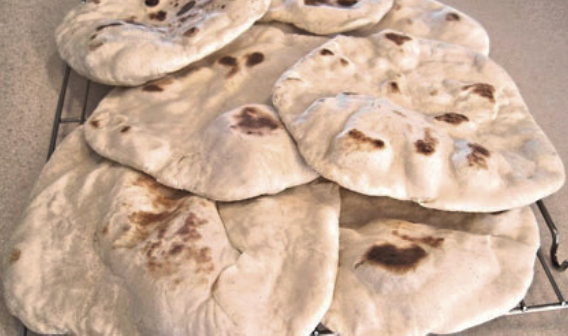
reclining; dipping; timing (at night). (See, e.g. Mk 14:18, 20, 17.) On the other hand it is strange that Mark and Matthew do not mention the eating of the Passover lamb. Lk 22:15 ("I have eagerly desired to eat this pascha with you") could refer to the lamb, but probably means the Passover meal itself. In the Synoptics, the unleavened bread takes on the prominence accorded in the Passover meal to the lamb. If the Last Supper was a regular Passover meal, this is perhaps surprising.
In John, the meal is eaten the day before Passover, 13/14th Nisan, and Jesus is crucified on the day when the Passover lambs are slaughtered in the Temple (13:1; 18:28; 19:14). Many scholars suspect John of changing the dating in order to have Jesus die at the time when the lambs were being killed. There is, though, an early Jewish baraita (bSanh 43a) saying that Yeshu (Jesus) was hung (crucified) "on the eve of Passover." Also, G. Vermes is probably right to say that Jesus' Trials and Crucifixion 'could not have taken place on Passover day.' People are said to have come in from the fields (Simon of Cyrene, Mk 15:21, Lk 23:26), and the disciples to have gone to buy spices (women from Galilee: Lk 23:56). On Passover? If we accept John's dating, do we have to accept that the meal was not really Paschal in nature? No. The Paschal details in the Synoptics (reclining; dipping; timing [at night]), are found in John too (Jn 13:23, 26, 28, 30). There are additional Paschal echoes in his reference to hyssop and the non-breaking of bones. Why so? The solution may be that, knowing that he would not live to eat the regular Passover meal that year, Jesus held an improvised Passover earlier, without, of course, the use of a lamb. Knowing that the Last Supper had Paschal features, the Synoptists will have perhaps assumed that it was a regular Passover meal.
We can, then, perhaps take it that, whether an official Passover or an unofficial one, the Last Supper had Paschal features. What, then, was the origin and nature of Passover?
The Origin and Nature of Passover
Origin
The Jewish feast of Pesach, Passover, celebrated over seven days, may be a combination of two different celebrations involving unleavened bread:
- A rite intended to avert evil (the destroyer, maschith, Exod 12:23) held in the Spring, when nomads were on the move
- A Spring-time fertility festival (Matzoth, Unleavened Bread) taken over from the Canaanites, the first harvest festival of the year: that of the barley crop.
Nature
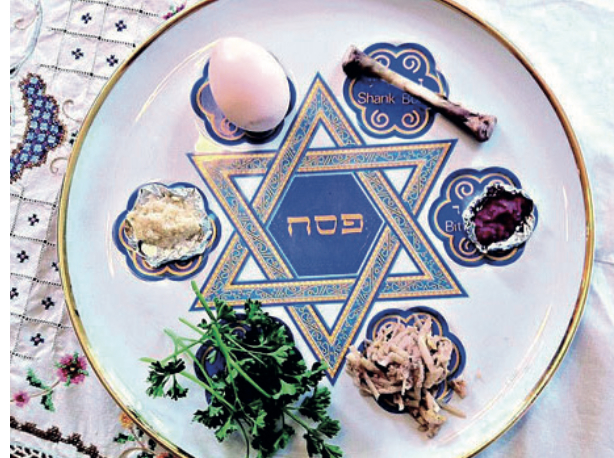
Seder-Plate
The combined feast (cf Mk 14:1 'The Passover and the festival of Unleavened Bread') is the first of the three pilgrim feasts in the Jewish calendar (the others being Pentecost and Tabernacles). For the Jew it brings together past, present and future. It commemorates the most spectacular event of the past, the Exodus from Egypt; it celebrates present-day Jewishness; and it looks forward to the Messianic age. (There is a tradition that Messiah will come at Pesach.) The Seder (Passover) service as observed today is in essentials much the same as prescribed in the Mishnah, AD c. 200. Some scholars doubt whether we can assume that Passover was celebrated in quite the same way as early as Jesus' day. In what follows, however, I shall assume that it was in fact much the same.
The basic features of the Seder meal are:
(1) The haggadah: the recital of the events of the Exodus event. Remembrance of the past is central to the celebration (c.f. Exod 12:14, "This day shall serve to you as a zikkārōn, remembrance"). Mishnah Pes. 10:5 quotes the words of Gamaliel (a rabbinical leader): In every generation, everyone is obliged to regard himself as though he had actually gone forth from Egypt, for it is written: "You shall tell your son on that day: 'This is done because of what the LORD did for me when I came out of Egypt' (Exod 13:8). Not only our fathers did the Holy One, blessed be he, redeem, but us too he redeemed with them".
(2) The eating of the Passover lamb (nowadays omitted in the absence of a Temple; it is represented by a lamb shankbone), unleavened bread and bitter herbs.
(3) The interpretation of these elements. This is not explicitly enjoined in the Mishnah.
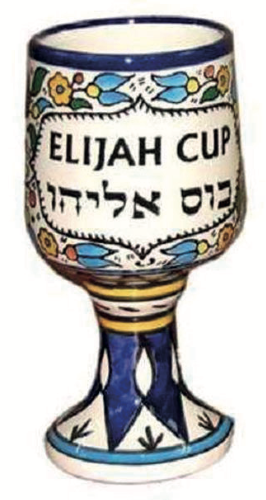
(4) The drinking of four glasses of wine. ("They give to the poorest man in Israel not less than four cups of wine": Pes. 10:1). Two are drunk before the meal proper, two after. A single fifth cup is then filled, Elijah's cup; Elijah was expected to return at Passover.
(5) A traditional element not mentioned in the Mishnah is the Afikoman. This is a piece of unleavened bread eaten at the conclusion of the meal. Sometimes (mainly in the Ashkenazi community) it is hidden and the children have to search for it.
The Passover of Egypt and the Passover of the Generations
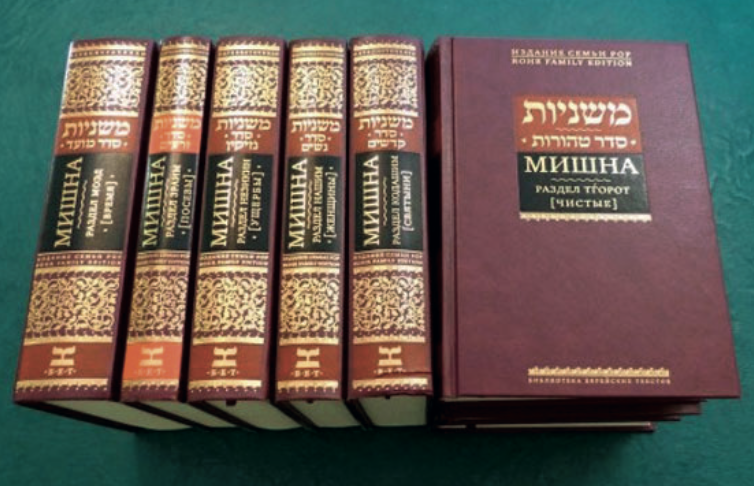
The Mishnah, a collection of rabbinic laws and traditions, distinguishes between "the Passover of Egypt [Exod 12] and the Passover of [subsequent] generations" (Pes.9:5). The Passover of Egypt involved smearing the door post with blood. Subsequent Passovers did not. Nor did they involve having one's loins girt and one's feet shod with sandals, or holding one's staff in one's hand. They included the drinking of wine, about which nothing is said in respect of the Passover of Egypt.
The Passover of Egypt looked forward to the Exodus; the Passover of the Generations looked back and commemorated that event. So, perhaps, with the Last Supper and the Eucharist? There will be more on this later.
Problem Elements in the Last Supper Accounts
Are the Remembrance words historical?
"Do this in memory of me" is found in the Gospels only in the Longer Text of Luke. Some scholars, therefore doubt whether Jesus said the words. I think he probably did. Paul's testimony in 1 Cor 11:25 surely means that he himself had been taught that Jesus said these words and that he himself had so taught the Corinthian church which he founded AD c.50. The probable implication is that we can take the tradition back to the time of Paul's acceptance of Christian claims AD c.36, or at least to his visit to Jerusalem three years later (Gal 1:18), and that we can presume its historicity.
Whether Paul implies that it was common practice in his day (in Corinth or elsewhere) to rehearse at the Lord's Supper an account of the Last Supper narrative, is unclear. From the fact that as late as c. 150 Justin Martyr (1st Apology, 67) speaks of the President as extemporising the Eucharistic Prayer, we may conclude that liturgical form remained fluid until a century after Paul's time. Some Eucharistic Prayers even today do not contain the so-called 'words of consecration', notably the Anaphora (Canon) of Addai and Mari used by the Assyrian Church and some other Eastern churches. In 2001 a document issued by Pope John Paul II accepted such liturgies as valid.
Did Jesus himself eat and drink at the Last Supper?
Some think not. Luke has Jesus say, "I have eagerly desired to eat this pascha with you before I suffer. For I tell you that I shall not eat it [again] until it is fulfilled in the Kingdom of God" (22:15-16). This is ambiguous: (i) You eat it, but I shall not"; (ii) "This is the last time that I shall eat it." I think that the second interpretation is the more likely since the equivalent saying over the cup (v.18) has "From now on [apo tou nun] I shall not drink…"
After telling us that Jesus had said how much he had been looking forward to eating this meal, Luke can scarcely want to imply that during it he sat by watching the disciples eat and drink. Mk 14:25 and Matt 26:29 have similar words but spoken only over the wine. In all three accounts, what we seem to have here is that, sensing that death is imminent, Jesus says that the next such festivity will occur in the Kingdom.
Over which element did Jesus say, "This is my body"?
The Unleavened Bread eaten during the course of the meal? If, however, there was an Afikoman (a piece of unleavened bread) at the Last Supper, it could have been said over this. This would square with the fact that Luke and Paul date the words over the cup "after supper". The bread may have been the Afikoman and the cup the third cup, drunk after the meal proper.
"My Body" or "My Flesh"?
Since Aramaic and Hebrew have no word for a living body, John (6:51, "This is my flesh for the life of the world") may be closer to Jesus' own words than Paul and the Synoptists. The early church's preference for body (Gr sōma) will be because this word includes the idea of a corporate body. They wanted to associate the Eucharist with the building up of the church as the body of Christ. Thus Paul, in saying that those who eat and drink unworthily are guilty in respect of the body and blood of the Lord…not discerning the body (1 Cor 11:27-29), is probably referring both to the body of the Lord and to the Church as his body.
The word covenant occurs in all four accounts. Mark and Matthew have Jesus talk of "my blood of the covenant", recalling Exod 24:8 (on Sinai Moses makes a covenant using the blood of oxen). In Paul (and the Longer Version of Luke) we have the expression "the new covenant in my blood", a clear reference to Jeremiah 31, indicating that with the shedding of his blood Jesus would usher in a new unilateral covenant between God and his people.
Origin(s) of the Eucharist
A Single Source?
It is probably an oversimplification to think that Jesus at the Last Supper simply instituted the Eucharist and then Christians adopted it as a weekly (and later daily) practice.
Reasons for saying this:
- The Eucharist is a commemoration of Jesus' death, and the elements involve the Risen Christ.
- The absence of an account of the Institution from John's account of the Last Supper, and perhaps from the original text of Luke, is hard to square with the traditional view. If John, and perhaps Luke, did not connect the Eucharist with the Last Supper, it seems likely that the connection, historically speaking, was rather less straightforward than is often supposed.
- The Didache [c.AD 100?] ch9 treats the Eucharist (though it is possible that this here means an Agape-meal rather than the sacrament) as a thanksgiving for the gift of Jesus and as an anticipation of the future gathering of the Kingdom. There is no reference here (or in ch14: "On the Lord's Day, assemble and break bread…") to the Passion or the Last Supper.
We may note in this connection that the tradition in the West is to see the consecration happening when the Last Supper account is narrated and the words "This is my body…" pronounced. In the East, the consecration occurs at the epiclēsis, the invocation of the Holy Spirit, which in the Eastern rites follows the Last Supper narrative. (In the West it precedes it.)
Several Sources?
It would seem quite likely that the Eucharist is a development from four things:
Jesus' practice of eating with all and sundry
e.g. Mk 1:29-31, 2:15; Lk 5:27-34, 7:31-34, 11:37, 14:1, 15:1-2, 19:7.
Hence Jesus' reputation as "a glutton and a drunkard, a friend of tax-collectors and sinners" (Mt 11:19). This practice will have been intended to be an icon of God's calling all, irrespective of unworthiness or standing, to the Kingdom. These meals prefigured the Messianic Banquet (cf Isa 25:6). (So did the Qumran meal, but only initiates were admitted to that.) Luke has eight meals; at one of them, in a Pharisee's house, Jesus says that "the poor, disabled, lame and blind" should be invited to dinner, whereupon one guest exclaims "Blessed shall be whoever eats bread in the Kingdom of God." (Lk 14:15). This brings out clearly the fact that Jesus' meals foreshadowed the Messianic Banquet. Appropriately, Jesus then tells the Parable of the Great Banquet (14:16-24). At the Last Supper, Luke (alone) has Jesus say: "You will eat and drink at my table in my Kingdom" (22:30).
Jesus' Feeding Miracles.
These again prefigured the Kingdom. (The Gospel of John connects the Feeding of the 5,000, Jn 6, not the Last Supper, with the Eucharist.)
The Last Supper
This is the culmination of Jesus' meals with his disciples. He transforms a paschal meal into a foreshadowing of his death, and enjoins the disciples to do what he is doing. He thus echoes God's words to Moses and the Hebrews: "This day shall be for you a memorial day, and you shall keep it as a feast for the LORD. Throughout your generations, you shall observe it as an ordinance for ever" (Exod 12:14).
Just as remembrance in the case of the Seder meal involves a memorial not only of the original meal, but much more so of that which it led up to, the Exodus, so the Eucharist is a memorial more of the Death and Resurrection, which the Last Supper presaged, than of that meal itself.
Meals with Jesus after his Resurrection
Lk 24:30 "While he was at table with them, [in Emmaus] he took bread, blessed and broke it and gave it to them."
Acts 10:41 "witnesses who ate and drank with him after he rose from the dead" (Peter in Cornelius' house); cf 1:4 "while synalizomenos, eating [or lodging] with them, he ordered them not to leave Jerusalem."
Jn 21:13: "he gave them bread and fish."
The early Church's fellowship meals.
Acts three times refers to the Breaking of Bread. Some scholars (e.g. Dupont, Marshall and Ratzinger) find all three to refer to the Eucharist. I think that they claim too much.
Acts 2:42-46 has the early Christians persevering in The Teaching of the Apostles, The Fellowship, The Breaking of Bread and The Prayers. They daily frequent the Temple, breaking bread at home, taking sustenance with agalliasis (joy) and sincerity of heart. They presumably saw these meals as continuing their fellowship with Jesus. I cannot agree with Dupont and Marshall that we are talking here about a Eucharistic celebration. Not only is wine not mentioned, but "there is no evidence for the daily observance of the Eucharist in the earliest period of the Church's history (both the Didache and Justin speak of a weekly celebration on the Lord's Day)" (Robinson, 492). Daily Mass probably began in the monasteries. In the East, the Liturgy is still normally celebrated only on Sundays and Feast days.
In 20:7,11, we hear that when 'we' had gathered together to break bread on a Sunday at Troas (v.7), a boy, Eutychus, fell from a window at midnight during Paul's sermon. Paul revived the boy, broke bread and tasted it (v.11), then concluded his sermon. As this occurs on a Sunday, can it mean the Eucharist? In v.7, possibly, though there is no mention of wine. We will return to this text later. In v.11 Paul does not distribute the bread, he only eats it himself. It seems more likely that Paul is merely keeping up his strength until he finishes his sermon at dawn before departing. (v11)
In 27:33-38, on Paul's way to Rome by sea, after a storm breaks out, so that none of the crew or passengers eats for fourteen days (because the sea water has got into the victuals or because of sea-sickness?), Paul eventually calls on them to take some sustenance and then "taking bread he gave thanks to God before them all and breaking it began to eat. Heartened by this, they all took sustenance." I cannot follow Marshall, Dupont and others, to take this to mean that Paul himself celebrated the Eucharist in the presence of a crowd of unbaptized soldiers and sailors.
Acts, therefore, seems to be, mostly at least, speaking of regular fellowship meals held in the early Church. They probably were thought of as not only continuing their fellowship with Jesus but as an icon of the coming Messianic banquet. Wine was probably not normally drunk, and the meals cannot, in my view, accurately be described as Eucharists.
Celebration of the Eucharist
Wine was usually drunk by Jews only on the major festivals, and at first the meals of the early Christians in Palestine may not have included the use of wine. Jewish Christians may (though this is speculation) have taken the Command to Repeat as referring to an annual celebration at Passover-time, and they may thus have originally commemorated the Last Supper and the death of Jesus, with bread and wine only once a year. But by the mid-50s, at least in Corinth, wine was an accepted part of the regular Christian communal meal, which was indisputably Eucharistic in nature. Christians believed that this meal united them with Jesus, who was present with them as they ate and drank.
This was no ordinary food: to eat of it was to partake of Jesus himself, in his death and his Risen state. "The cup that we bless, is it not a sharing (koinōnia) in the blood of Christ? The bread that we break, is it not a sharing in the body of Christ? Because there is one loaf, we, though many, are one body, because we all share in the one loaf." (1 Cor 10:16) The elements on the table were in some sense Jesus' own body and blood. They were, as Jn 6:51b-59 would later put it, eating Jesus' flesh and drinking his blood.
To eat and drink unworthily, Paul told them (1 Cor 11:27), was to be guilty of the body and blood of the Lord. The meal recalled Jesus' death and was instrumental in deepening the unity of his followers, as also in hastening the coming of the Kingdom.
How far back can we trace the observance of the Eucharist? Certainly, as we have seen, to the mid-50's. But in 1 Cor 11:23-26 Paul says that the Eucharist is to be celebrated in accordance with "What I have received of the Lord." This as we have seen, will probably mean that the tradition is at least as early as the mid or late 30's of our era. Perhaps the Eucharist was celebrated on Sundays (as it certainly was from the second century) and fellowship meals on other days of the week? The Sunday meal at Troas (Acts 20:7), although wine is not mentioned, may well have been a Eucharist. It occurred during Paul's third missionary journey, not long after he had sent the Corinthians his first letter to them, a letter which contains the dominical command at the Last Supper "Do this in memory of me".
Conclusion: An Attempted Synthesis
Jesus came to usher in God's Kingdom: that is, a world based on love rather than exploitation, a world that was to be divine gift rather than a reward for greater or lesser worthiness. The Kingdom was to be like a party meal at which all would be equal, since all would be guests at the Father's table. Like all meals, it would not only celebrate existing unity but also bring about, or deepen, unity. One of Jesus' ways of teaching about the Kingdom was by anticipating it, through meals in houses and by picnics on Galilean hillsides. On at least one occasion he is said, like Elisha before him (2 Kings 4:42-44), to have miraculously multiplied the loaves.
When it became clear that his plan for the Kingdom was being rejected by the Jewish leaders, he held one last such gathering, either at Passover or just beforehand in the form of an unofficial Passover. Passover commemorated the liberation of the Hebrews, back in the 13th century BC, which had led to the creation of the people of Israel. It was thought of as uniting Jews over the centuries in a common bond with Moses and the Exodus generation. But also as looking forward to the dawning of the Messianic age.
The food eaten had a symbolic significance: the bread stood for 'the bread of affliction', the wine for joy, etc. At his Last Supper, Jesus interpreted the unleavened bread (perhaps in the form of the Afikoman at the end of the meal) and the wine with reference to his coming death. What his life had not achieved his death would bring about. His sharing of this meal with them would give them fellowship in his death, and an earnest of the life of the Kingdom. He spoke of this meal as a farewell meal but one which they should repeat (annually, or more frequently?). The Last Supper symbolically anticipated Calvary, just as the Passover of Egypt did the Exodus; their subsequent meals, like the Passover of the Generations, would commemorate and re-present the great act of liberation.
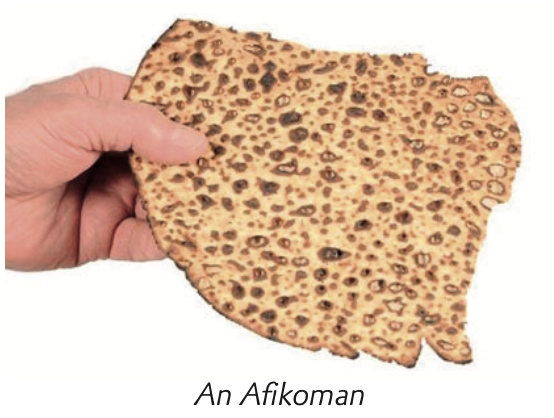
An Afikoman
After his Resurrection, Jesus several times appeared in corporeal form to his disciples at meal-times. The disciples themselves often met together to 'break bread', normally without the use of wine, and they saw these gatherings as continuing Jesus' practice throughout his ministry right up to his final meal with them. The Christians experienced on these occasions the presence of Jesus among them. The Jesus who had died was alive and continued to share his life with them. From the end of the 30's, at the latest, the Eucharist, which included the use of wine, had come to be celebrated (on Sundays?) in compliance with what tradition stated that Jesus had commanded at his Last Supper.
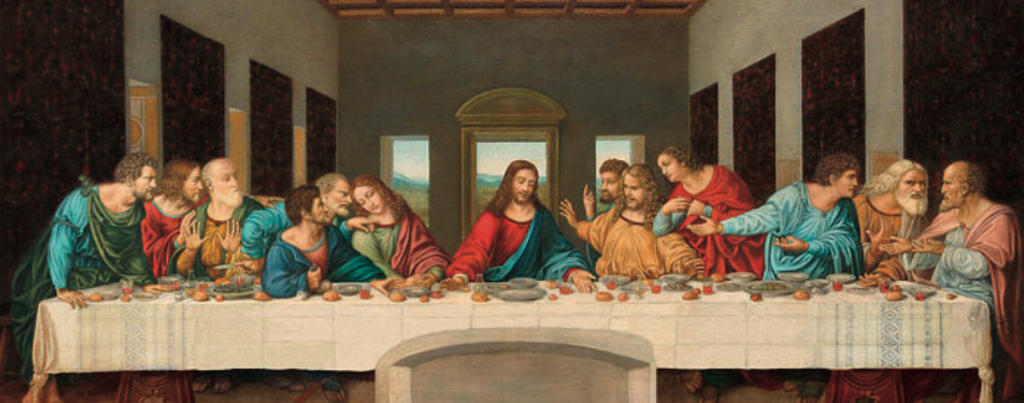
Was the Last Supper, then, the first Mass/Eucharist? It can, I think, only be so described by a rather loose use of language. The Last Supper was a farewell meal but, more importantly, a paschal meal at which Jesus pointed to the bread and wine as symbolising his flesh and blood at his coming Passion, at which time a new covenant would be enacted. He directed his disciples in future "Do this" in order to commemorate him in his self-offering. After the Resurrection, the disciples regularly held meals together, continuing Jesus' practice, and from at least the mid to the late 30s commemorated his Death and Resurrection in fully Eucharistic celebrations in fulfilment of Jesus' command at the Last Supper.
Bernard Robinson, a member of the Tyneside Circle, taught Scripture at Ushaw College, Durham, from 1986 until 1999. This is an edited version of a talk to the Tyneside Circle in July 2019.
References
Brown, R.E., The Gospel according to John (Anchor Bible). 2 vols, 1966
Dupont, J., 'The Meal at Emmaus' in J. Delorme et al, ed., The Eucharist in the New Testament. London, 1965, 105-121.
Marshall, I.H., Luke: Historian and Theologian. Exeter, 1970.
Ratzinger, J. (Pope Benedict XVI), Jesus of Nazareth. Part Two, Holy Week. London, Catholic Truth Society, 2011.
Robinson, B.P., 'The Place of the Emmaus Story in Luke-Acts', New Testament Studies 30 (1984) 481—497.
Robinson, J.A.T., The Priority of John. London, SCM, 1985.
Vermes, G., The Passion. Penguin Books, 2005.