Aidan Reynolds pays tribute to Robert Williams.
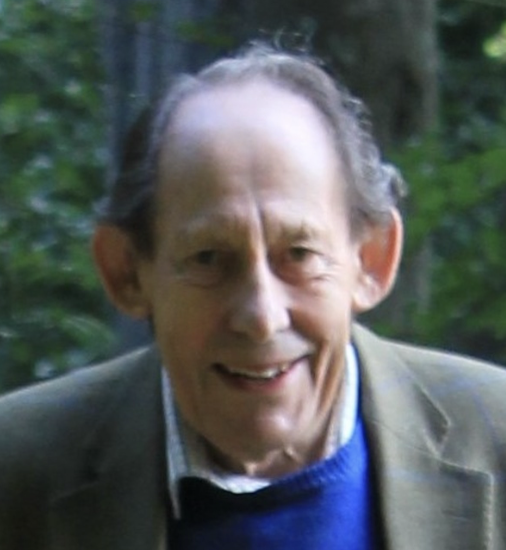
Robert Williams, who died suddenly in September aged 77, made a significant contribution to the Newman Association over many years. He was editor of The Newman over two periods for a total of 22 years. His greatest achievement, for which he should always be remembered, was his work in making Christians – and particularly Catholics – aware of the need to need to respect and cherish our God-given created world.
His family came from Dorset and had farmed the land for generations. This was the life he hoped he would follow but the family financial situation did not allow it. He went up to Cambridge reading geography, history and economics, then took a teaching qualification and went out to South Africa to teach at an Anglican school in Grahamstown. His first permanent post was at Atlantic College, the sixth form international college in Wales founded by Kurt Hahn in 1962. Later he taught at Malvern College and finally at Aylestone School in Hereford.
He also worked for some years in the Newman bookshop in Oxford and at a school for disadvantaged children. While at Malvern he met George Sayer who was influential in guiding him and his wife Rosemary towards Catholicism. He was baptised into the Church in the late 1970s and soon afterwards joined the Newman Association. He had, and always retained, a great affection for the Anglican Church, its traditions and the beauty of its liturgy. His own Faith was always a matter of exploration, a continual work in progress. He was proud of his ancestor, another Robert Williams, who as a young friend of the future cardinal and saint had alerted Newman to an article by Wiseman on the "Anglican claim" which had caused Newman his first serious doubt as to its legitimacy.
Caring for Creation
Robert, with his agricultural background, had for long been concerned by the pollution of the land through pesticides and by the cruelties and bad practices of intensive farming. His true conversion to green ecology and the movement towards organic food production was when he came to realise that it was a Christian imperative to care for creation in all its forms – the plant and animal kingdom, the oceans, the minerals and all else.
Like most Anglicans he knew his Bible better than most Catholics. He found the biblical basis for care of creation in the work of Robert Murray, the eminent Catholic theologian, particularly his book The Cosmic Covenant. Murray spoke at the first national conference Robert edited for the Association (Creation, Christians and the Environment, Birkbeck College, London, 1990). From this time on it is no exaggeration to say that his call to proclaim the need to care for creation became his ruling passion. He met and became friends with leading figures in the movement: Dr Edward Echlin, Sir Ghillean Prance, Professor Sam Berry and others in Christian Ecology Link and the John Ray Initiative. This enabled him to invite distinguished speakers to the next Newman conference on the environment at Bath in 1996 (The Church and the Earth after Rio; is Creation safe with Christians?).
In 2002 the Catholic Bishops' Conference of England and Wales published "The Call of Creation" citing biblical and papal teaching to alert the Catholic community that our way of life is abusing God's creation and forcing the poor into greater poverty. Robert, welcoming the Church's response (if tardy), brought together a small committee of Christians to launch the very successful conference (Faith and the Environmental Imperative) at Belmont Abbey in February 2004 (over 180 applied but only 163 could be accommodated). The main speakers were Sir John Houghton, who had just retired from chairing the International panel on Climate Change, Abbot Paul, the Bishop of Hereford and Ellen Teague. The committee comprised an Anglican, a Methodist and two Catholics. Christian Ecology Link also participated fully in the Conference. This is one area of Christian mission where ecumenism is not just desirable but absolutely essential.
The Newman Environmental Group
Robert carried this over in editing The Newman, often coaxing articles from authors far from the Catholic tradition. The Newman was a newsletter when he took it over in 1984 but he built it up into a respectable journal publishing three issues a year. He also founded the Association's Environmental Group but he struggled to make it grow. He was Editor of The Newman over several periods for a total of nine years.
His great interest in the landscape and geology of the Welsh borders stemmed naturally from his fascination with the wonders of the created world. The great Scottish geologist Roderick Murchison had named the Silurian system from his identification in the 19th Century of the ancient rocks in Shropshire, Robert's immediate neighbourhood. This led him to start a local summer school to explore the area. He recently contributed two chapters to a major work "Herefordshire Landscape, Scenery and Rocks". Limits of space prevent an account of Robert's contribution to his village Weobley's lively cultural and religious community including his determination to keep alive the local museum which should be recorded.
He was disappointed that the bishops did not follow through with the strong message of The Call of Creation and was therefore overjoyed by Pope Francis' Laudato Si'. He felt the Church was catching up at last! It is not surprising that he admired Thomas Traherne, the Herefordshire mystic who sung the glory of God in the landscape.
Robert was a man of great enthusiasms with the ability to get his friends to share them. He had practical skills and got things done but he was other-worldly in the best sense. Finally, he will be remembered for his remarkable courtesy to everyone he met. It was a privilege to have known him.
Aidan Reynolds