An edited and simplified version of a slideshow given to members of the Hertfordshire Circle, exploring the mysterious Christian spirituality of the Picts through their extraordinary sculpted stones.
This is an edited and simplified version of a slideshow given to members of the Hertfordshire Circle in January 2021 by Rev Dr Geoffrey Calvert
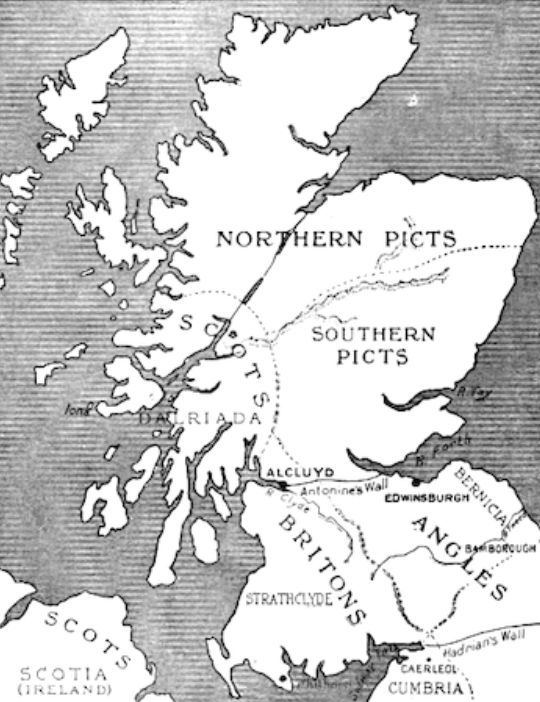
The Picts are without doubt a mysterious people. This is partly because they have left us no written records of their own, except for lists of kings. Almost everything written about the Picts was written by others. What we do have, though, are stones − hundreds of sculpted stones. These are what we are left with to try to perceive something about the spirituality of the Picts. It is very odd to have, in their later stages, an undoubtedly Christian people, whose spirituality is mysteriously opaque.
So who are we talking about? Roughly, they were inhabitants of what is now Eastern Scotland above the Tay, taking in Tayside, Angus, Aberdeenshire, Moray and Easter Ross during the middle and later first century AD. They appear to have spoken a Brittonic form of Celtic, akin to that spoken in Wales and Brittany. They became Christian in the middle and late First Century, and produced an incredible corpus of sculpted art, much of it very distinctively Pictish. Their land was never incorporated into the Roman Empire, and so much of the mental image we have of them derives from Roman historians, who regarded them as aggressive and violent barbarians. Actually, they seem to have been true Iron Age Celts, given to raiding, quarrelling and seeking status through prowess as warriors, but capable of breathtaking artistic achievement.
The earliest stones we have are called symbol stones, for obvious reasons. This first one is in the Museum at Forfar, and shows one of the classic Pictish symbols, the double disk and Z-rod.
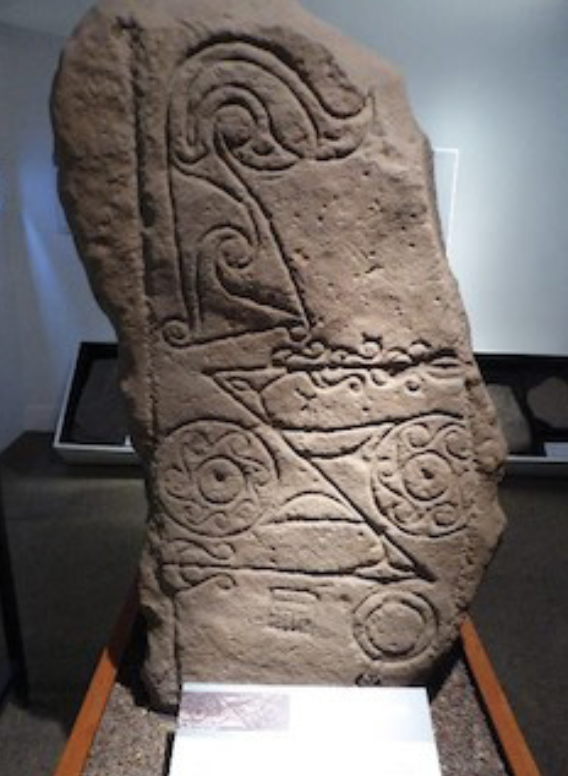
We frankly have no idea what this symbolises, although the best guess is that it refers to a clan or family. It dates roughly to the 5th-7th Centuries AD.
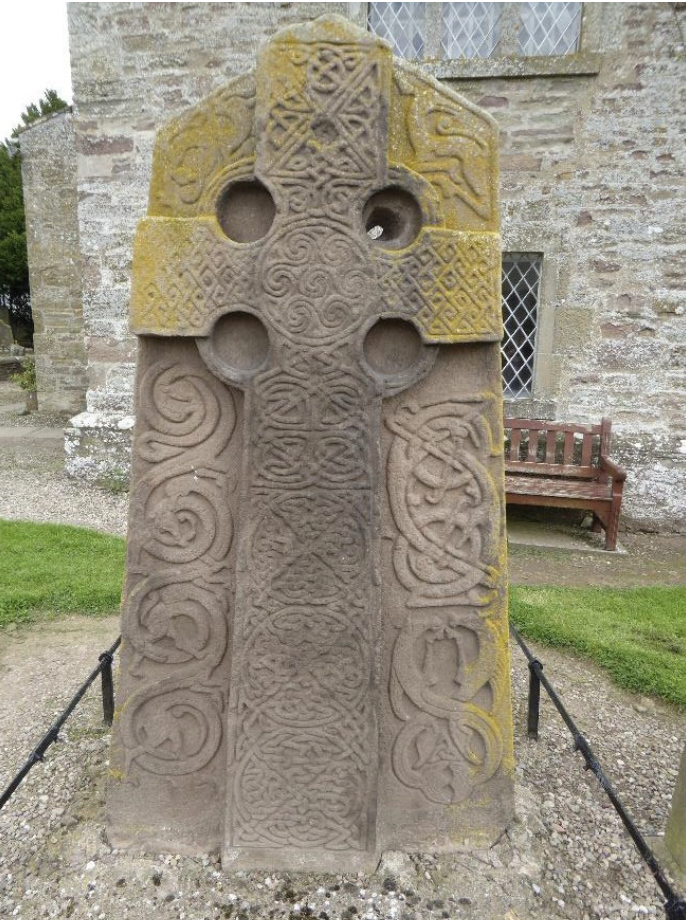
Next is a Class 2 Pictish stone, at Aberlemno. This dates to the 9th Century AD, and is clearly now Christian, often referred to as a Cross-lab.
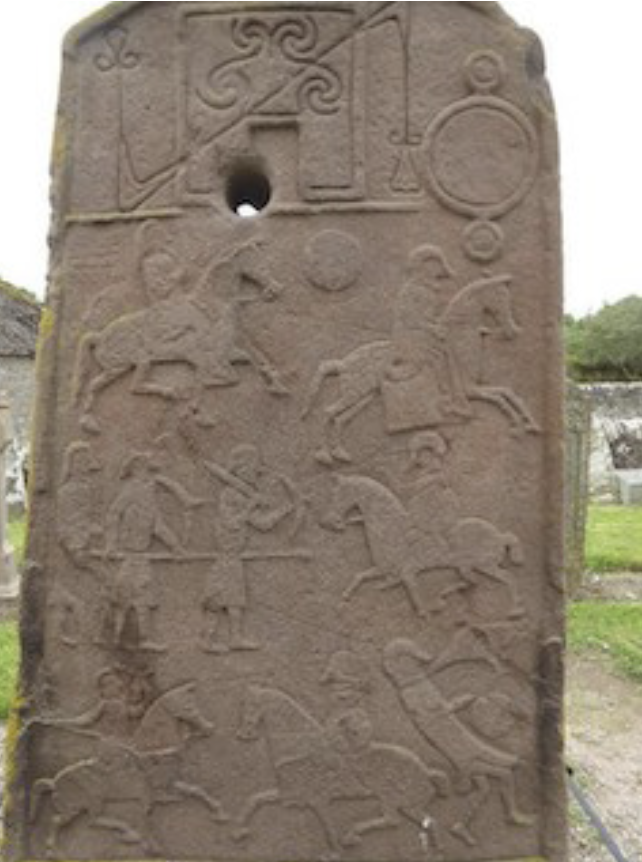
The other side of this stone, though, has the familiar double disc and Z-rod, with a crescent and V-rod, which is another widely-used symbol. Underneath, however, is a depiction of hunting scenes. The Picts evidently loved hunting. The question is, though, why there is a hunting scene on a self-evidently Christian stone? Is it simply a reflection of aristocratic status, or is there some kind of Christian metaphor? The short answer is, we have no way of knowing!
Also at Aberlemno is this, the Churchyard Cross, one of the most exquisite pieces of Pictish art. The cross itself is inlaid with some of the classic Celtic patterns we see elsewhere, but it is flanked by fantastic, sinuous, interlaced animals. These are evidently Sea-Horses. Note the interlace symbol of the Trinity, the three-in-one.
Here are interlaced animals, with feet sticking out in all sorts of improbable places! What we don't know is the theology behind these carvings. Are they just exuberant celebrations of nature, or is there something deeper?
The other side of this cross-slab is more mysterious, but more interesting to speculate on! Below the Pictish symbols at the top is what is unmistakeably a battle scene, where Celtic warriors are defeating men wearing distinctive Anglo-Saxon helmets reminiscent of the Coppergate helmet found in York.
There are really four options for interpreting this scene.
- It commemorates a real battle, for which there are one or two candidates.
- It symbolises the Christian faith as a battle with evil.
- It is an attempt to portray a Biblical battle.
- It is any one of these according to who was using it as their sermon illustration!
So how did the Picts become Christian? St Bede tells us that the Southern Picts were evangelised by St Ninian, from his base at Candida Casa, or Whithorn, while the Northern Picts were evangelised by St Columba from his base on Iona. There are a number of issues with the neatness of Bede's scheme, but it is something to work from.
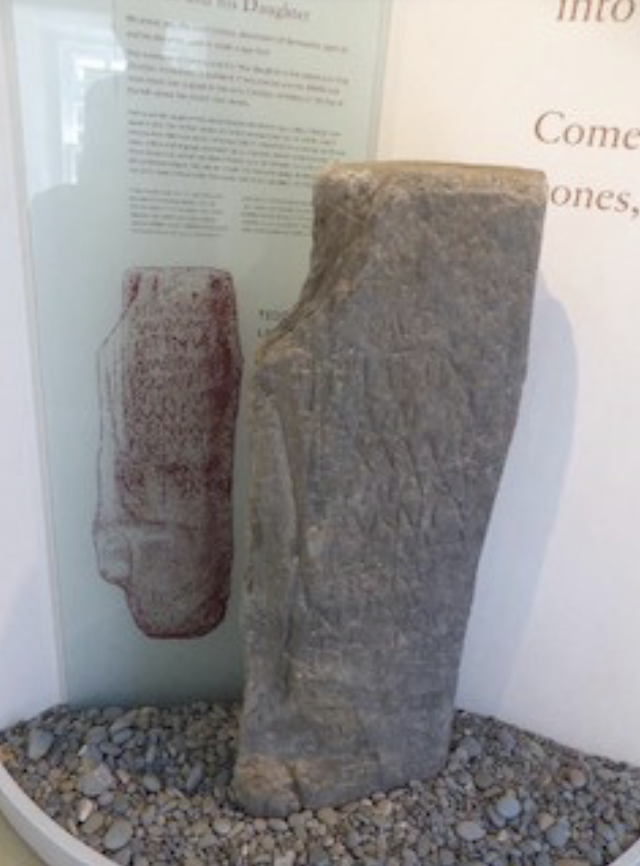
The early Christian credentials of Whithorn are bolstered by this next carving, the Latinus Stone. It reads: "We praise you, the Lord! Latinus, descendant of Barravados, aged 35, and his daughter, aged 4, made a sign here". It dates from the 5th Century AD, and it is the oldest Christian memorial in Scotland.
Somewhere in this area seems to have been a monastery in the late 5th or early 6th Century, whether at Ninian's Whithorn, or along the coast in the Rhinns of Galloway.
The early mission to Bede's "Southern Picts" has a distinctly Roman, and monastic, flavour which we will see reflected later in the carvings.
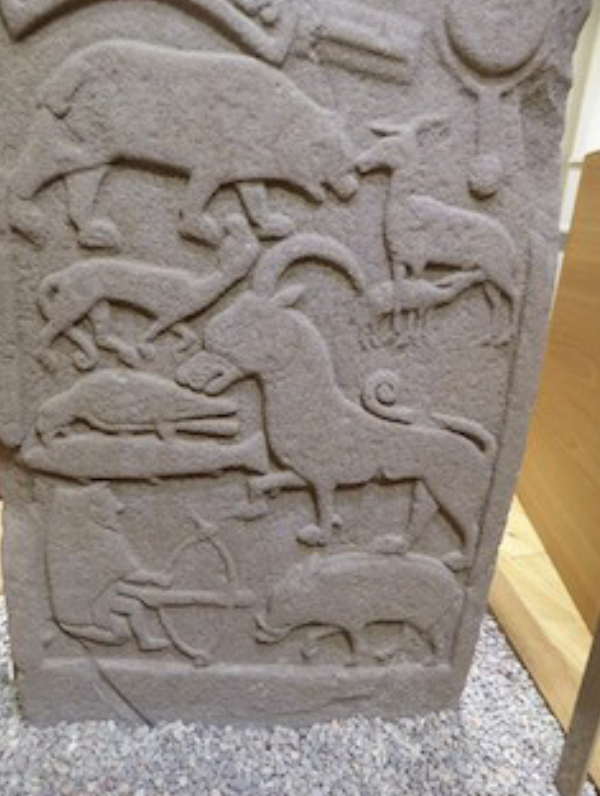
One of the most distinctive aspects of Pictish carving, which continues from the Symbol Stones on to the Christian ones, is the depiction of animals. My favourite of the animal pictures is on a stone in the St Vigeans Museum*. It is just a riot of animals, doing what animals do, with a solitary bowman in the bottom left, looking very threatened by a wild boar!
During my extended study leave I spent a week on the Tarbat peninsular in Easter Ross, sometimes known as the Iona of the West. It has been known for a long time that there must have been a Pictish religious centre on the Peninsular, because of the three splendid stones. My personal favourite is the Nigg Cross Slab, preserved in Nigg Old Church, very near the ferry which connects Ross and Cromarty, for the aficionados of the Shipping Forecast.
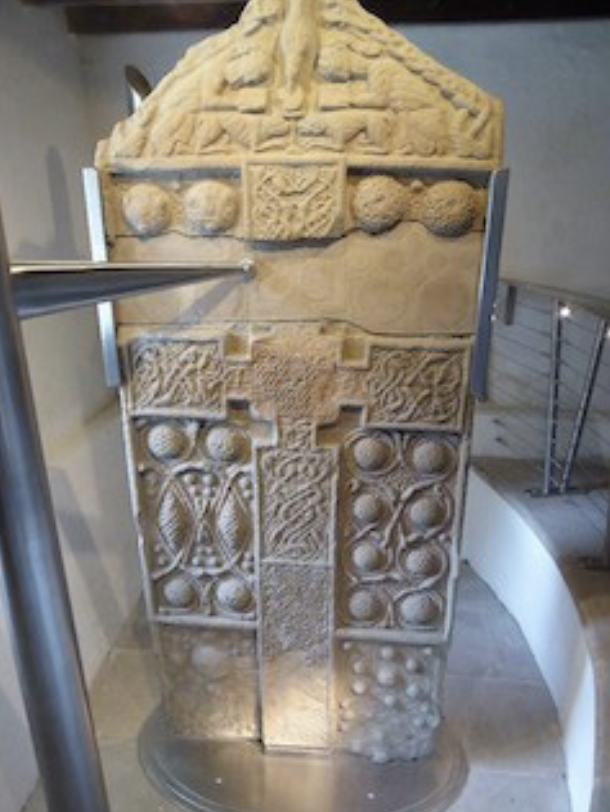
I visited the Tarbat Discovery Centre in Portmahomack, in St Colman's Church. Here in 1984, crop marks seen in aerial photographs revealed an enclosure very like that on Iona. Excavations in 1994 and 1994 showed that this was the sight of the sought-after monastery, dating to around the period of Columba's Mission. Also found at the site were the bodies of some of the monks, evidently killed in some kind of raid. Vikings are the obvious culprits, but there is no evidence either way. The Picts themselves could be very violent too.
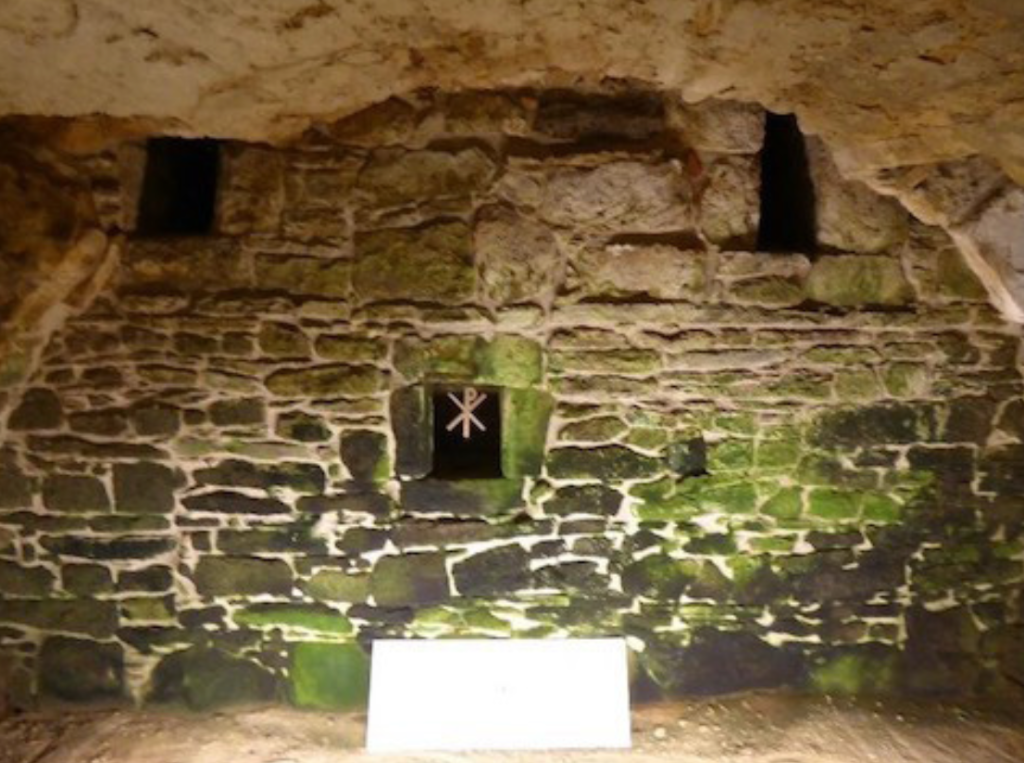
The discovery I found most fascinating about Portmahomack, though, was evidence of the processing of the processing of calf-skins into vellum, used for Illuminated manuscripts such as the Lindisfarne Gospels. In the crypt at Portmahomack is to be found probably the only upstanding Pictish masonry.
I hope I have been able to give you a flavour of what we know, but probably more of what we don't know, about Pictish Christianity. It certainly gives a whole new perspective to the idea of "Celtic Spirituality".
*St Vigeans Stones and Museum is located in the village of St Vigeans, Angus.