St John Henry Newman's vision of holiness guides us through the Church's year — from Ordinary Time to Advent, Lent and the Paschal mystery — as a Saint for all Seasons.
The Vision of Holiness
St John Henry Newman remarked that our commitment to living out the truths of faith is not something to be "worn on and off like Spring fashions" as he explains:
…what is religion but a habit? And what is a habit but a state of mind which is always upon us, as a sort of ordinary dress or inseparable garment of the soul? A man cannot really be religious one hour, and not religious the next. We might as well say he could be in a state of good health one hour, and in bad health the next. A man who is religious, is religious morning, noon, and night; his religion is a certain character, a mould in which his thoughts, words, and actions are cast, all forming parts of one and the same whole. He sees God in all things; every course of action he directs towards those spiritual objects which God has revealed to him; every occurrence of the day, every event, every person met with, all news which he hears, he measures by the standard of God's will. And a person who does this may be said almost literally to pray without ceasing; for, knowing himself to be in God's presence, he is continually led to address Him reverently, whom he sets always before him, in the inward language of prayer and praise, of humble confession and joyful trust. (Parochial and Plain Sermons, VII, 15).
These are the attitudes which we seek to renew throughout the Church's year, remembering that Christmas and Easter, as Newman says, are joined by a spirit of penance. This is not just an approach to Advent or Lent, but an important dimension of being Christian disciples in Ordinary Time as well. Therefore, Newman advises us to be fully aware of the dynamics of self-denial. So that we do not become discouraged if we set the bar too high. Even a modest spiritual exercise naturally becomes more difficult. He likened this process to a stone which, if it is constantly dropped, becomes hollow. (Sermons on Subjects of the Day, 4). He notes that God's grace increases our capacity to maintain any commitment we make.
St John Henry offers a very practical meditation which helps us to grow in faith, hope and love:
If you ask me what you are to do in order to be perfect, I say, first – Do not lie in bed beyond the due time of rising; give your first thoughts to God; make a good visit to the Blessed Sacrament; say the Angelus devoutly; eat and drink to God's glory; say the Rosary well; be recollected; keep out bad thoughts; make your evening meditation well; examine yourself daily; go to bed in good time, and you are already perfect. (Meditations and Devotions Part Two, 'A Short Read to Perfection').
Newman saw the Church's worship as the nearest experience to Heaven we can have on earth. This is because, by participation, we sing the song of the angels and saints. So that our lives may speak with the cadences of eternity and the joyful rhythm of sacred days.
Diary Dates for Disciples
Ordinary Time
Whatever set of circumstances we find ourselves in, Newman believed they are important for the salvation of ourselves and those around us. He recognised that the eyes of faith are needed to ponder every scene in this way:
God knows what is my greatest happiness, but I do not. There is no rule about what is happy and good; what suits one would not suit another. And the ways by which perfection is reached vary very much; the medicines necessary for our souls are very different from each other. Thus God leads us by strange ways; we know He wills our happiness but we neither know what our happiness is, nor the way. We are blind; left to ourselves we should take the wrong way; we must leave it to Him… O my God I will put myself without reserve into Thy hands. Wealth or woe, joy or sorrow, friends or bereavement, honour or humiliation, good report or ill report, comfort or discomfort, Thy presence or the hiding of Thy countenance, all is good if it comes from Thee. Thou art Wisdom and Thou art love – what can I desire more? (Meditations and Devotions, Part 3).
In a letter to his friend Mrs Froude, Newman reveals the delicate spiritual journey each person is making:
I am quite sure you wish to please God, and would do any thing He told you. On the other hand, I know well He does not tell us everything at once – but first one thing, and then, when we act upon that, another. No-one ought to enter the Church without faith – no one can have faith for it by wishing or willing it, at the moment. Faith is a Gift of God; we can gain it by prayer, we cannot gain it at once; but we can gain it at last. I will quarrel with no one simply for not entering into the holiest and happiest of states on the spur of the instant – faith must be preceded by reason – but I will quarrel with him much, if he does not earnestly and continually ask of God the illumination which leads reason to faith. (Letters and Diaries XV, p.307-8).
This requires us to foster a contemplative outlook which seeks the face of Christ in all things. As Newman concludes:
…it is simply this, thinking habitually and constantly of Him and of His deeds and sufferings. It is to have Him before our minds as One whom we may contemplate, worship, and address when we rise up, when we lie down, when we eat and drink, when we are at home or abroad, when we are working, or walking, or at rest, when we are alone, and again when we are in company; this is meditating. And by this, and nothing short of this will our hearts come to feel as they ought. (Parochial and Plain Sermons VI, 4).
Advent and Christmas
In one of his seasonal sermons, Newman warns us not to use "unreal" or bland words. We can imagine his objections to the greeting card slogan "Happy Holidays" instead of a direct reference to Christmas. He recommends that during Advent we meditate on each article of our faith: "All that we can hope is, that we are in the way to understand it; that we partly understand it; that we pray, and strive to understand it more and more. Our Creed becomes a sort of Prayer." (Parochial and Plain Sermons V, 3).
This formula focuses our attention on the vision of Christ's coming in history, his presence among us in Eucharistic Mystery and the anticipation of his return in glory. Newman has these themes in mind; he recognises that our appreciation of the deep meaning of Christianity is affected by a combination of the limits of individual circumstances and sinful choices.
What I have been saying comes to this – be in earnest, and you will speak of religion where, and when, and how you should; aim at things, and your words will be right without aiming. There are ten thousand ways of looking at this world, but only one right way. The man of pleasure has his way, the man of gain his, and the man of intellect his. Poor men and rich men, governors and governed, prosperous and discontented, learned and unlearned, each has his own way of looking at the things which come before him, and each has a wrong way. There is but one right way; it is the way in which God looks at the world. Aim at looking at things in God's way. Aim at seeing things as God sees them. Aim at forming judgments about persons, events, ranks, fortunes, changes, objects, such as God forms. Aim at looking at this life as God looks at it. Aim at looking at the life to come, and the world unseen, as God does. Aim at 'seeing the King in His beauty'. All things that we see are but shadows to us and delusions, unless we enter into what they really mean.
It is not an easy thing to learn that new language which Christ has brought us. He has interpreted all things for us in a new way; He has brought us a religion which sheds a new light on all that happens. Try to learn this language. (Parochial and Plain Sermons V, 3).
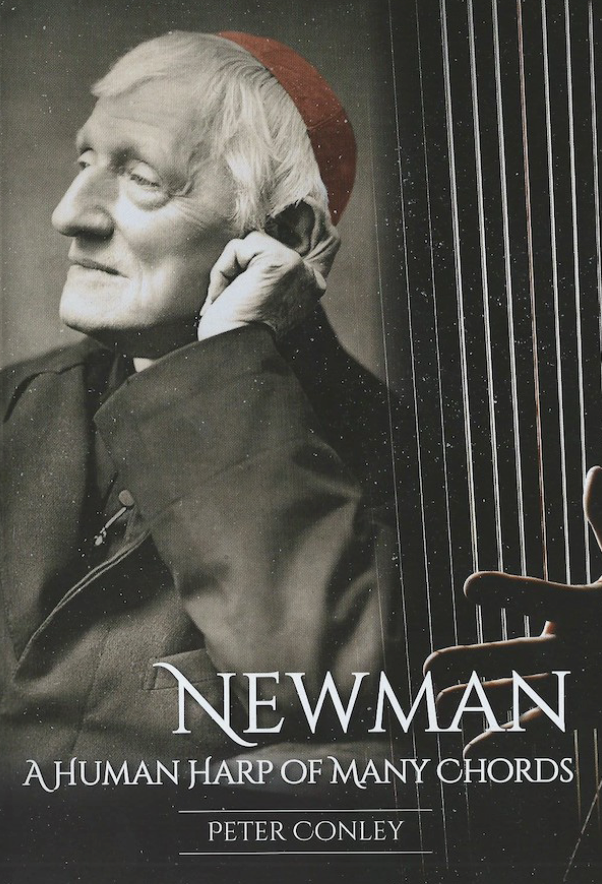
Newman's prose continually invites us to reset the trajectory of our sights on the Lord's birth and its significance when he concludes: "Let us receive the truth in reference…that it may bear fruit within us."
The coming of Christ as a human person, like us in all things but sin, reveals that God understands us from the inside. In an epiphany sermon, Newman examines this through the gift called our Conscience. Here we meet God. This encounter helps us identify right from wrong. Then, in freedom, we choose, using practical wisdom, how to apply the Church's teaching, revealed through the Holy Spirit, to particular situations.
Lent and Eastertide
Newman hints that the pace of the New Year can overtake us when we need to balance urgency with prudence. Hence, he writes to his friend William Copeland on Ash Wednesday, 14th February, 1866: "Your Christmas Turkey was wonderful – but, time passes so quick, it is now a matter of history. We are steaming to Easter, and it will be upon us before we know where we are." (Letters and Diaries XXII, p.155).
Newman recognised that Lent is a season to live out the wisdom of reflecting before acting. While acknowledging the sinful consequences of our not doing so in the past and present. He explores candidly the struggles we have in striving to be holy by fulfilling the basic responsibilities of each day:
I am not speaking of cases of extraordinary devotion, but of what every one must know in his own case, how difficult it is to command himself and do that he wishes to do; - how weak the governing principle of his mind is, and how poorly and imperfectly he comes to own notions of right and truth; how difficult it is to command his feelings, grief, anger, impatience, joy, fear; how difficult to govern his tongue, to say just what he would; how difficult to rouse himself to do what he would, at this time or that; how difficult to rise in the morning; how difficult to go about his duties and not be idle; how difficult to eat and drink just what he should, how difficult to fix his mind on his prayers; how difficult to regulate his thoughts through the day; how difficult to keep out of his mind what should be kept out. (Parochial and Plain Sermons V, 15).
St John Henry taught that by Lenten penances we are able to join the great sacraments of baptism, where we are born again in Christ at Christmas and eucharist which honours the risen Lord.
As Newman energetically states:
A true Christian, then, may be defined as one who has a ruling sense of God's presence within him…so that he habitually realizes that all his thoughts, all the first springs of his moral life, all his motives and his wishes that all that is in him should be bare to God. (Parochial and Plain Sermons V, 16).
Paschal mystery
Pope Francis described Peter's running to Christ's tomb as "the beginning of the resurrection of his heart." This reminded me of the expression that one must let Jesus "Easter in us" to become missionary disciples. Newman anticipates what we might call paschal mystery thinking in two of his homilies. He begins by outlining how necessary it is for us to desire a renewed faith:
We cannot change ourselves; this we know full well, or, at least, a very little experience will teach us. God alone can change us; God alone can give us the desires, affections, principles, views, and tastes which a change implies: this, too, we know. (Parochial and Plain Sermons V, 16).
Newman's reflections emphasise the importance of the post-resurrection period for the vitality of the early Church. The disciples re-interpret the whole of Jesus' life in light of it, as we are invited to do:
What a time must that forty days have been, during which, while He taught them, all His past teaching must have risen in their minds, and their thoughts, then must have recurred in overpowering contrast to their thoughts now. His manner of life, His ministry, His discourses, His parables, His mystery of His grief and joy; the agony, the scourge, the cross, the crown of thorns, the spear, the tomb; their despair, their unbelief, their perplexity, their amazement, their sudden transport, their triumph – all this was in their minds; and surely not the least at that awful hour, when He led his breathless followers out as far as to Bethany, and He lifted up His hands and blessed them. And it came to pass, while He blessed them, He was parted from them and carried up into heaven. (Luke 24, 50-51). (Parochial and Plain Sermons VI, 16).
St John Henry proclaims this with wonder, awe and in rapt expectation of receiving the Holy Spirit's gifts along the way, and so must we. Newman's vision of holiness makes him our Saint for all Seasons.
Fr Peter Conley is the Assistant Priest at St Joseph the Worker Parish, Canley, Coventry and Assistant Chaplain at Warwick University