Comparing the ultra-Orthodox Jewish community in the Israeli television series Shtisel with debates within the Catholic Church about tradition, authenticity, and the role of Latin in the liturgy.
"Shtisel" is an Israeli soap opera series first broadcast on Israeli television in June 2013. It was then taken up by Netflix in 2018, proving so popular that a second series was shown, making 24 episodes in all. As it enjoyed an unexpected popularity Netflix is now showing a third season.
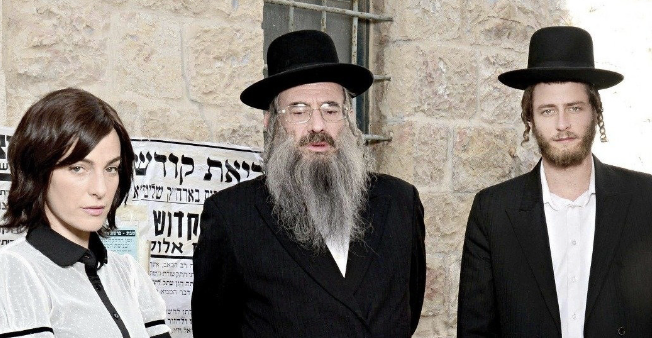
Its success, both on Israeli television and Netflix, was unexpected. Indeed, more than unexpected it was unlikely, because the story concerns a religious group family living in the heart of a Haredi community in Geula, an ultra-orthodox district in Jerusalem. The "Haredian" umbrella includes the Hasidic, a subgroup of Haredi. The story is thus about is a small self-centred group, distinct from normal Israeli society, which follows its own rules.
Other religions also show tensions from the preoccupations of small groups within them. Belief, especially when driven by tradition, is a stronger driver of emotions than logic is. There are parallels with some of the divisive arguments now being seen within the Catholic Church.
While the religious practices of orthodox Judaism and the life of the Haredi world are at the very centre what happens in the series, they are not its essential subject. This presents a challenge to reality: the reality is that the Haredi have a parallel life to normal Israeli society. More than that, there is a general feeling of resentment, even of hostility, in Israel against the ultra-Orthodox; a tension between a general dislike of the advantages the ultra-orthodox obtain through their political influence.
The world of Shtisel is one that although close geographically, is nevertheless far away in most other respects. Maybe Shtisel does in a way represent what the state of Israel is really for, but it also represents a way of life that most Israeli citizens have no interest in following. But if all of this presents an underlying sense of conflict, it is one that is overshadowed by the main theme of the series, which is about is the changing and developing relationships between people. For instance, if there is a scene where Rabbi Shulem Shtisel, the father and patriarch of the family, comes home and greets his son Akiva, the religious obligation to kiss the mezuzah on entering the room, and for prayers before eating will always be demonstrated, the ritualistic and cultural mores of heredity life beautifully captured.
One of the important characteristics of the series is its language. The Netflix presentation is the Hebrew original shown with English sub-titles. However, the Hebrew language used in the dialogue makes extensive use of Yiddish, and those who are Hebrew speakers comment on how this gives an authentic feel to the dialogue. I was struck by some connections to apparently very different issues within the Catholic Church. The link between authenticity and language has, of course, a major resonance in the Catholic Church and one, in the Roman Rite of the Western Church, that turns on the place of Latin. The issue is in several dimensions, one about the link between Latin and the authentic language of the Mass and the other about the nature of the vernacular language used to translate the Bible, the Mass the liturgy and so on.
So far as Latin and the Mass are concerned, the main argument is not so much about a Mass in "Latin" as such, but about the demand to use one particular form of Latin Mass, the one proclaimed by the Council of Trent. However, Trent abolished a host of traditional local and regional forms of Latin mass to replace them with a new standardised Mass in Latin. The Tridentine mass is historically authentic in that sense, as a modernising project of the sixteenth century. One might therefore think that if one was interested in up-to-date authenticity, the key Latin Mass must surely be the Mass of Paul VI, the Mass in Latin promulgated in 1969 after the Second Vatican Council and described as the "ordinary" form of the Mass (as against the Tridentine Mass described as the "extraordinary" form).
However, the dispute is only and (at best) partly about the Latin itself. The real issue is about the change of the religious practices that were part and parcel of the Tridentine Mass: and therefore the new role of lay people in proclaiming biblical readings at Mass or as ministers of Holy Communion, the acceptance of female altar servers, allowing the host to be received in the hand. Rabbi Shtisel would surely argue with the Catholic traditionalists that the old Latin text and its associated practices go together.
Rabbi Shtisel would be sure that the integrity of the traditional language and the religious practices that are associated with it are indissoluble. He would not be interested in the case for the Church to adapt, to change its practices to enculturate in today's world. He would probably want, with the Catholic traditionalists, to go further and argue that departure from the old text and its associated practices was a case of the "baby being thrown out with the bathwater".
A devotional approach
Shtisel is an interesting window on a religious life that is in many ways alien to our times. But maybe there are some things that a Catholic might learn from the programme. Knowing how to walk as a Haredi, knowing how to speak as a Haredi, knowing every aspect of the daily behaviour of a Haredi is everything to religious observance. This is a devotional approach to religion that once had many parallels in the everyday practice of Catholicism, that is nowadays largely unknown to the average Catholic. So, given the steady decline of practising Catholics, how far is there a meaningful connection between the two? How far does following everyday devotional religious practices relate to keeping the faith? Does the one depend on the other? For instance, in Shtisel everyone entering a room is shown to habitually touch the Mezuzah, which is a piece of parchment firmly attached to the doorway and containing Torah verses.
Once most Catholic households had symbols that had a similar purpose, to be seen or passed on entering or leaving a house and calling for a symbolic response such as the sign of the Cross. Such Catholic "reminders" are now uncommon and is it a coincidence that with their passing has also passed the main body of religious observance? Rabbi Shtisel would have no doubt at all of the right answer.