An exploration of John Henry Newman's approach to letters and biography, examining his belief that letters reveal the authentic voice of a person more truly than any biography can.
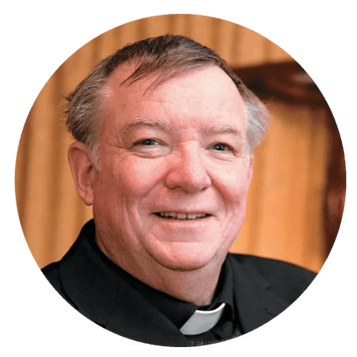 Fr Peter J. Conley
In 1886, as an elderly man, Newman humorously confesses to Lord Blatchford that he has always had "the love of order, good in itself but excessive." This ability not to take himself too seriously is also shown in middle age. Newman laments from Dublin to Fr Austin Mills in 1852 that:
When I got here, I found that the housekeeper, who would not let any other of the servants do it, had arranged, not only my clothes, but all my papers for me. I had put my letters in various compartments according to my relations towards them – and my Discourse papers, according as I had done with them or not. She had mixed everything, laying them most neatly according to their size. To this moment I have not had courage to attempt to set them right – and one bit, which was to have come in, I have from despair not even looked for. And so of my linen; I had put the linen in wear separate from the linen in reserve. All was revolutionised. I could find nothing of any kind. Pencils, pens, pen knife, toothbrush, boots, 'twas a new world – the only thing left, I suppose from a certain awe, was, (woe's me,) my discipline. Mind, everything was closed up, as far as they could be without lock and key, which I had not. She then came in to make an apology, but was so much amused at her own mischief, as to show she had no deep sense of its enormity.
Newman regularly sorted out his letters, both those received and copies of those he sent; he cut up and pasted them in quarto books for safe keeping. He used them as the prime source materials for his Apologia of 1864. Hence, Newman enquires of R.W. Church: "You might have letters of mine to throw light on my state of mind, and thus by means of contemporaneous authority."
The older he became the more Newman focused on tidiness in his affairs. As he admits to Henry Bedford:
I am engaged in what I am bound to do before I die, and which is so long a work, that my great fear is that it will be too long for my life. When I was fifty, I said, "I must finish it before I am 60" – when sixty, I said "I must do it before I am seventy". I have no right to leave the letters and papers of private friends for the last forty or fifty years for other eyes than my own – on the other hand, I cannot destroy them in a heap without discrimination – and this involves, as you may understand, a great work. And I can get on very slowly, with my other engagements, in making my way through them. A man cannot do more than he can do – We are poor creatures – and must be content to be such.
A means of communication
Newman recognised both the strengths and weaknesses of letters as a means of communication. Consoling George Ryder over his sick daughter he states: "I would rather speak than write…I wish letters could express feelings better."
In attempting to resolve his difficulties in relating to Fr. Wilfred Faber, Newman concedes:
It is endless writing. The only effect of your letters would be if I answered them, to make me word mine more exactly, to define my terms and to correct past inaccuracies of language, but not to alter my opinion or my distinct meaning.
Nevertheless, as Alan G. Hill concludes:
Letter-writing always held a high place in Newman's scale of priorities. It was not for him a marginal or leisure-time activity but an integral part of his mission, and he devoted all his powers of mind and genius for human understanding and sympathy to it.
Despite their in-built limitations, Newman believed that letters facilitated a virtual "living" encounter between author and recipient across time and space. Therefore, he maintained that they would always represent the most authentic form of biography. Hence, the letters (and other works) of an ordinary person or saint ought to drive the "story" along. As a result, any contextual information should be kept to a minimum so as to let an individual speak for his or herself.
While Newman expressed a "debt of gratitude" to biographers he urged caution lest they interrupt the dialogue between souls:
A saint's writings are to be the real "Life;" and what is called his "Life" is not the outline of an individual, but either of the auto-saint or of a myth. Perhaps I shall be asked what I mean by "Life". I mean a narrative which impresses the reader with the idea of moral unit, identity, growth, continuity, personality. When a saint converses with me, I am conscious of the presence of one active principle of thought, one individual character flowing on and into the various matters which he discusses, and the different transactions in which he mixes.
Newman makes a comparison between the structure provided by the correspondence of a saint and one formed by a group of second hand accounts about them:
Commonly, what is called "the Life," is little more than a collection of anecdotes brought together from a number of independent quarters; anecdotes striking, indeed, and edifying, but valuable in themselves rather than valuable as parts of a biography; valuable whoever was the subject of them, not valuable as illustrating a particular saint.
Three decades later, Newman's opinions had lost none of their passion:
The Oratory Bm May 28th, 1869
My dear Sister M. Fr. Raphael,
In thanking you for your kind and welcome letter, and the message to me which it contains from Mother Provincial, I take the opportunity also of acknowledging the receipt of the Copy which your Community has sent me of their Memoir of their dear Mother Margaret…
It is a great encouragement and refreshment to the reader to have had placed before him something real; and, − useful as it may be for devotional purposes (which I am not denying) in the case of some minds, − certainly speaking for myself, I cannot abide the practice so common of cutting up a Saint into virtues and of distributing him into pigeon holes, which serves to destroy the special value of biography over didactic composition, and without intending it, goes far to deny to Holy Church her prerogative of being "circumdata variate". Whether Mother Margaret was a rose, or lily, or carnation, in our Lord's garden, I cannot tell; but she was either the one or the other, not all of them at once – not a generalisation or idea of man, but a great work of God…
Lastly, it is quite wonderful to me how so carefully selected and condensed a history could have been written and published with such speed.
Begging your good prayers ever, I am, My dear Sister M.F. Raphael
Most Sincerely Yrs in Xt John H Newman of the Oratory.
A more creative approach
Intriguingly, while Newman suggests to Copeland that he write a history of the Oxford movement utilising the letters of himself and others, he also proposes a more creative approach:
I know how hard it is, to write an account – so, what I would recommend you to do, is to write piecemeal, and in the way of letters, whatever comes into your head, never mind the want of connexion. I am sure, if you wrote a series of letters to me, by way of remembrance or to E. Caswell, or to your brother, or to an imaginary personage, they would be the ground work of a more important work.
Newman has in mind the magnetism of the 18th and 19th century best-selling epistolary novels. He explores the same theme in a letter to Jemima:
It has ever been a hobby of mine (unless it be a truism, not a hobby) that a man's life lies in his letters. This is why Hurrell Froude published St Thomas a Beckett's Letters, with nothing of his own except what was necessary for illustration or connections of parts. It is the principle, I suppose, of the interest which attaches to such novels as Clarissa Harlowe, Evelina etc. And it is exemplified in one of the popular novels of the day, The Woman in White, in which I cannot detect any merit except what lies in the narrative being a living development of events as exhibited in supposed letters, memoranda, and [[quasi-legal]] depositions.
A much higher desideratum than interest in Biography is met by the method, (as it may be called,) of Correspondence. Biographers varnish; they assign motives; they conjecture feelings; they interpret Lord Burleigh's nods; they palliate or defend. For myself, I sincerely wish to seem neither better nor worse than I am.
What Newman longs for is to experience, as closely as possible, the original writer who is the subject of any retrospective publication. As he remarks to Mrs Sconce about a book of her father-in-law's letters:
I thought it particularly kind of you to send me so interesting a work. I have been much pleased by what I have read of it – and letters always have the charm of reality. I have before now given this as the reason why I like the early Fathers more than the Medieval Saints viz: because we have the letters of the former. I seem to know St. Chrysostom or St. Jerome in a way in which I can never know St. Thomas Aquinas. – and St. Thomas of Canterbury (himself medieval) on account of his letters as I can never know St. Pius Vth.
Newman's caveats
This potential to "enrapture" meant that Newman often both commended and recommended letter collections. He also added caveats. To Mrs Maxwell Scott he tentatively suggests in respect of her late father:
I wonder whether his letters would form the staple of a Memoir. They are the best of all materials, and I am sure, would exhibit him most happily. In that case you would only need a slender line of narrative to string them together. My only fear would be, that, as he got into more and more work, his letters became shorter. Of course, there is this fear too, viz that those which showed his qualities at most advantage would be the most private. However, the first step, I think, would be to see if his letters can be turned to use. You would know this by the letters, which he has left behind him, of his correspondents.
Newman's steer is an important one. He fully acknowledged that the Victorian genre of memoir was a respected means of grieving for family, friends and relatives. His Letters and Diaries are full of him gratefully accepting these texts and sometimes commenting upon rough drafts. Nevertheless, his deep-seated uneasiness about being subject to such a process remained.
On June 1st 1874 he wrote the following guidance to Ambrose St John:
Had I my will no Memoir should be written of me, except such a thin running notice as would suffice to hold together a series of my letters. Letters I don't mind, for they are facts, and belong, for good or bad, to the personality of the writer of them; but a Memoir, or at least a Life is more or less the produce of the imagination, a conclusion from facts, more or less theoretical and unauthoritative. Besides, for the most part, Lives are padded, or spun out, that they may give an adventitious interest, from a continuous narrative, and complete a volume.
Ambrose St John, however, died on May 24th, 1875. Just over a year later, on June 16th 1876, Newman amended his instructions to allow for a fuller treatment of his life to be given: "Since writing the above, I have lost Ambrose St. John. This misfortune, together with a growing interest in my subject, has led me, on transcription, to turn my Sketch J.H.N. into a much fuller and more finished composition than it was originally."
Newman turned to Anne Mozley, the sister-in-law of his sister Jemima.
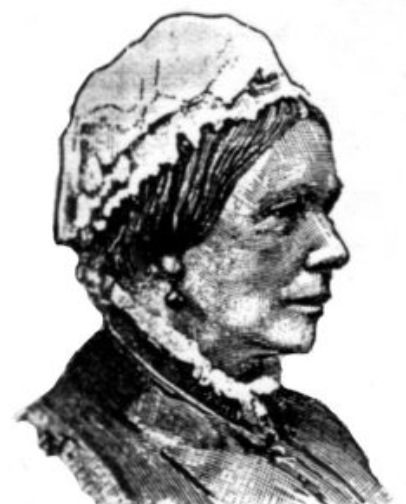
Anne Mozley
On July 2nd, 1887, in response to a newspaper article, he outlines her role:
Dear Mr Longman
I have no thought and no chance of publishing an autobiography. I have never liked such work, and now my increasing infirmities make such an attempt impossible; especially my difficulty in writing.
If you would allow me to ask you to let me speak to you in confidence, I would say that I have put all my papers and copies of letters up to 1845 in the hands of a great friend, a Protestant, making no conditions, (as to pecuniary matters etc) except that I am not to see the resulting work and it is not to be published in my life time.
In 1874 I wrote a sort of sketch or skeleton to connect the successive events together. But I made the property over, as a point of honour, to my friend. I will mention my wish that you should have the engagement, but I cannot do more than recommend.
I am on a very different work – the new edition of my translation of Athanasius – if I live.
Very truly Yours John H Card. Newman
Ultimately, Longmans, Green and Co. did publish the Letters and Correspondence of John Henry Newman – During His Life in the English Church with a Brief Autobiography, Edited at Cardinal Newman's request by Anne Mozley in Two Volumes (1891).
Given Newman's method of preservation, it is apt that the following note was physically pasted into each copy of the opening volume:
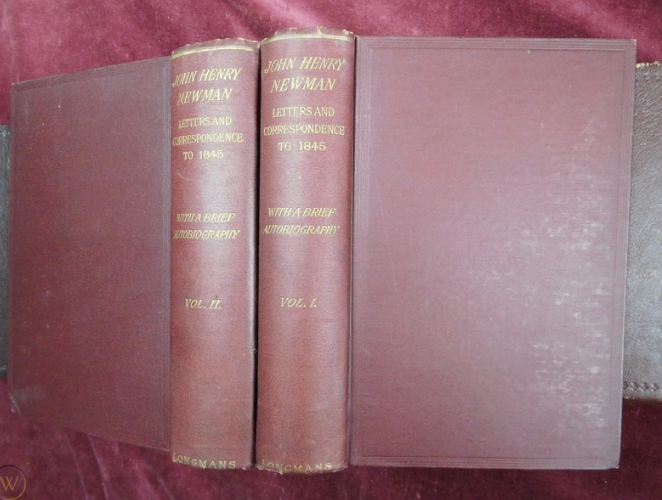
An early edition of Newman's letters in two volumes
The Executors of CARDINAL NEWMAN will feel much obliged if any lady or gentleman who may be in possession of any of the Cardinal's letters or papers will kindly communicate with the Rev. W.P. Neville, the Cardinal's literary Executor, The Oratory Edgbaston, Birmingham.
This appeal, eventually, opened the way for the production of thirty-two Volumes (over 20,000) of Newman's Anglican and Catholic letters gathered as part of the process which led to his canonisation in 2019. Subsequent editors were mindful of Anne Mozley's observations upon Newman's approach:
His high estimate of letters as records and custodians of the truth of things made him from early youth a preserver of letters; though his esteem for his correspondent might be the more prominent motive. In early days a postscript often speaks of arranging letters as one of the tasks of the closing year. The task, as he would perform it, would help to fill in the details of that map of the past which in its outline was so vividly marked in his memory. The habits of his life, as being congenial to his nature, were early formed; just as the turn of thought, the tastes, the more powerful bends of his mind, may all be traced to an early dawn. Few persons preserve their letters; it is, indeed, a rare habit; but there was in Newman's letters to his friends, as in his character, a weight and distinctiveness, whether of subject or mode of treatment, which secured them an exemption from the common fate after perusal; and, once escaping this, their value increased with years, and, in fact, as time went on, they were felt to be history.
Fr Peter Conley popularises the life and thoughts of St John Henry Newman for the Archdiocese of Birmingham.
Notes
- JHN to Lord Blatchford, 5 October 1886, Letters and Diaries of John Henry Newman, ed. Charles S. Dessain et al; 32 Vols. (London: Thomas Nelson and Sons and Oxford: Oxford University Press, 1961), Letters and Diaries is hereafter cited LD. LD, XXXI:167.
- JHN to Fr. Austin Mills, 3 June 1852, LD, XV:95.
- JHN to R.W. Church, 23 April 1864, LD, XXI:101.
- JHN to Henry Bedford, 18 November 1873, LD, XXVI:388.
- JHN to George Ryder, 20 April 1850, LD, XIII:466.
- JHN to J.W. Faber (1), 15 May 1849, LD, XIII:149.
- A.G. Hill and I. Ker (eds.), Newman after a Hundred Years (Oxford: Clarendon Press, 1990), 129.
- JHN, Historical Sketches Vol II, (London: Longmans, Green and Co, 1840), 227.
- Ibid; 228.
- JHN to Augusta Theodosia Drane, 28 May 1869, LD, XXIV:261-262.
- JHN to W.J. Copeland, 23 January 1863, LD, XX:399-400.
- JHN to Mrs John Mozley, 18 May 1863, LD, XX: 443. See Samuel Richardson, Clarissa Harlowe (1747-8), Fanny Burney, Evelina (1778), Wilkie Collins, The Women in White (1860).
- JHN to Mrs Sconce, 15 October 1865, LD, XXII:73.
- See JHN to John Edward Bowden, 19 June 1869, LD, XXIV:271. In respect of The Life and Letters of Frederick William Faber, D.D., Priest of the Oratory of St Philip Neri, London 1869.
- JHN to the Hon. Mrs Maxwell-Scott, 10 December 1877, LD, XXVIII:277.
- H. Tristran (ed.) John Henry Newman Autobiographical Writings (New York: Sheed and Ward, 1957), 23.
- Ibid; 24.
- JHN to Charles James Longman, 2 July 1887, LD, XXXI:217-218.
- Anne Mozley (ed.) Letters and Correspondence of John Henry Newman During his Life in the English Church with a Brief Autobiography (London/NewYork: Longmans, Green and Co., 1891), Vol I & II
- A. Mozley (ed.), Vol I, B.
- Ibid; 2.