In this thought-provoking article, John Duddington examines the proper role of Christians in political life, arguing against both a privatised faith and an uncritical alignment with secular values. Drawing on thinkers from Edward Norman to Pope Francis and Cardinal Bernardin, he makes the case that Christians must engage boldly in public debate — translating their convictions into arguments grounded in reason and human dignity — while remaining rooted in the Gospel rather than the spirit of the age.
Introduction
Ought Christians as Christians to take part in political debate? One view is that Christians should be wary of this and in Edward Norman's Christianity and World Order,i based on the Reith Lectures which he gave in 1978, Norman feared that some Christians were adopting wholesale the values of the secular world and failing to bring an authentic Christian voice to public debate. In his second lecture "Ministers of Change" Norman referred to the statement issued after the Medellin Conference of Roman Catholic bishops in 1968, which condemned neo-colonialism, and endorsed the need for new and reformed political and economic structures.ii
He also referred in this lecture to the document "Uppsala Speaks" issued after the Fourth Assembly of the World Council of Churches held there in 1968 and which urged the peoples of the world "to realise the need for revolutionary change"iii. This tendency to, as he thought, see the world through the prism of secular and not Christian values led Norman in his concluding lecture "The Indwelling Christ" to argue for "the separation of individual Christian action from the corporate witness of the Church". He agreed that this would be seen as the "privatisation of religion" but said: "I think that is exactly what it is".
A curious example of this was in 1938 when, after visiting Hitler following the invasion of Austria by Germany, Cardinal Theodor Innitzer, the archbishop of Vienna, issued some directives to urge Austrians to vote in the forthcoming plebiscite for union with Germany. However, having said that "the exclusive mission of priests is to care for souls ... they must remain at a distance from politics" he then seemed to contradict this by eulogising the idea of the "nation" and saying that "a truly religious life presupposes the practice of national virtues". The Austrian episcopacy followed this by issuing explicit advice to their flocks to vote for union with Germany. It is important, though, to note that a swift rebuke followed from the Vatican.iv
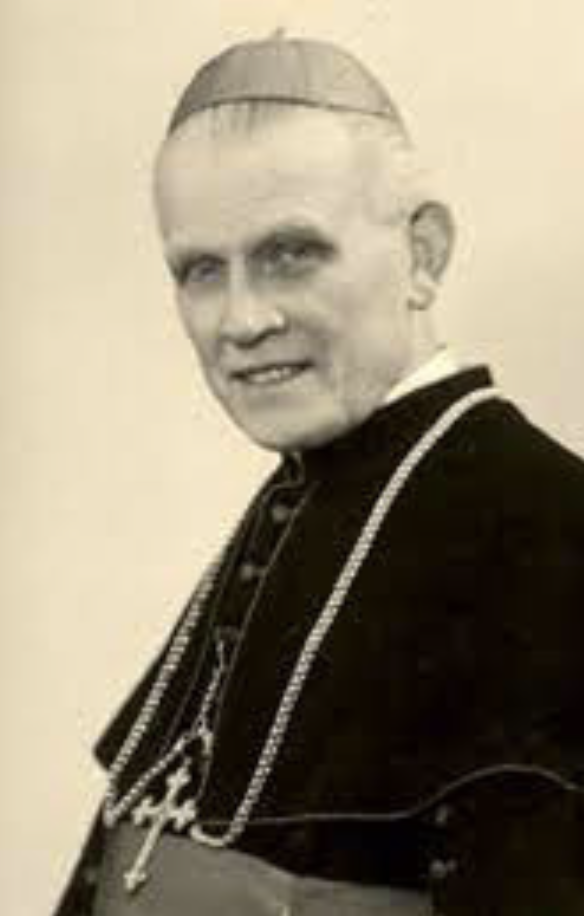 Cardinal Theodor Innitzer
This last example shows us how dangerous it can be for the Church to retreat into itself and ignore what is happening in the political world. However, Norman does have a point: it is vital that Christians, when taking part as Christians in public debate, have as their starting-point the words of the Gospel and not those of a particular social programme.
I would argue, nevertheless, that a kind of dualism which, as R H Tawney put it, "draws a sharp line between the life of the spirit, which is the concern of religion, and the external order with which religion has no concern" is fundamentally wrong. As Pope Francis in Evangelii Gaudium said: "It is no longer possible that religion should be restricted to the private sphere and that it exists only to prepare souls for heaven. We know that God wants his children to be happy in this world too, even though they are called to fulfilment in eternity, for he has created all things 'for our enjoyment' (1 Tm 6:17), the enjoyment of everyone." As Jacques Maritain vividly put it: "These two ordersv are distinct but they are not separate. If grace captures us and recreates us in the depth of our being it is in order that the whole of our action may be affected by it and illuminated with it."vi
This much would, I expect, be agreed by many readers of this journal but we need to go further and in this article I will try to explore a path forward for religion in public debate.
No longer a guaranteed place for Christianity
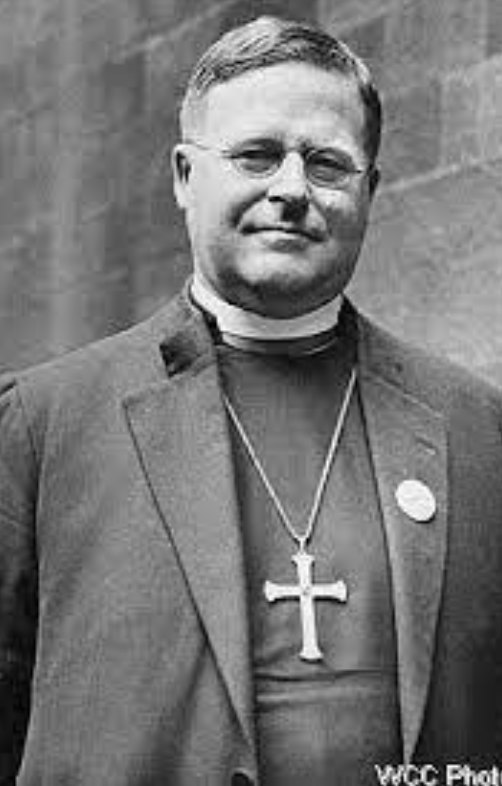 Archbishop William Temple
Most Christians, when asked, would probably agree that we cannot just assume that Christian views ought by their very nature to be accepted by the rest of society but I wonder if there is still an unspoken assumption that this is the case? Archbishop William Temple was one of the leading exponents of the Church's role in politics during the early part of the 20th century and his Christianity and Social Ordervi is unjustly neglected today and still worth reading. However, what underlies this, and all of Temple's thinking, is that, as John Kent puts it, "Church and state should combine to reflect the overriding purpose of God".vii However the idea of Church and state combining would not only be unacceptable today but would also bring with it what I suggest is an unhealthy closeness between Church and state. Perhaps one should now say that the Church should seek to influence society and politics so that the overriding purpose of God is expressed through its words and actions.
What is clear is that the Christian voice in politics is accepted and indeed welcomed but only where it accords with the prevailing mores of society. In Talking God, the Legitimacy of Religious Public Reasoningviii Jonathan Chaplin looks at the reaction to a march through central London in 2008 by six hundred Anglican bishops carrying placards past Downing Street and the Houses of Parliament to make their demands on behalf of the Millennium Development Goals. The then Prime Minister, Gordon Brown was among the audience and told them that he was "humbled" to be among men and women for whom he had "the utmost respect, the greatest admiration, and the highest affection". Press reaction was favourable and Chaplin asks: "Where was the familiar chorus telling us that this was a shameful attempt by a self-appointed religious minority to impose its view on a (supposedly) secular majority?"
Chaplin then looks at a hypothetical situation where 600 Catholic bishops from around the world converge on Westminster.
They march round Parliament Square and down Victoria Street carrying pro-life banners, ending up outside Westminster Cathedral where they listen to speeches calling for an end to abortion. Suppose that again the Prime Minister joins them and tells them that he has "the utmost respect, greatest admiration and highest affection for them".
As Chaplin points out:
Imagine, if you can, the public reaction. Imagine the outrage, the accusations of undemocratic bullying, the calls for French-style secularism. The comment pages would be log-jammed with sermons informing us that religion is a private affair, and that we shouldn't mix up the things of God and Caesar.
Indeed, the Guardian columnist Jackie Ashley once wrote after Roman Catholic bishops had issued a statement about abortion: "If any MP really thinks their personal religious views take precedence over everything else then they should leave the House of Commons. Their place is in church, mosque, synagogue or temple. Parliament is the place for compromises, for negotiations in a secular sphere under the general overhead light of the liberal tradition."ix Yet it is often in being counter-cultural that we as Christians find ourselves in the right place in the end.
A Way Forward?
Yet I detect a reluctance among some Christians to be counter-cultural and to swim against the popular tide. As Lord Mackay, the former Lord Chancellor has said, Christians must beware "….the wish to be popular or acceptable to public opinion….. We all must be conscious of this whatever church we support, established or disestablished, or if in our lives we are guided by moral principles which may have no religious base. Are we to go along with the tide or stick to our principles? It is usually easier to go along with the tide. Swimming against it involves strength of commitment."x
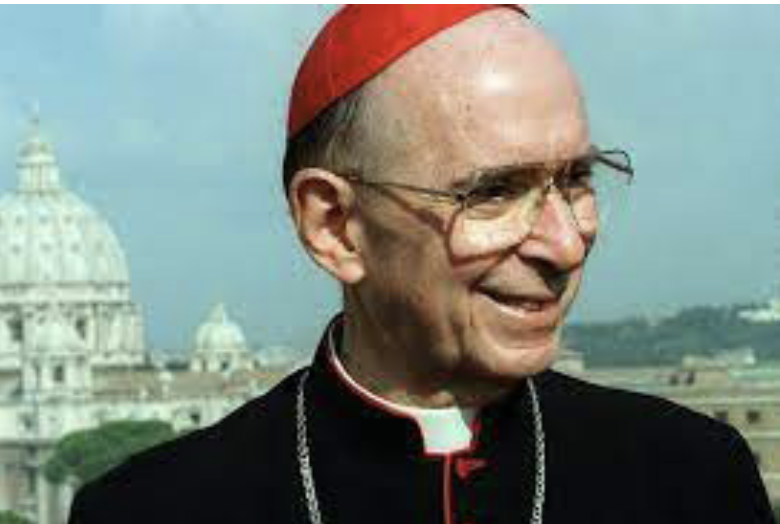 Cardinal Bernardin, then Archbishop of Chicago
When Christ was presented in the Temple it was Simeon who foretold to Mary that He was "destined to be a sign that is rejected – and a sword will pierce your own soul too so that the secret thoughts of many will be laid bare".xi Christ is not a sign of cosy engagement with the secular world but a sign that we may be in contradiction to it and if that puts us at the margins of debate in society then so be it.
Yet we must not understate our case. The value of religion is made clear in numerous judgements of the courts. The European Court of Human Rights in the case of Kokkinakis v Greece (1993) said that the religious dimension "is one of the most vital elements that go to make up the identity of believers and their conception of life, but it is also a precious asset for atheists, agnostics, sceptics and the unconcerned". In a South African case the court said that: "Religious belief has the capacity to awake concepts of self-worth and human dignity which form the cornerstone of human rights. It affects the believer's view of society and founds the distinction between right and wrong. It expresses itself in the affirmation and continuity of powerful traditions that frequently have an ancient character transcending historical epochs and national boundaries". This is the kind of positive view which we should be stressing.
However, we still have the practical question of just how to express a Christian view. As Pope Francis in his Apostolic Exhortation Evangelii Gaudiumxii said (at. para 125):
The Church's teachings concerning contingent situations are subject to new and further developments and can be open to discussion, yet we cannot help but be concrete – without presuming to enter into details – lest the great social principles remain mere generalities which challenge no-one. There is a need to draw practical conclusions, so that they "will have greater impact on the complexities of current situations".
As Cardinal Bernardin, then Archbishop of Chicago, put it "religiously rooted positions somehow must be translated into language, arguments and categories which a religiously pluralistic society can agree on as the moral foundation of key policy positions".xiii One example, which is very pressing at the moment, concerns euthanasia. Catholics, and indeed many other Christians, are absolutely opposed to euthanasia and the teaching of the Catholic Church is made clear in Evangelium Vitae issued by Pope John Paul II: "that euthanasia is a grave violation of the Law of God, since it is the deliberate and morally unacceptable killing of a human person. This doctrine is based upon the natural law and upon the written Word of God, is transmitted by the Church's Tradition and taught by the ordinary and universal Magisterium".xiv
Yet it falls to us to translate this message into ways that resonate with the secular world and so we must point out that mission creep happens where euthanasia is legalised. In Oregon 38.6% of patients committing suicide had expressed concern about being a "burden" on others and in 2020 the Dutch government approved plans to allow euthanasia for terminally ill children aged between one and twelve,xv saying that this would prevent some children from "suffering hopelessly and unbearably". There are many other instances of this "mission creep", especially in Holland and Belgium. Surely this is not what most people want? One could go further. In an article in the Catholic Medical Quarterly Francis Etheridge has pointed out the evidence for the link between the experience of loneliness and requests for euthanasiaxvi and if this is so then why is society not tackling the root of the problem and not the symptom?
The above is but one example of a specific issue where in public debate Christians need to bring forward arguments which, whilst not denying a Christian basis, express that basis in a fully Christian way with regard for the whole person on the basis of human reason. On a wider canvass there is much to be said for the notion of a "consistent ethic of life" of which the most notable exponent was Cardinal Bernardin. This does not in any way seek to diminish the absolute opposition of the Catholic Church to abortion and euthanasia but seeks to put it in a wider context of the promotion of life itself as God-given and in doing so gives shape and meaning to the fundamental Christian concept of the absolute dignity of each human person.
Thus Cardinal Bernardin distinguished between what he termed "life threatening issues" such as genetics, capital punishment, abortion and euthanasia, where the Church has an absolute moral position and "life diminishing issues" such as prostitution, pornography, sexism and racism where as he put it: "they all contribute in some way to a diminishment of human dignity" and so there is the need for "specific reflection and concrete action".xvii The whole point is that we must not be single issue Christians but resist any attempts to diminish human dignity.
Furthermore, we must insist on a private space not only for matters of religious belief but for all matters of deeply-held conscience. One area where this is currently threatened is the very practice of private prayer under the Public Order Bill 2022 which as most will now know, would introduce "buffer zones" outside abortion facilities across England and Wales to ban pro-life volunteers. What is not so widely known is that this is already happening with a number of local authorities introducing by-laws which are worded in draconian terms and are worded so that the mere practice of private prayer outside an abortion clinic is criminalised. This is because it is now a crime, where there is such a by-law, to even "advise or persuade, or otherwise express an opinion" within a certain distance of an abortion clinic. Secularists may well rejoice at this but beware; once this line has been crossed it will be crossed in other cases. In fact, laws are already in place to protect women from harassment when they attend appointments at abortion clinics and so all of this legislation is quite unnecessary.
Conclusion
If it is right that Christians should engage in political debate then is it right that they should be engaged in party politics? In the concluding words of his Christianity and Historyxviii the historian Herbert Butterfield, having surveyed the different political parties in Britain throughout history, advised "hold fast to Christ and for the rest remain totally uncommitted".
I disagree. On a personal note my own father, a committed and active Catholic all his life, was also involved in the Conservative party and strongly believed in the Conservative tradition of Harold Macmillan and R. A. Butler of the "Middle Way"xix. He chaired a local authority housing committee for many years and was very strongly opposed to the sale of council houses. Readers will have similar examples of involvement with other political parties. Butterfield was of course right that we must hold fast to Christ but whilst making sure that in the words of the old hymn our anchor holds we must not be afraid of active participation in political life and action. There is no divide between the things of God and Caesar!
Notes
i Oxford: Oxford University Press, 1979.
ii The documents of this conference can be found, together with other documents relating to Catholic social teaching, including Papal encyclicals, at www.shc.edu/theolibrary/cstdocs.htm
iii Uppsala Speaks, Section Reports of the World Council of Churches (Geneva: World Council of Churches, 1968).
iv The story is told in G. Passelecq and B. Suchecky, The Hidden Encyclical of Pius XI (New York: Harcourt Brace, 1997).
v He is referring to the spiritual and the temporal.
vi J. Maritain Scholasticism and Politics (Macmillan, 1940) at 195.
vii (1942) Harmondsworth, Penguin but republished by Shepheard-Walwyn/SPCK in 1976.
viii John Kent William Temple (CUP, 1992) at 175.
ix London: Theos Report 2008.
x Jackie Ashley, 'Cardinals, back off from this war with women and state' The Guardian, June 4, 2007.
xi These words were in a lecture 'Does Establishment have a Future?' which he delivered in Middle Temple on May 9th, 2013, and which is reprinted in Law and Justice, 170 (2013) pp. 7-18.
xii Lk 2:35.
xiii London: CTS, 2013.
xiv Consistent Ethic of Life (Sheed and Ward, 1988) at p.91.
xv John Paul II, Encyclical Letter Evangelium vitae (25 March 1995), 65: AAS 87 (1995).
xvi (2022) CMQ 72 (3) 22-25.
xvii Consistent Ethic of Life at 29-30.
xviii Collins, 1949.
xix Are there any adherents of Butskellism today?