The article explores the concept of synodality, particularly in light of Pope Francis's papacy. It discusses historical context, key synod events, and theological implications, asserting that synodality transcends previous church practices and embodies a new ecclesial style of listening and decision-making. Ultimately, it argues for recognizing synodality as a profound opportunity for renewal within the Church, rather than merely a modern trend.
Part 1 – Walking with Pope Francis
Since 2013 commentators have sought a single word to describe the rich, sometimes chaotic papacy of Pope Francis: early indications were that Joy would be the watchword, only to be confidently replaced by Mercy a few years later, and the language of a Poor Church for the Poor, with pastors smelling of the sheep, is rightly never far away. But increasingly, it is Synodality that is being suggested as the leitmotif of this papacy. Although theologians were writing important articles on this topic during the pontificate of Pope Benedict XVI it is still an unfamiliar word, and the "synodal" something of a novelty in Catholic linguistics.
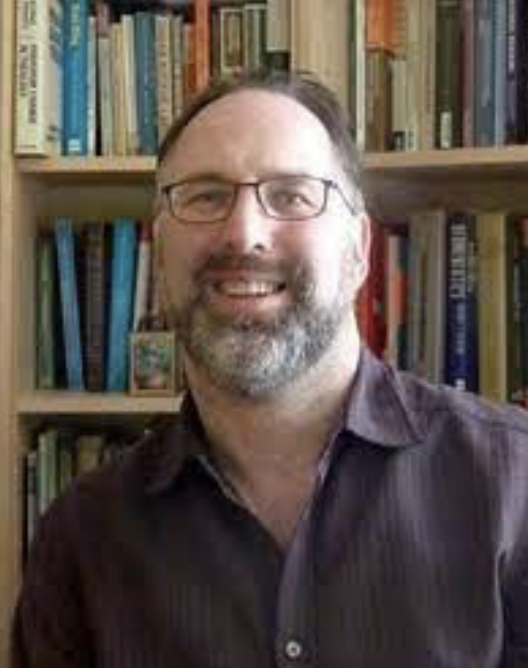 Dr Gregory A. Ryan, Durham University
Nonetheless, several popular writers saw the significance of this idea in Francis's worldview from the start, most succinctly Drew Christiansen, a reporter for the Jesuit periodical America, who, at the start of Francis' papacy in 2013 wrote a short article simply called: "Listen for this word: Synodality" and went on to say that “It looks to be the heart of the Franciscan reform of the Church".
Absolutely! Although not exactly in the way Christiansen expected. Like the 2017 Pope Francis Word Book, filled with entries by esteemed authors, but which ignored "synodality" in favour of “collegiality", the 2013 article focused on the learning and listening that goes on between bishops and the Pope, whereas Francis has given synodality a much wider sense involving – to use one of his favourite phrases for the Church – the whole Faithful Holy People of God. For Francis, synodality and collegiality are not to be separated but neither are they to be confused!
In the sense that we now coming to understand it, synodality is a surprisingly recent idea. This is a term which only appears once in Francis' 2013 manifesto, Evangelii Gaudium, and that in the context of ecumenism, although the underlying principles are nascent elsewhere. It reappears in a homily for SS Peter and Paul in 2013, but again the context is in the relationships of bishops to each other. As with much of the literature before 2015, synodality seems mainly to involve collegiality among the Catholic bishops, and ecumenical relations with non-Catholic bishops.
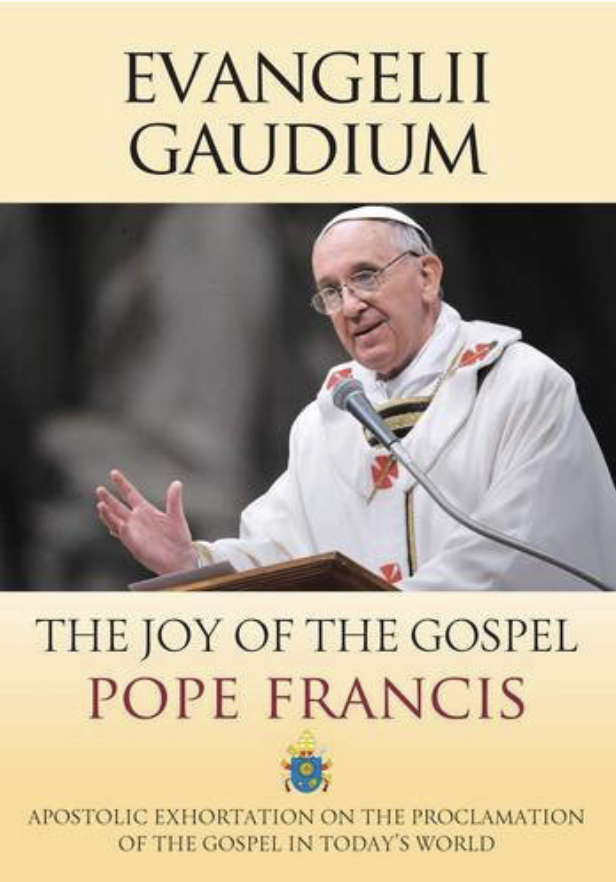 Pope Francis, Evangelii Gaudium (2013)
In an important 2018 document – Synodality in the Life and Mission of the Church the ITC calls synodality and synodal a “linguistic novelty" but at the same time shows how synodality is present – or prefigured – in the early Church and forms a key part of later tradition in both East and West. Indeed, it forms a fresh reception of the Second Vatican Council's ecclesiology of the People of God.
Definitions only get us so far, and as Wittgenstein says, “don't look for the meaning, look at the use", so what better place to see Synodality in use than in the synods in which Francis has been significantly involved?
Francis's Synods
At the 2001 synod of Bishops on “The Bishop: Servant of the Gospel of Jesus Christ for the Hope of the World" during which a discussion on the need for episcopal collegiality was pushed aside, Pope Francis experienced increasingly centralised control over the participants and outputs of the synods exercised by Popes and Curia since the Council. But since 2012 he has brought a new process and a new style, beginning with the 2012 synod on the New Evangelisation. This was Benedict's synod – but Francis's legacy. In 2013 it was the new Pope who wrote the post-synodal apostolic exhortation, taking evangelisation as the starting point for the wide-ranging exhortation “Evangelii Gaudium". How this might be realised in the Synod of Bishops itself becomes clearer with the 2014-15 synods on the Family.
In many ways what happened in 2014 was the prototype of what is going on now, both in the preparation and in the synod hall itself. Because the synod took place in two sessions, it is possible to see something of the development of a synodal method by comparing the preparation for each session. Some of you might remember the questionnaire associated with this synod. It was not originally intended for distribution to the faithful – indeed it was initially only for bishops - but took its own course and ended up widely distributed. Although there is a sense that some consultation was better than nothing, there was justifiable criticism regarding the technical, churchy language. But there was a fascinating development between the two sessions of the Synod. The preparatory work for the 2014 Synod started out with a “priority of the answer" (e.g., how well is natural law understood? How can the birth rate be increased?), fitting the lived experience of the faithful into an existing framework. In contrast, the instructions for 2015 moved the priority towards real “questions which arise", following a "see-judge-act" method: "Listening" – "Looking at Christ" – "Confronting the Situation".
In the synod hall, Francis encouraged parrhesia – courageous speaking – and told bishops not to be afraid of disagreeing. At the same time, he insisted on true discernment and learning in the Synod. As has recently been emphasised: “The Synod is a spiritual process and is "not [to be] reduced to a parliamentary debate".
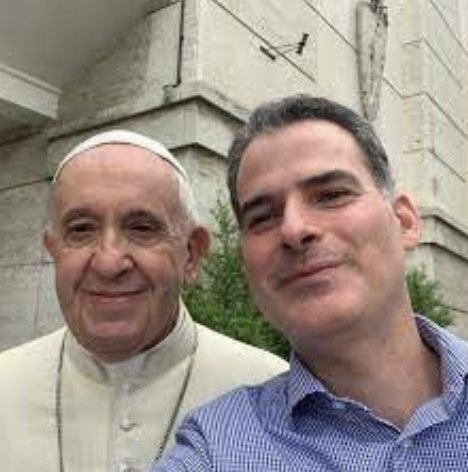 The pope with Raphael Luciani
Synod of Bishops
The conclusion of the 2014-15 synod coincided with the 50th Anniversary of the Synod of Bishops as an institution, and Francis took the opportunity to recognise it as a "fruit of the Second Vatican Council”, intended "so that pope and bishops are able to better provide pastoral care and governance of the Church".
But what could have been a rather conventional commemoration has become an essential reference point for understanding his synodal vision, showing how the focus was shifting from synodality as the application of episcopal collegiality to something much more comprehensive. Noting the etymology of "synod", he gave what has become the classic description of a Synodal Church:
A synodal Church is a Church which listens, which realises that listening “is more than simply hearing”. It is a mutual listening in which everyone has something to learn. The faithful people, the college of bishops, the Bishop of Rome: all listening to each other, and all listening to the Holy Spirit, the “Spirit of truth", in order to know what he “says to the Churches".
Significantly, he also expanded the hermeneutical horizon for understanding the synod and episcopacy, by clearly distinguishing collegiality and synodality, and by situating the former with the frame of the latter:
In a synodal Church, the Synod of Bishops is only the most evident manifestation of a dynamism of communion which inspires all ecclesial decisions... an expression of episcopal collegiality within an entirely synodal Church. Two different phrases: "episcopal collegiality" and an “entirely synodal Church".
The Venezuelan theologian Raphael Luciani neatly summarises the development we are seeing here as a movement from the conciliar understanding of episcopal collegiality to a new understanding – and practice – of episcopal synodality. What the Church is now working through is a further conversion to a synodal ecclesiality. But development of synodality in respect of synods does not stop there.
By the time of the 2018 synod on Young People and Vocational Discernment, this synodal ecclesiality is starting to come to the fore. Sr Nathalie Becquart, who as undersecretary to the present synod is the first women to hold that role, has highlighted that post-synodal exhortation highlights important issues about the full participation of women in a synodal church – especially their "presence" in ecclesial bodies and “participation" in decision-making. Recently Sr Nathalie has challenged prevailing ecclesial attitudes on “feminine genius” arguing that it is not possible to say "Women are like this; men are like that, so women can bring this to the Church." Rather, the challenge is to be the Church with men and women together: she presents synodality as a path of reconciliation not only between clergy and laity, but between women and men.
Finally, the 2019 Synod on the Amazon emphasised that a synodal Church needs to hear the "cry of poor and cry of earth". It also gave an example of one of the challenges of Francis's approach. Global media focused largely on one issue – the possibility of married priests – which the Synod had discussed and recommended but which Francis did not endorse. Bradford E. Hinze, professor at Fordham and author of an important book on Dialogue in the Catholic Church criticised Francis for apparently not hearing the voice of the Synod on this matter. Was it lack of courage, and papal authoritarianism? A generous reading might say that the Pope was making two important points: first, distinguishing between debate even with majority assent and true Spirit-led discernment; and second, concern that the hot-button topics of the global north should not obscure a holistic set of regional issues.
In this first dimension of synodality, then, it can certainly be seen as more than buzzword in terms of a synod of bishops, of understanding episcopal synodality, and to some degree of how that related to a wider synodality of the whole faithful.
Part 2: Structure and Processes
In Evangelii Gaudium Francis makes an understated but powerful observation: “Lay people are, put simply, the vast majority of the people of God. The minority – ordained ministers are at their service.” Their role is by no means passive, nor is it to fill gaps left by a shortage of priests, but involves a wide range of ministries in the world and in the Church, a potential seen as limited by lack of suitable formation, and by not being given opportunity to participate in local church decision making.
Inverting the Pyramid
One of the most pervasive images for Synodality is Francis's description of an “inverted pyramid" on the basis of ministerial service such that the Pope serves the bishops and churches, the bishop serves the other clergy, who serve the laity and the world. This is important and has real pastoral consequences. For example, Francis' reordering of the Curia to be an instrument to support the needs of local churches, rather than simply as a distribution channel for Papal strategy. Inverting the pyramid has also been fruitfully developed by theologians, reflecting on the role of the sensus fidei in a synodal church, and in the dynamics of ecclesiologenesis.
Of course, Newman recognised the value of “consulting the faithful on matters of doctrine" long before Vatican II but since the Council's teaching on the sensus fidelium, and on "reading the signs of the times in the light of the gospel", an understanding has developed among theologians such as Christoph Theobald and Richard Gaillardetz of the pastorality of doctrine. That is, the relationship between the world of lived experience and formal expressions of Church teaching.
The challenge of receiving Vatican II in this regard is not to exalt the laity or denigrate ordained ministry, but to situate all in the whole People of God – differentiated, yes, but as equal daughters and sons in the Pilgrim Church.
Structures of Participation
The participation of the whole faithful, and especially developing the participation of the laity, brings us to the ITC's second level of synodality: the need for stable structure and processes that make the participation of the whole faithful possible.
The commission states that this “cannot simply be a matter of reusing what is already there but must integrate and update the heritage of the ancient ordering of the Church by means of the synodal structures inspired by Vatican II and must be open to the creation of new structures".
This applies not just to episcopal and diocesan synods; while Francis does not directly contradict Benedict XVI's negative assessment of the theological value of episcopal conferences he quotes extensively from regional and national conferences in his magisterial teaching. He has reopened questions which have implications for canon law and inculturated diversity. However, when detailing permanent structures for involving the laity beyond occasional diocesan synods and assemblies, the ITC suggestions are limited to the existing provisions for Diocesan Pastoral Councils, Parish Pastoral Councils and Parish Finance Councils.
Now, it is encouraging – and I suspect challenging for many – to hear Francis say emphatically: "How needed pastoral councils are! A bishop cannot guide a diocese without pastoral councils. A parish priest cannot guide the parish without the parish council. This is fundamental!” But this cannot be the limit of what is possible. In particular there is, one the one hand, a great need to find a way of practising synodality for those who do not do committees, and on the other hand to find a way of inculcating the spiritual and ecclesial values of synodality into these low-level structures so they have an ecclesial and missional pastoral function, not merely an administrative one. There is a great danger of Synodality being only a buzzword here a complacent rebranding of things we were already doing, without attending to the call to newness heard from Pope Francis and from the synod office, as well as from the grassroots.
Syn-hodos is not just about walking together but being called together as an assembly for a purpose. So, too, a synodal Church is not just about listening to each other but about co-responsible decision-making, and structures and processes need to recognise and facilitate this. What might be in view here for a synodal Church?
In Latin America, CELAM has responded to the synodal process by planning four interlocking centres, on: Knowledge Management; Basic Ecclesial Community Training; Pastoral Action Programmes and Networks; and Communications. Perhaps we are not ready for something like that at a continent or even country level, but might some pastoral cooperation between dioceses form part of our local response?
More radically, Raphael Luciani makes an intriguing suggestion that as well as diocesan councils (which come under the governance of the bishop and conform to the logic of canonical structure) there might be other synodal bodies in a local church that are ecclesial rather than episcopal in nature. These will be bodies where clergy and laity meet simply as the People of God in that place.
The Bishops' Conference
Beyond the diocese, think of how the Catholic Church is represented at the national level in England and Wales by the Bishops' Conference – not just internally as regards governance but as the external face of the Church. The CBCEW website is headed up “The Catholic Church in England and Wales”. A synodal ecclesiology perhaps raises questions about whether there ought not to be a visible national entity of the Church in England and Wales as an evangelistic sign, not only as a decision-making body which is served by the CBCEW.
Finally, and worth a talk of its own, we should pay attention to the language used in the documents on synodality, as with Vatican II, referring to People of God: “all the baptised" – not just all the Catholics (and certainly not just “all the clergy"). This has major implications for an ecumenical dimension to the synodal transformation of the Church, perhaps along the lines of the emerging approach of “Receptive Ecumenism" which seeks actively to learn from other traditions, not just overcome historic divisions.
Part 3: Synodal Style
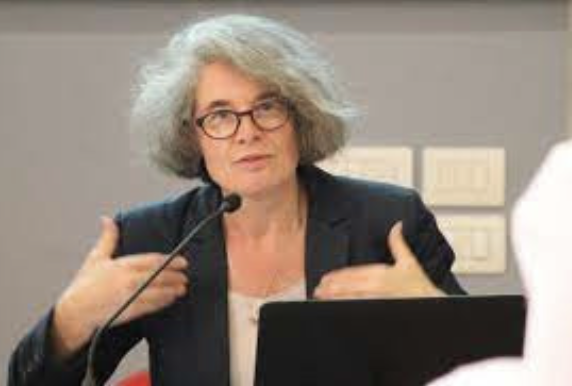 Nathalie Becquart
A flourishing synodal Church requires more than synods and processes. It also needs a third level of synodality: which the ITC calls synodal style. "Synodality must become the Church's modus vivendi et operandi".
It is, as Luciani says: “Not a method but an ecclesial way of proceeding....It requires reconceiving, and not merely modifying, the forms by which all Church structures and mentalities can be effectively synodalized."
Let me offer three brief thoughts on what “synodalising” mentalities might involve?
Firstly, this style requires certain habits or virtues, such as those listed as "synodal attitudes" in the preparatory documents for the current synod: courage, honesty, charity, humility, openness, hope, inclusivity, community... It's probably not surprising that these kinds of virtues are needed in dialogue. But there is another area of Francis' thinking which is very significant in respect of synodal style but which can be overlooked in emphasising consensus.
Secondly, therefore, synodal style requires a particular approach to what Francis calls contradistinctions – polar opposites which work in a productive tension. When the Pope encouraged speaking with Parrhesia at the 2014 synod, even if that meant disagreement, he was giving flesh to his conviction that conflict needs to be faced, not avoided, or prematurely resolved in a neat synthesis, but engaged with so that polarised positions can be transcended on a new plane a transformative growth emerging from the interplay of the poles – what he calls “overflow". This is what unity prevailing over conflict looks like not an absence of discussion on certain topics. In his readable and profound little book Let us Dream Francis puts it like this: Our main task is not to disengage from polarisation but to engage with conflict and disagreement in ways which prevent us from descending into polarization...holding disagreement and allowing it to become a link in a new process.
And finally, the third point on Synodal Style takes us back to Evangelii Gaudium, and specifically to one of Francis' four principles for building a society: Time is greater than Space:
Giving priority to space means madly attempting to keep everything together in the present, trying to possess all the spaces of power and of self-assertion; it is to crystallize processes and presume to hold them back. Giving priority to time means being concerned about initiating processes rather than possessing spaces. (EG 223)
How then might we imagine this rather abstract idea that time is greater than space?
From the first days of his papacy, wise commentators have pointed out that Francis is neither conservative nor progressive, to use those unhelpful but pervasive categories. Rather he is a radical, returning to the radix – the roots. The point of returning to the roots is not to bury oneself deep in the ground forever, but to grow afresh. It is not to recreate the first flower, but to reappropriate the original vital principle and nourishment.
Raphael Luciani correctly says that “[Synodality] requires theological-cultural recreation of the foundational spirit that led to the church's original foundation", and it is this dynamic sense of recovering a foundational spirit, indeed listening to the Holy Spirit, in initiating an emergent – if somewhat unpredictable – process, that makes me think of Francis' approach to transformative ecclesial renewal, in particular his approach to synodality, as a form of “rewilding” the Church.
This is not, as a colleague suggested, because the synodal pathway painstakingly cleared by the church is immediately being overgrown with the weeds and briars of distorted human and ecclesial nature, but because rewilding is concerned with re-establishing not the past form but the conditions for ecological processes and species diversity to get underway.
“Rewilding is not so much about turning back the clock and restoring damaged ecosystems to an arbitrary past baseline. Rather, it is about restoring networks of interactions between communities of organisms and their physical environment along with the ecological processes that emerge from these interactions.”
“It is more open-ended and relaxed about ecological novelty. It embraces the view that there is no way back for ecosystems, and that, as ecological interactions and processes recover, ecosystems will take on new forms. These may evoke the past, but they will be different.”
This gives us a good picture, I think, of synodal style to complement the style and image of listening and walking together. Synodal style is style with a purpose, not returning to an arbitrary past, but creating an environment for flourishing and diversity. Sometimes it will be messy and unpredictable, sometimes requiring patience and belief in the long haul – "being concerned about initiating processes rather than possessing spaces".
Conclusion: Buzzword or Breakthrough?
I have focused today on the intellectual apparatus around synodality. Clearly, a rather different presentation could have looked at the topic in terms of the theological and spiritual factors involved in synodality – the sense of faith, the notion of communion, the biblical precedents, and above all the action of the Holy Spirit. And our focusing on what The Spirit is saying to the churches today – in listening to each other, in contemplation and action. Or again, although I have touched on some practical issues, much more could be said about the need for rethinking formation for laity and clergy in a Synodal Church. Also, about the widespread sense that “we've been here before”, or about best practice for holding meetings in a synodal style. I'm happy to wander down those paths in our discussion!
Hopefully the three perspectives I have presented today go some way towards thinking about synodality not as a fashionable buzzword, but a rich, multi-layered reality to be rediscovered and developed in the life and mission of the Church. Despite all the challenges, I am hopeful.